
Nutrition students share their personal experiences in Ghana. From the plane ride to hospitals and engaging into the community, you'll hear first-hand details of their Ghana adventures.
-
An American Learns to Dance
July 17, 2026
-
Ghana Through A Car Window
July 17, 2026
-
Day in the Life of a Student on a Ghana Study Away Program
July 17, 2026
The daily routine of our past 2 weeks shadowing at Ridge Hospital, emphasizing on the day, Thursday, July 16, 2026.
-
The Last Monday
July 17, 2026
-
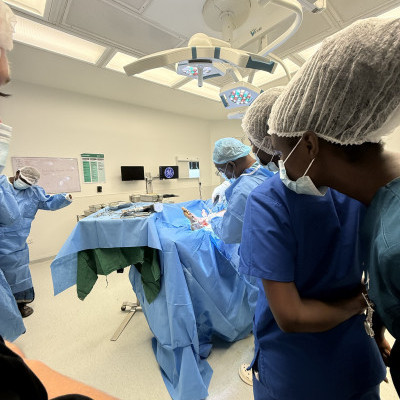
Behind the Operating Room Doors
July 17, 2026
-
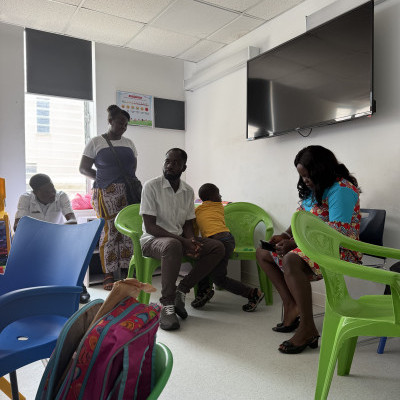
A Different Side of Pediatric Care
July 17, 2026
-
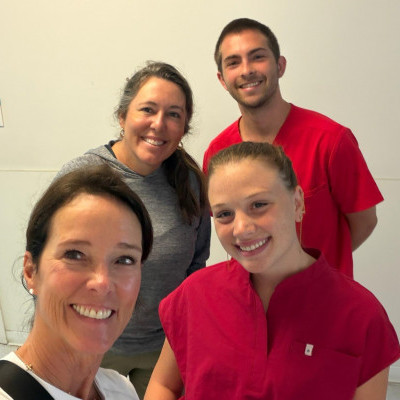
Finding Americans in the OR
July 17, 2026
-
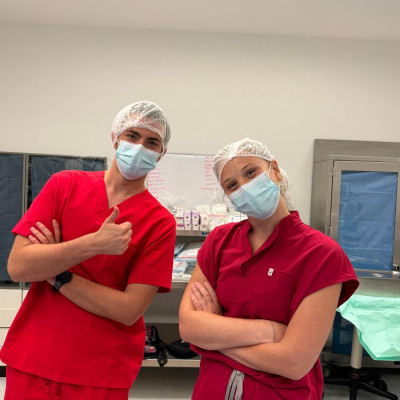
The Power of CocoMelon
July 16, 2026
-

Surgical Adventures
July 15, 2026
-
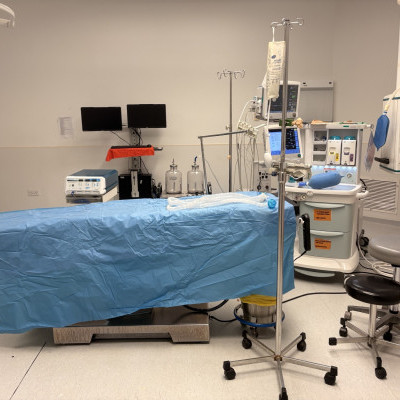
My First Surgery
July 15, 2026
-
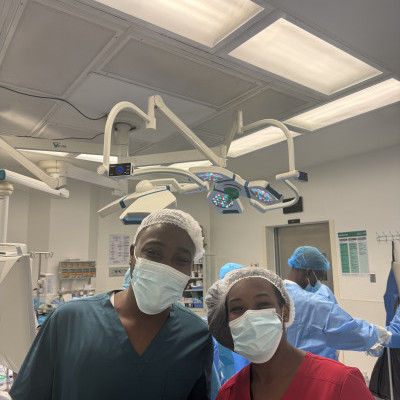
Everlasting Scars
July 15, 2026
-
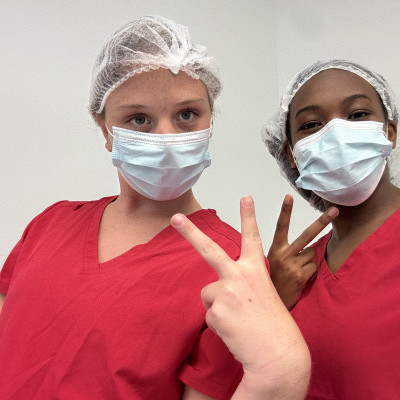
Still Time to Learn
July 15, 2026
-
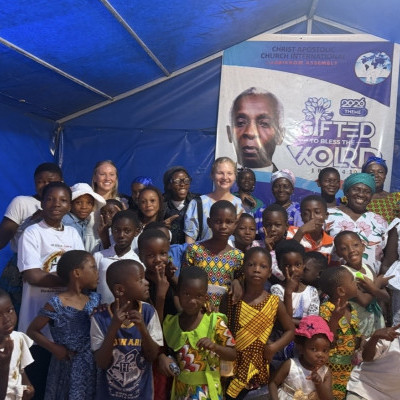
A Sunday of Worship and Friendships in Ghana
July 13, 2026
-
The Breathtaking Ghanaian Naming Ceremony
July 12, 2026
-
One More Weekend
July 10, 2026
-
Being Accused of Witchcraft
July 10, 2026
-
The Abdominal Wall Spindle Cell Sarcoma
July 10, 2026
-
The Performances in the Level Two Theatre
July 10, 2026
Three amazing pediatric surgeries at the Greater Accra Regional Hospital.
-

Where Hope Weighs Ounces
July 10, 2026
-
A Ghanaian Bed and Breakfast
July 10, 2026
-

Animals in a Resort?!?!
July 10, 2026
-

A Transformative Day in the ICU
July 10, 2026
-

The Malnutrition Ward
July 10, 2026
-
First Observation of a Ghanaian Surgery
July 10, 2026
-
A Weekend Worth the Risk
July 10, 2026
-
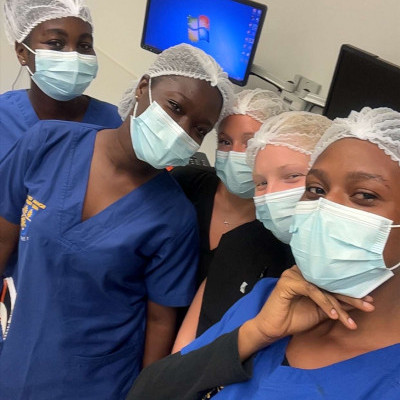
A Day in the Emergency Surgery Unit
July 10, 2026
-
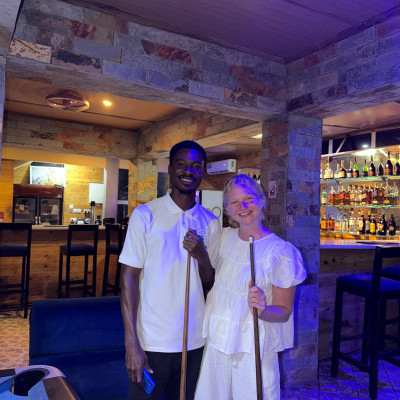
Making Friends Through a Game of Pool
July 10, 2026
-
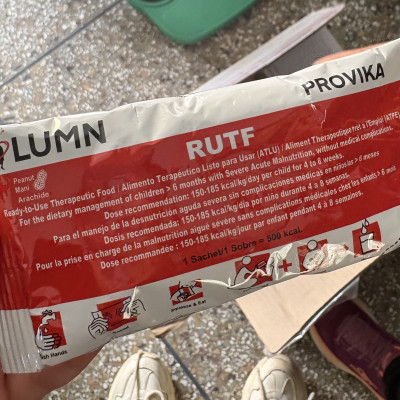
Seeing Kwashiorkor: Knowledge to Reality
July 03, 2026
-

The PML Children’s Hospital Emergency Room
July 03, 2026
After spending a day in the emergency room, I learned invaluable insight into the Ghanaian healthcare system.
-
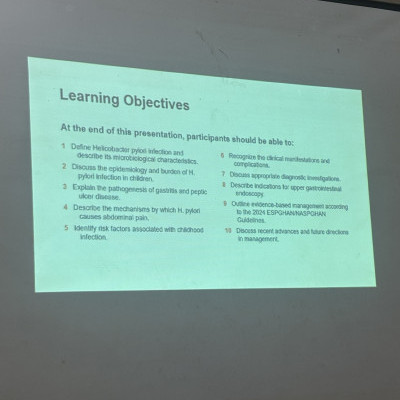
Helicobacter Pylori Infection in the Morning Meeting
July 03, 2026
-
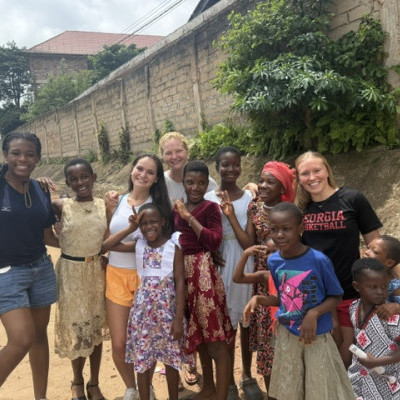
Friends in Mampong
July 03, 2026
-
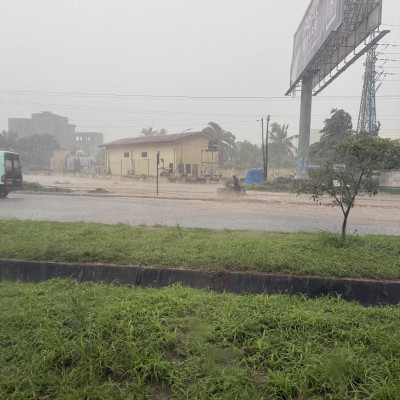
Rain and Detours
July 02, 2026
-

Cape Coast Coincidence
July 02, 2026
-
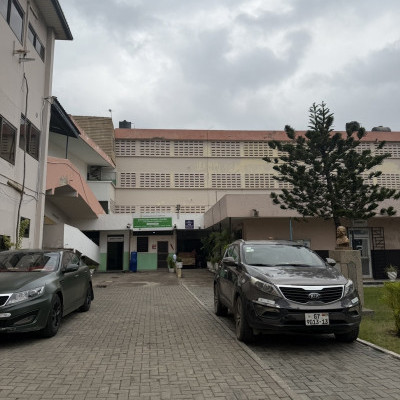
Learning Beyond the Textbook
July 02, 2026
-
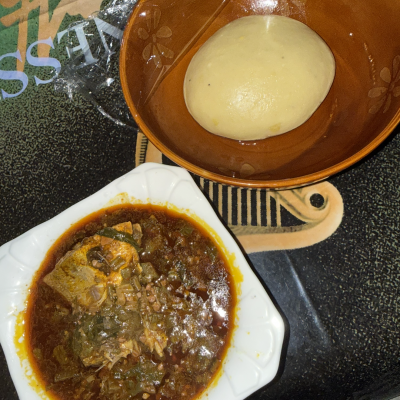
The Surprises in Ghanaian Cuisine
July 02, 2026
-

From Classroom to Clinic
July 02, 2026
-

Beyond the Chaos: My First Day in the Pediatric ER
July 01, 2026
-
Shop Rite: The Light in the Darkness
July 01, 2026
-
A Night at the Ghanaian Opera
June 29, 2026
-

Newfound Appreciation for the Football Spirit
June 26, 2026
-
A Well Intentioned Attempt at Pangolin Rehabilitation
June 26, 2026
-

The Barefoot Soccer Game
June 26, 2026
A short soccer game with four Mampong- Akwapem locals turned into an incredibly inspirational experience.
-

Ghana vs. England: A Night to Remember
June 26, 2026
-
Trials, Tribulations, Twi
June 26, 2026
-

Meeting Kojo
June 26, 2026
-

Lost in Translation
June 26, 2026
-
Discovering African Soap Operas
June 26, 2026
-
Merry Madina Market
June 26, 2026
-
Serving with Purpose: Community Health in Ghana
June 26, 2026
-
Walks Through Ayirebi-Oda
June 26, 2026
-

Teamwork, Twi, and a Turning Point
June 26, 2026
-

-
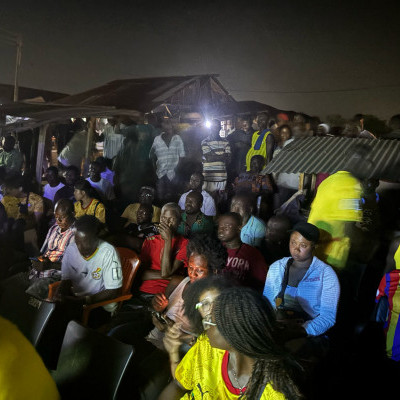
Ghana and England Group Stage Game
June 24, 2026
Experiencing the professional soccer culture with the locals.
-
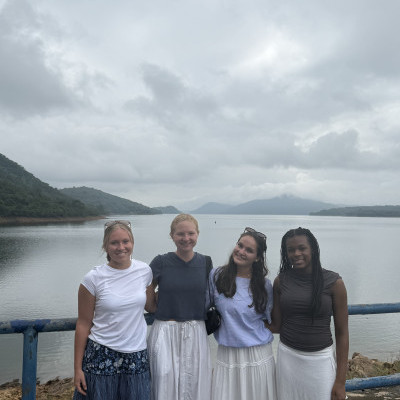
Dancing in the Rain
June 20, 2026
-

Making New Friends in Ghana
June 20, 2026
Befriending a little girl in the Methodist Church and how she hung out with us for two hours entertaining both us and her
-

Boat Cruise and Meeting my First Ghanaian Friend
June 20, 2026
-

Memories at Mole National Park
June 20, 2026
-
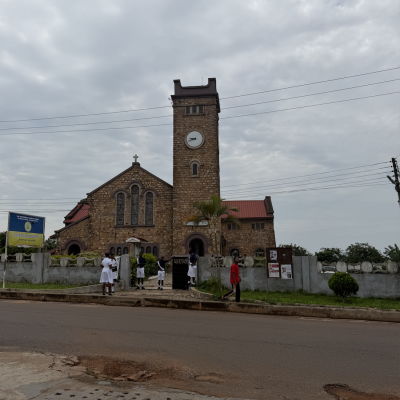
An Unforgettable Ghanaian Church Service
June 20, 2026
-
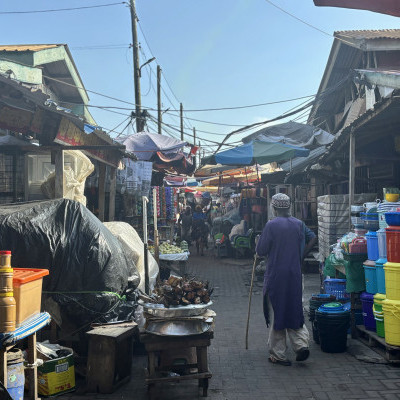
Exploring the Accra Markets
June 20, 2026
-
Experiencing Ghanaian Hospitality
June 20, 2026
-

The Burning Plastic in Larabanga
June 19, 2026
-

The Eye-Opening Discussion With a Food Science Professor at the University of Ghana
June 19, 2026
On June 12th, we got the invaluable opportunity to meet with a University of Ghana professor.
-

Ghana: A Nation of Unity and Culture
June 19, 2026
-

A Night in Mole National Park
June 19, 2026
-

Misconception and History at Manhyia Palace
June 18, 2026
Manhyia Palace Museum is filled with wonders of history and nature, but what if one of these aspects was a misinformed fact.

An American Learns to Dance
July 17, 2026
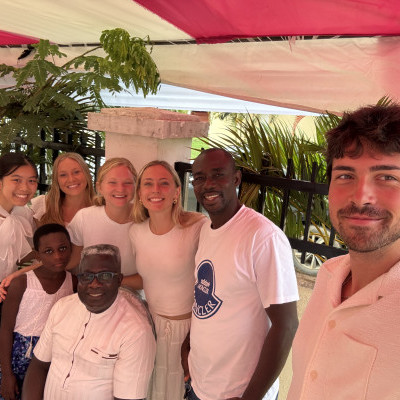
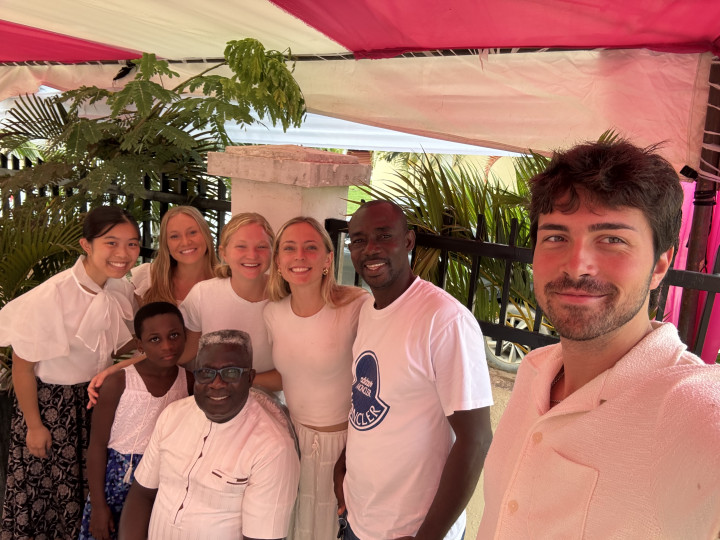
On July 11th, Jordan, Mary Hanna, Taylor, Rachel and I joined Dr. Anderson at a Ghanaian naming ceremony. At first we thought it would be an extremely lengthy church service, in which the baby would be christened and given a name within a church. However, the mood changed when Dr. Anderson mentioned us going to an “after-party”. At this point, we had no idea what to expect. If this trip has taught us anything, it was that no matter what you thought was going to happen, something else would occur.
With an open mind, we piled into the van and drove to a part of Accra we had not seen before. As far as suburban neighborhoods go, this was the closest to an American style suburb I had seen yet. It was almost unsettling, since I had believed this to be a very Western concept. After learning the effects that the Western world had on Africa, it felt as though it was forced and out of place. Regardless, the neighborhood and houses were beautiful, and we pulled into Elfreda’s home. She was hosting Stephanie and Koby, the mother and father, respectively, of the newly named child, Jada.
The reason that children undergo naming ceremonies is quite fascinating. In Ghanaian culture, newborn children are seen as merely visitors in this world. Their presence is regarded with a high level of spirituality; if a child dies soon after it is born, it is considered to be the soul returning back to the spiritual domain. If the child lives past the first week of its life, it is said that their soul is here to stay and they will be given a name.
The ceremony quickly became one of my favorite days here in Ghana. We were showered with food and drinks, eating things like jollof, fried rice, shito, chicken, and goat and pork kebabs. The drinks were also phenomenal. The idea that Americans only drink whiskey, Bailey’s, and sangria was very evident, since they put up a table with just these drinks along with liters of sprite and coke for us to drink. They were definitely not wrong, because we were the only ones at the party that touched these drinks, which was hilarious. The entire family was just talking and relaxing outside at the tables, and we were right there with them.
One of the highlights about this experience was the dancing. Ghanaians take dancing here very seriously, something which I quickly found out. Leaving the party, we were saying our goodbyes and some were using the restroom. I took this opportunity to express my extreme satisfaction with the day by dancing, calmly, to the music outside. One of Dr. Anderson’s high school friends, Marian, decided to join me in bobbing with the music. While I didn’t think I was dancing all that bad, I immediately got free lessons: “You’re doing too much with your legs, start with your head and shoulders and when you are ready you can move your legs again.” Embarrassed but determined, I immediately stopped moving and started with my head. I eventually got the rest of my body moving, realizing that she was actually right. I felt way more comfortable relaxing and not forcing the movement upon myself, which I have been criticized many times for by my friends. At the end of the day, I learned so much about Ghanaian culture and I feel so extremely grateful that I got the chance to immerse myself into the people around me.
-Carlton Burns
Ghana Through A Car Window
July 17, 2026
According to my VERY rough calculations, our group will have spent a total of 80 hours on the road these past five weeks (not including optional activities).
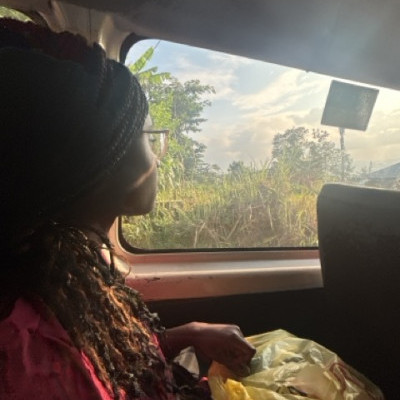
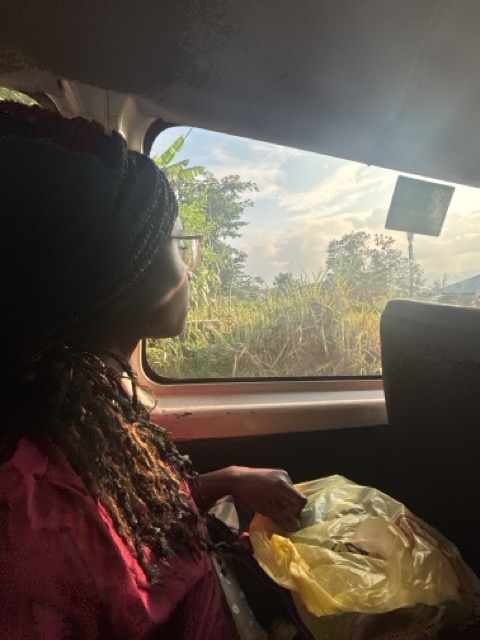
Although these rides were truly treacherous at times, I am grateful for them. Through the window of the van, I was able to see so much of Ghana and what people were doing in their daily life. I would often stare out and watch the scenery change from a bustling market street to a quiet forested landscape.
For all of the trip, we’ve been riding in a white van in which 15 people can be seated, meaning every single seat was taken by a person. Our driver is a reliable man we’ve come to know as Fender, a nickname given to him by Dr. Anderson. The first couple of days here, it was a big adjustment to go from American streets and driving style to Ghana’s. To paint a picture for you, there would be times where we were speeding down a poorly paved road, driving on the wrong side in order to overtake a slower car, giving our van a few seconds to get in the right lane to avoid a head-on collision. However, we’ve always come out unscathed and 10 minutes faster than the GPS.
One of the most memorable rides for me was when our group was returning to Monpong from Kumasi. It was a Saturday, and we had been in Ghana for about a week. As we were driving through towns in the evening, you could see they were alive and bustling. In the span of 30 seconds, I saw that women were sitting on their porches chatting with one another, a small group of children were gathered and goofing off, and two older boys were playfully jostling each other like someone had just said a funny joke. From observing moments like these, you can tell that Ghana is a community-oriented country; in the US, you wouldn’t see a sight like this unless there was an organized activity like a Fourth of July gathering. I was envious, knowing that this was most likely a normal weekend occurrence in a residential area in Ghana.
On another trip during the weekend, we saw our first Ghanaian funeral procession. I pointed out the window and asked Sydney what she thought was going on, and she told me that it was a funeral. You could tell because everyone gathered was wearing beautiful outfits that were black and red. I was a bit surprised because the funeral seemed festive, as there was music playing and people dancing. Although we never attended a funeral, we were able to learn about them just by driving through the towns.
The drives also pointed out to us areas of economic difference in the country. The day we were driving to and from Mole National Park, located in the northern part of the country, we could see the towns we drove through become less and less developed. All countries have areas that are more poor; however, it was interesting, in a sad way, to see that poverty may be more visible in the north of Ghana.
I have much more to say about these car rides, but I can only take up so much of your time, so I’ll leave it with this: my experience on this trip wouldn’t have been the same without these car rides. I learned a lot from each one of them. I’m so grateful for our wonderful driver and the wonderful company I had to get me through.
Common Car Casualties:
* Concussion from banging your head against the window when riding on unpaved roads
* Stains from food spills
* Leg stiffness
* The one dog we hit (he’s alright)
* Rachel and Ethan suffering from car sickness
* Classmates taking photos of you taking a nap in the car
- Madison Bradford
Day in the Life of a Student on a Ghana Study Away Program
July 17, 2026
The alarm goes off. I get up to brush my teeth in a bathroom shared with seven other girls. We say our good mornings. Each person patiently waits for space near the sink, whether to brush their teeth, do makeup, skincare, etc.
Once done with my morning routine, I head downstairs to eat breakfast. The options are the same every morning: kettle-boiled water, scrambled eggs, toast, sliced fruit (mango or pineapple), chopped sausages, coffee, milk, tea, sugar, peanut butter, jam, and oatmeal. I choose my go-to meal which is sausages, eggs, a cup of tea, oatmeal, and slices of fruit. Even though I’ve been eating this same meal almost every morning for the past five weeks, I am strangely still not tired of eating it. It’s still delicious, nutritious and filling.
Fender is here, that is our cue to start heading to the van. I grab my scrubs and crocs bags and head out for the van. Seats on the van operate on a rotational basis for front, middle, and back seats. I sat in the back the day before, so I choose to sit in a different section.
The ride to Greater Accra Regional Hospital is approximately two hours long. The roads are riddled with pot holes, so the ride is really bumpy which leads to some friends, such as Rachel getting car sick. I take the time in the van ride to catch up on work, sleep, listen to music, or simply look out the window for sightseeing.
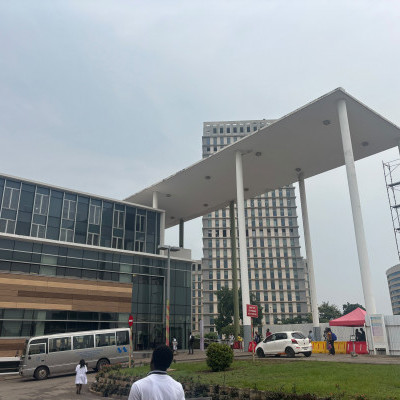
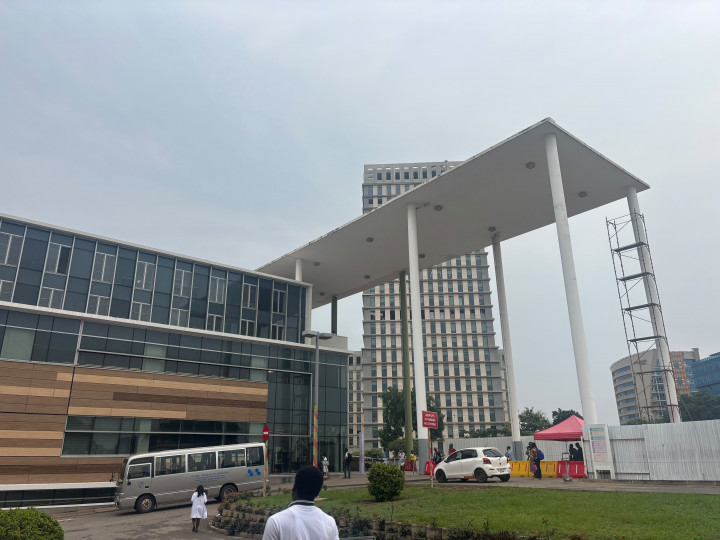
We finally reach the hospital. The unit each student is assigned to that day is based on the schedule we made. Today, I am assigned to the emergency unit with my partner, Madison. There, we meet Dr. Akosua, a bubbly, tall emergency physician. We introduce ourselves and I find out that she’s my roommate's cousin. What a coincidence!
Madison and I change into our scrubs and crocs then observe Dr. Akosua through the unit while asking questions and taking notes. We see patients with various problems: diabetic ketoacidosis, severe head trauma, and severe asthma complications. We observe diligently and curiously as Dr. Akosua and the team of healthcare staff do their jobs.
Once it’s past noon, it is time for Madison and I to bid our farewells to Dr. Akosua, and change back into our normal clothes from the scrubs. When done, we walk out of the hospital to join the rest of the group. We head back to the van to Fender and drive back to Mampong, and pick up dinner on our way back. Once we reach Mampong, we go around a circle in which each person gives a brief overview of the unit they were in. We then have a book discussion, eat dinner, wash the dishes, then it’s students’ free time.
My free time consists of working on my assignments such as my daily journal, reflective essay, and blog post. After completing portions of my assignments, I take a shower, do my nighttime skincare, review the hospital unit that I’m assigned to the next day, and pick out my scrub uniform. Time for a good night’s rest.
- Sydney Apraku
The Last Monday
July 17, 2026
Typically, I hate Mondays, but this final Monday in Ghana was very memorable. We started our day at Greater Accra Regional Hospital, where Dani and I shadowed nurses in the Child Health department. We learned all about the infant wellness check-ups and their vaccination process. Majority of the Child Health ward is a covered outdoors area, which is very different from something I’d see at home. The nurses weigh the babies in a canvas bag hooked onto a scale tied to the ceiling by rope, similar to how you’d weigh a fish after fishing. I found this to be very resourceful and clever.
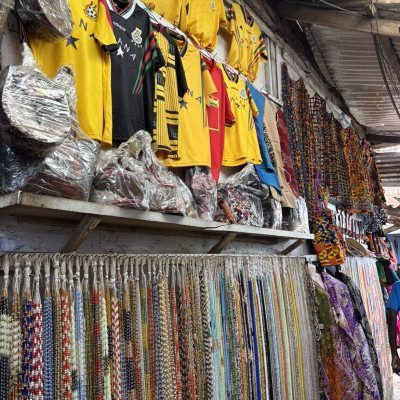
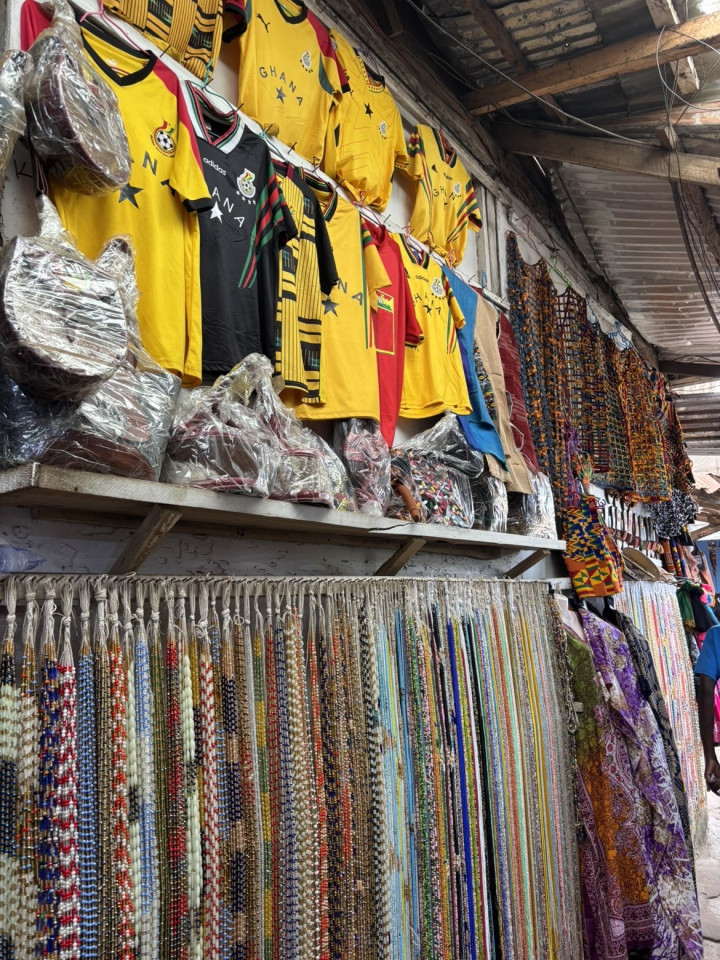
After we left the hospital, the group decided we wanted to go shopping in Accra at the cultural center. I love shopping back in the United States, as I’m sure my parents would agree, so I was excited to experience this in a new place and be able to compare Ghanaian shops with ones in the United States. This experience is not at all what I had expected. I assumed a ‘cultural center’ meant one large gift shop; however, it was instead multiple small shops with different vendors and items. People approached us eager to show us their merchandise, art, and decorations. There were so many different items to pick from, so it was all very exciting. In our time at the cultural center, we were also able to practice our bargaining skills.
In Ghanian culture, at the market customers haggle with the vendors back and forth till they reach an agreed price. This is considered polite and the way of doing things, however I have little to no experience haggling. Looking at someone in the face and asking for a lower price, especially when the item is hand-made and we are in a developing country, made me feel very guilty. As I expected, I was not a great bargainer, so I had to recruit my friend, Dani, to help me argue for my desired products. In our time at the cultural center, I purchased a wooden zebra and a silver bracelet. Dani and I were able to negotiate my wooden souvenir down from 300 cedis to just 170 cedis.
After the cultural center, we drove back home to Mampong and had our final serving of egg stew as a group. Egg stew is a stew in which either hard boiled or scrambled eggs are put in a sauce with sauteed onions, tomatoes, and bell peppers along with spices. It is commonly served with rice, boiled yam, or banku. Egg stew with white rice is my favorite Ghanaian meal, so it made me sad to realize it would be a long time before I had it authentically prepared again. I’ve asked local friends about its preparation, and many of them have reassured me it is very simple and quick. They have inspired me to attempt this dish at my own house, and I’m very excited to give it a try and even introduce it to my family and friends.
-Katie McIntyre
Behind the Operating Room Doors
July 17, 2026
Some of the most memorable moments from my time in Ghana came during my two days in the Level 2 Surgery Unit and the Labor Ward at Greater Accra Regional Hospital. Over those two days, I witnessed procedures and experiences that I had only ever heard about, giving me a completely new appreciation for medicine and the people who practice it every day.
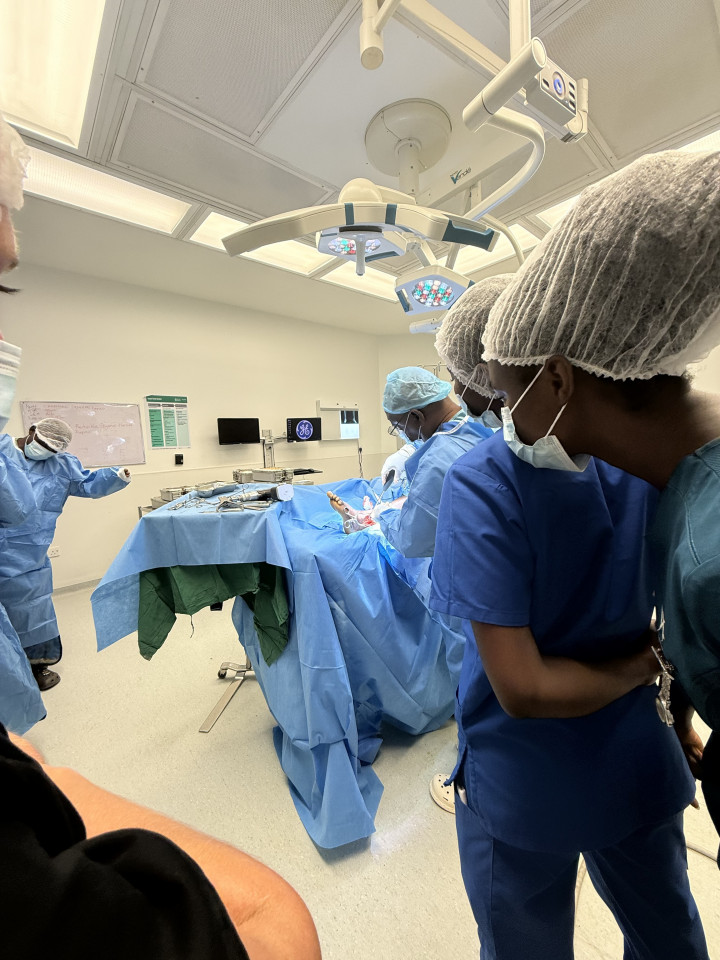
Our day in the Level 2 Surgery Unit began by meeting Nurse Felicia, who warmly welcomed us before introducing us to Nurse Nadia and five nursing students beginning their two-week rotation. Nurse Nadia gave us a tour of the operating theatres, including gynecology, orthopedics, neurosurgery, ENT, plastics, and general surgery, along with the holding bay where patients wait before surgery.
We observed four different surgeries that day, each one completely different from the last. My first surgery was a bilateral salpingo-oophorectomy for a woman with endometrial cancer. I had never seen inside a living human body before, so watching the surgeons make the first incision with such confidence and precision was surreal. Seeing the uterus removed and placed into a bowl was something I never expected—it was much larger than I had imagined.
Next, we watched a fibula fracture repair. It was incredible to see every layer of the body leading down to the bone before the surgeon inserted a rod and screw to stabilize the fracture. The third procedure was an umbilical hernia repair. The surgeon explained that the hernia was caused by tissue pushing through a weak area in the abdominal wall near the belly button. During the operation, the tissue was carefully pushed back into place, and the weakened muscle was stitched closed to strengthen the abdominal wall. Our final surgery was an anterior colporrhaphy to repair a bladder prolapse. Watching the surgeons reposition the bladder and reinforce the surrounding tissue was another anatomy lesson that no classroom could have prepared me for.
Just as memorable as the surgeries themselves was the attitude of the surgical team. Every surgeon encouraged us to ask questions and took time to explain what they were doing, often turning around in the middle of surgery to make eye contact while answering us. They never made us feel like we were in the way, despite how busy they were.
The following day in the Labor Ward brought another unforgettable experience. After a quiet morning with no patients, we met Gordon, a scrub nurse whose sense of humor immediately made us laugh. He jokingly told us he was going to marry our friend Jordan before inviting us to observe two scheduled Cesarean sections.
Before the first surgery, I witnessed my first surgical time-out. The team introduced themselves, confirmed the mother's identity and consent, discussed estimated blood loss, verified that blood was available if needed, and ended with a short prayer. It was a simple but meaningful reminder that every patient deserves careful preparation and teamwork.
Watching my first birth was something I will never forget. Seeing the baby still inside the mother's uterus was unbelievable, and I had no idea how much strength it takes to deliver a baby during a C-section. It took three people working together to gently lift the baby out. A few moments later, hearing the baby's first cries filled the room with excitement. Watching the placenta being delivered afterward was equally fascinating and reminded me just how remarkable the human body truly is. The second C-section followed a similar process, but it was every bit as exciting as the first.
These two days gave me experiences I never imagined I would have as a student. I am incredibly grateful to the surgeons, nurses, and patients who welcomed us into their operating rooms and allowed us to witness such meaningful moments. They deepened my appreciation for medicine and confirmed that this is the path I want to pursue.
-Mary Hanna Hiers
A Different Side of Pediatric Care
July 17, 2026
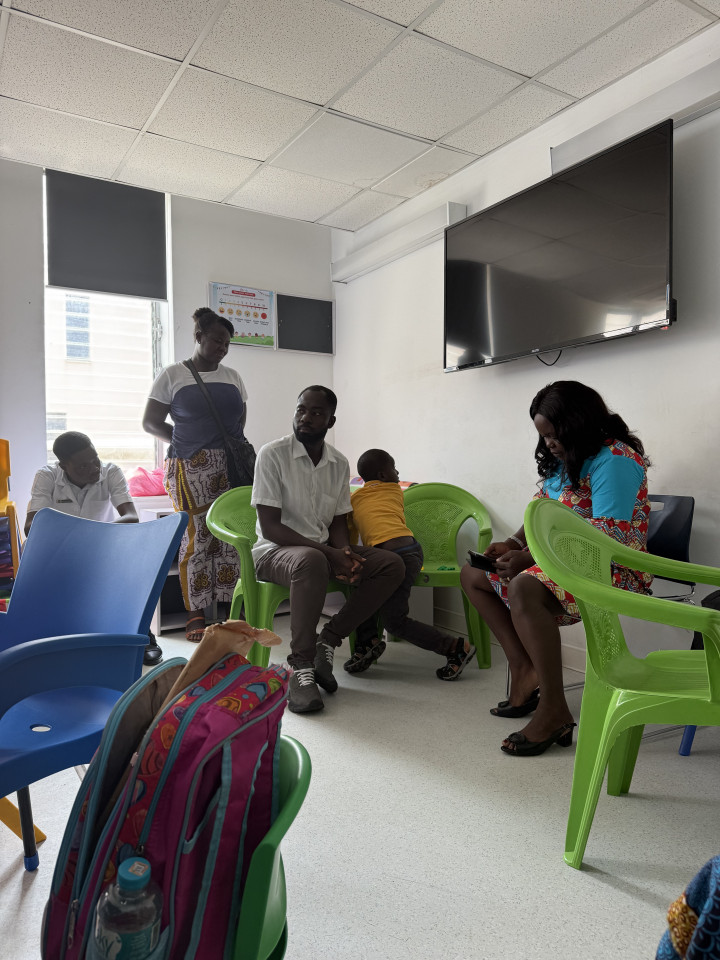
My day in pediatrics gave me the opportunity to see a completely different side of healthcare. Taylor and I spent the day shadowing medical officers and the pediatrician, Dr. Brew. We worked in the playroom, which served as both a place for the children to play and a treatment room where the staff could observe their development and work on specific skills.
Our day began with a fun activity involving corn and palm leaves. Taylor and I joined the medical officers, nurse, and doctor in filming a demonstration for parents to watch with their children. First, we had to shuck corn, which was much harder than it looked. It was obvious that Taylor and I had never done it before because we were the last ones to finish. We struggled our way through it and gave everyone a good laugh. Next, we stripped palm leaves until only the hard, firm parts remained. This was much easier and almost therapeutic. We eventually tied the pieces together to create a surprisingly nice broom.
The purpose of the video was to show parents simple activities they could teach their children to improve their motor skills while also helping with basic chores around the house. I loved how the staff used ordinary household activities as practical learning opportunities for children.
Afterward, one of the medical officers gave a presentation about jaundice in newborns. Jaundice occurs when bilirubin builds up in a baby’s blood, causing the skin and eyes to appear yellow. It is common in newborns because their livers may not yet be developed enough to remove bilirubin effectively. We had already seen babies with jaundice in the NICU, so it was interesting to gain a more in-depth understanding of what we had observed. Toward the end of the presentation, children began running into the room, so the medical officer had to wrap it up quickly.
Once the children arrived, the staff divided into groups to work with them. Dr. Brew worked with a young boy who needed additional help with listening, following directions, and interacting with others. She gave him blocks and asked him to complete certain tasks. She also repeatedly asked him to sit down. At first, he resisted, but through consistent correction and encouragement, he improved by the end of the session.
Two medical officers worked with a young girl by asking her to feed a baby doll and identify the mother and baby in a picture book. The other children completed similar activities focused on communication, listening, and basic developmental skills. Each child was experiencing some developmental delays but mainly needed extra attention, structure, and practice to help them progress.
Dr. Brew explained that developmental differences can have several possible causes and that careful observation is important before reaching a diagnosis. She emphasized spending time with each child, understanding their environment, and teaching the skills they may not have developed yet. Her perspective was not that autism should never be diagnosed, but that children should receive a thoughtful evaluation rather than being defined too quickly by a label that may carry stigma.
Dr. Brew was incredible to shadow. She was loving and patient with the children while also being firm and honest with their parents. She did not sugarcoat what needed to change, but it was clear that everything she said came from a place of care. She reminded us that progress takes time, consistency, and attention—and that each child deserves the chance to develop at their own pace.
-Mary Hanna Hiers
Finding Americans in the OR
July 17, 2026
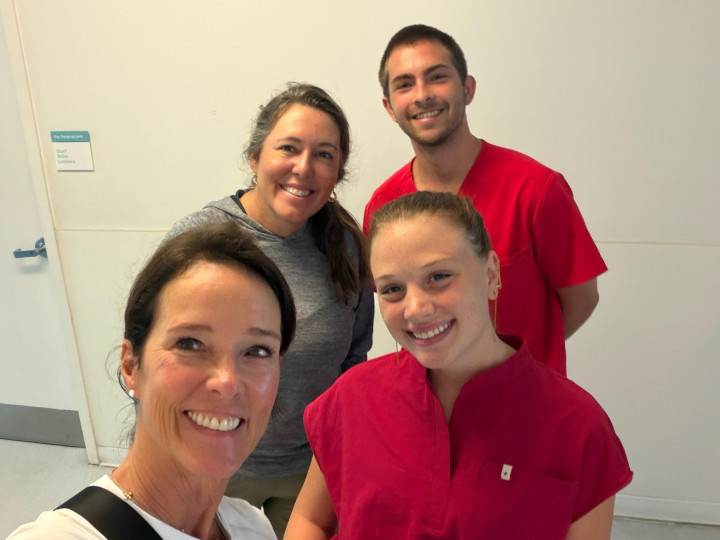
On Tuesday, EK and I were in level 2 surgery. While we were walking into the ward in the morning, we ran into three Americans who were headed in the same direction. They told us that they were volunteers with the non-profit Alliance for Smiles. We talked with them while the surgery ward was still opening, and found out that one of the women, Tina, was from Bluffton, South Carolina, and the other, Amber, was from Alpharetta, Georgia. After talking a little more, I found out that Amber lived in my hometown of Savannah years ago. We found out that she was living about 5 minutes from my house.
Chris, the surgeon, told us that he is a pediatric plastic surgeon based in Portland, specializing in cleft lip and palate surgeries, and that he travels around the world with Alliance for Smiles, fixing cleft lips and palates. He told us that we were welcome to come into surgery with him once he started, but he was waiting for the Anesthesia team to get the patient prepped and ready. While we waited, EK, Chris, and I went to another surgery room where they were performing a Hypospadias repair on a 1-year-old, a procedure that fixes a developmentally misdirected Urethra. Chris was able to explain to us the Hypospadias procedure that was going on and answer our questions. When the anesthesiologist had Chris’s patient ready, we all went into the room. The surgeries he was performing were follow-ups on cases that the team had performed 18 months earlier. The first surgery was a follow-up on a cleft lip procedure that he had performed the last time he was in Accra that needed adjustments.
After the first surgery, Chris and I walked outside, and he explained to me what he had done. At the same time, a surgeon from the hospital approached him and asked him for an opinion on a case. We walked into an examination room where a one-year-old and her mother were waiting. The patient had undergone two surgeries for a cleft palate, but they had failed both times. Chris suggested a couple of things to try and offered to do the surgery if he had time. When we had finished talking to the surgeon, Chris and I went into the breakroom with the other volunteers, and he explained to me why the patient's case had been complicated and what a typical cleft palate procedure looks like by drawing it out on paper.
The second case was a cleft lip and a facial cleft that pulled the child's eye down. He made an incision under the eye and a few on the lip and stitched the skin to fix them. The final surgery was a cleft palate, and they had to use a device to hold the mouth open to operate. When Chris had finished the incisions, he let EK and me come around the operating table to take a look. Unfortunately, we were out of time and had to leave before the procedure was finished.
On the way out, we ran into Tina again, and she said their organization offers volunteer spots and internships for students. We exchanged contact information so I could reach out in the future.
- Ethan Neall
Finding an Unexpected Purpose in the Smallest of Patients
July 16, 2026
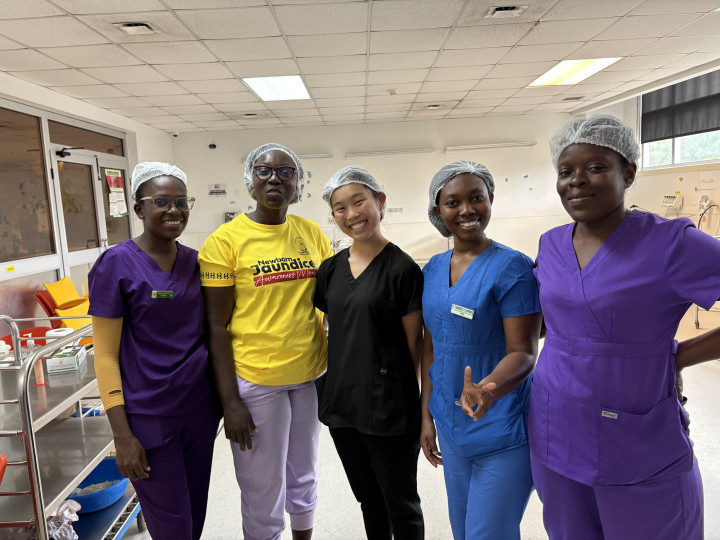
During this last week of shadowing in Ghana, I had the wonderful opportunity to shadow in the neonatal intensive care unit (NICU) of the Greater Accra Regional Hospital Ridge. This experience opened my eyes to a possible direction in my career I had never really set my sights on before: neonatal care.
When I initially entered the NICU, I was very nervous about what the circumstances would be like. Still, I was lucky to meet some amazing nurses, Rhoda, Sakythea, Doris, and Freda, as well as student nurses, Rebecca, Alice, and Amina. They made me feel so welcomed and demonstrated the patience and compassion behind caring for these tiny patients and reassuring their mothers.
There were several babies in the room, each placed in a different section of the ward based on the stability of their conditions. I was able to learn more about each of my little patients and take their vitals. I saw conditions I had only seen in textbooks before, such as spina bifida and cleft palate, and it felt much more personal to see them firsthand. Spina bifida is a neural tube defect in which the spine fails to fuse properly, creating an opening in the spinal cord. In this baby’s case, she had a meningocele, and I learned that her mother was only 20 years old, and this was her first baby. I could only imagine how difficult this must be for the mother, and it broke my heart to see the mother of the cleft palate child across the room quietly sobbing, watching the other mothers breastfeed their children. A cleft palate is an opening in the roof of the mouth caused by improper development as a fetus. The baby had a rare type involving the lower palate, making it very difficult for her to breastfeed and requiring her to eat through an orogastric (OG) tube.
Once the babies were all fed, it was time to burp them, and I had the chance to hold one. As soon as I carefully supported her head and held her against my chest, my heart melted. She was incredibly adorable as she let out little yawns while I gently patted her back. I was able to discuss her mother’s situation and reassure her that her baby appeared stable based on her vitals. It was likely that the baby would be able to go home pretty soon. Being able to connect with the mothers and the little precious bundles of joy was a different feeling. They hardly weighed anything in my arms, but the weight they carried was far greater than their size. Each tiny body held all their family’s love and hope. Before long, it was time to leave the ward.
Working as an interfacility transfer emergency medical technician back in America, my usual patients were adults and geriatrics, so I had little experience with infants. To me, they were just so fragile. However, when I saw the mothers’ sighs of relief, knowing their babies would be in good hands, and the babies’ satisfied smiles as they slept, I felt a new sense of appreciation and purpose in caring for these vulnerable and precious bundles of joy, a feeling I want to hold on to. It was an unexpected calling, but one I’m grateful to have been gifted with by this trip abroad.
-Rachel Jin
The Power of CocoMelon
July 16, 2026
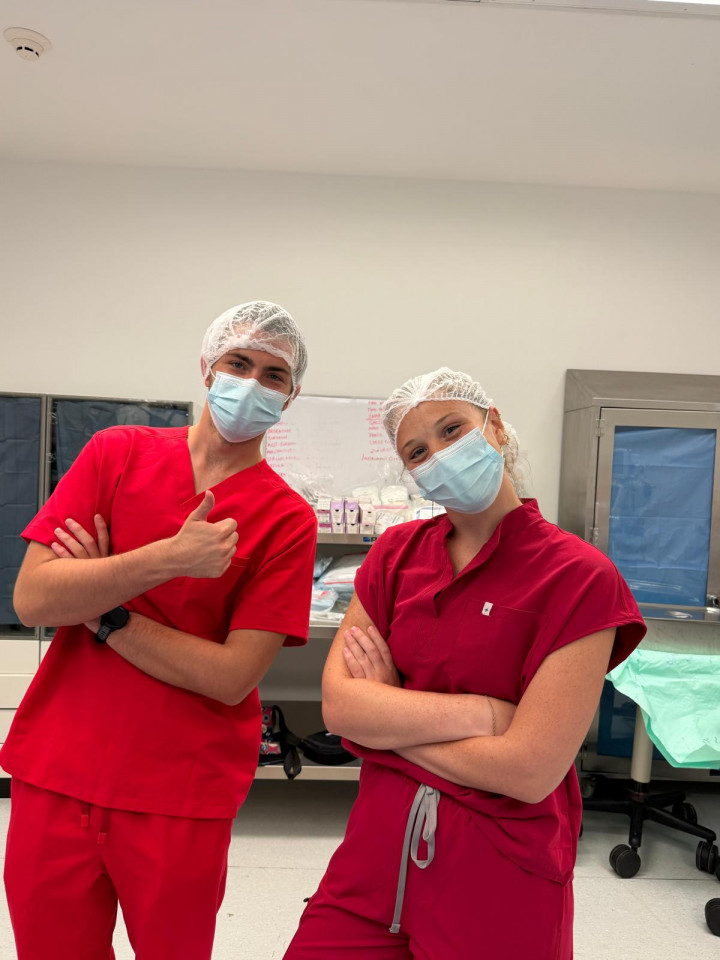
On Monday, Ethan and I were able to go to the Pediatrics Ward to observe the work they did there. In the beginning, we followed around the new house officers and the specialists as they completed their rotations. We saw everything from Steven-Johnson Syndrome to cancer patients and were able to get explanations about the care plan surrounding each patient. One of the things we noticed was how comfortable the children were with walking around the ward itself but also the hospital. They hung out most of the time outside of their room and interacted with the doctors and nurses and other medical professionals who were helping take care of them. Along with this, a lot of the nurses we saw gave fist bumps and hugs or said kind words to the children around them whether it was in the hallway or during rounds. I thought this was so important largely because when a child is sick in a hospital, they often feel discomfort or fear regarding their surroundings and to have the people in charge be kind and go out of their way to interact with them makes them feel less small and takes their mind off of being sick.
Ethan and I are both interested in pediatrics and love working with children so we were excited to be able to interact with them in this unit and make them feel loved even if it just was for a couple of hours. We were able to interact with a couple of patients but one really stuck out to me. For privacy reasons, I will simply refer to him as Patient X. He was a cancer patient in the ward who we found walking around alone. We immediately started engaging with him, giving high-fives and fist bumps and asking them how old he was and his name. Luckily, he spoke a bit of English so communication was easier. Not long after we met, his father walked over to us and both of them sat down next to us. Patient X did not speak much but he was trying to grab my phone from where it sat next to me. I handed it over and allowed him to scroll until he found Youtube. Immediately Patient X knew what he was doing. Their father told us that he loved to watch CocoMelon, so of course that is what I put on. Patient X was immediately entertained.
While Patient X watched and hung out with us, Ethan and I began to speak to the father more about the cancer diagnosis and what the family had to go through. Through this discussion, we were able to learn a little more about how expensive the chemotherapy is and how the government does not give them much assistance. However, the parents do not want their child to go without help so they pay for it anyway. The father then asked to keep in touch with us and we were happy to share our contacts. Overall, it was a very enlightening experience that helped educate me about the Ghana healthcare system especially through the eyes of those experiencing it firsthand and to give a little bit of love to someone who is suffering.
-EK Jordan
Surgical Adventures
July 15, 2026
After a week and a half of anticipation of shadowing at Greater Accra Regional Hospital (also known as Ridge Hospital), I would finally be able to experience what “Level 2 Surgery” is like. My groupmates who have been in Level 2 Surgery described it as a hot zone of activity, with varied, constant surgeries happening all the time. So on the 15th of July, 2026, I would be shadowing in the surgery ward for the first time and I was excited. This was especially exciting as I am more drawn to the surgical and higher acuity side of the medical field, so seeing this would give me a feel for how surgery is like and if it's truly a fit environment for me.
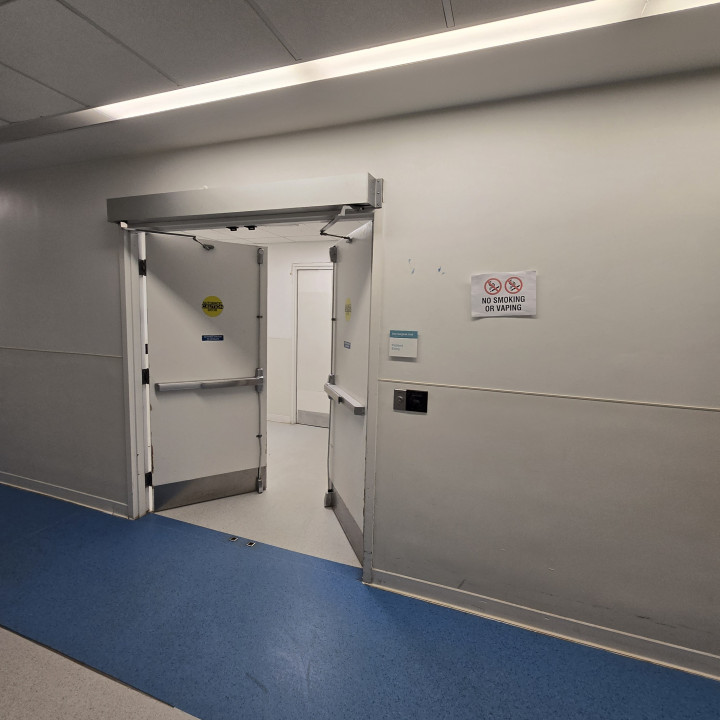
I was shadowing in a group of 3 and once we got in our scrubs, we were given a tour of the ward and told about the surgeries that will take place today. After the tour, we were immediately sent to the first surgery of the day, which was a Myomectomy. We saw everything from the preparation of the surgery, sedation of the patient, the cutting and procedure, and the end with the sewing up of the body. It was an interesting experience as I have seen surgeries before but through a screen, so I was expecting to feel a certain way in-person but I was just watching and taking it all in. After that surgery, we witnessed two orthopedic surgeries till we learned about an interesting surgery taking place.
That interesting surgery was Cataract Removal and I was especially interested as the eyes seem like such a unique part of the body to work on. I wasn’t wrong thinking it’d be a unique body part to work on as I saw a masterclass in precision and technique from the eye surgeon. She was swiftly working and giving orders to her assistants while she was using the tiniest of tools on the patient’s eye lens to drain out the cataracts. It was genuinely beautiful to watch and wish to become as proficient in the tools I will use one day as her. Going back to the Orthopedics surgery, the one that I was most interested in was the removal of a metal rod from a patient’s leg. It was entertaining to see the use of a hammer to slowly take it out with constant clanking noises. He was hitting it like a sculptor does to a stone statue and I just found it amusing overall.
I would say that today was the best day for me as I was able to see interesting things and get a feel for the environment that I may work in the future. I would recommend anyone interested in the medical field to shadow in a surgery unit at least once to see whether they like it or not. If it’s not a good fit for you, it really is still an eye opening experience to see the wonders of medicine and technology today.
Maximiliano Villeda-Macias,
My First Surgery
July 15, 2026
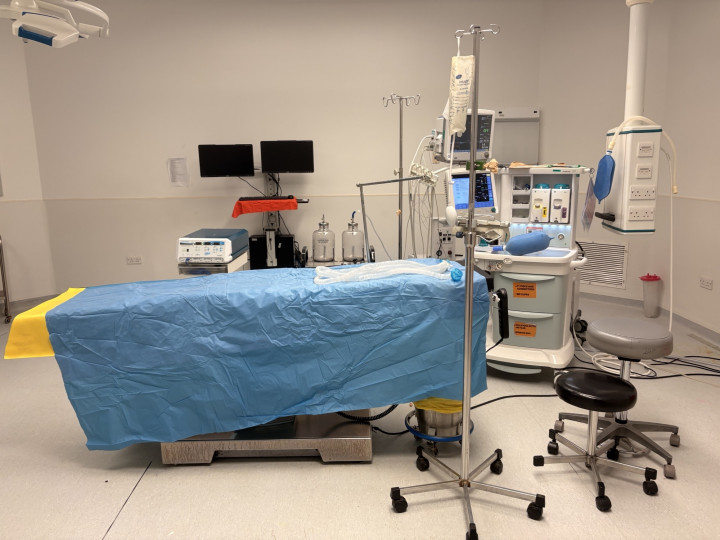
On July 13, I had the opportunity to observe surgery in the 24-hour surgery ward with Nhyiraba. This ward is reserved for emergency surgeries only, so it can be hit or miss. Luckily, we did get the chance to witness a laparoscopic drainage of an intra-abdominal abscess on a pediatric patient. This is the first surgery that I have ever seen, and it will always stick with me for multiple reasons.
First of all, the nature of how the patient received this complication was very heartbreaking to me and really hit home. An intra-abdominal abscess is essentially a pocket of fluid (pus) walled off by tissue and can be located anywhere in the abdomen. Common reasons to develop this are appendicitis, Crohn’s disease, and blunt trauma (among others). Unfortunately, our patient, only 10 years old, was in this position because of blunt force trauma. One of the nurses informed me that he had developed this abscess due to being severely bullied at school. His peers beat him repeatedly and had put him in this position. I asked why they would do this, and the nurse told me that it was simply due to this child outperforming academically in comparison to his peers. He was at the top of his class and received a lot of attention from the teachers, and this caused them to become jealous of him. I immediately had to hold back tears and compose myself. I had also been bullied in school at his age and had trouble getting along with a lot of my peers, so I was really able to put myself in his shoes. In that moment, despite our geographical, cultural, and age differences, I saw myself so much in this patient. I prayed to myself that he would be alright with no complications and continued to try to observe the surgery objectively.
As I continued to observe the surgery, I realized a few things about myself. I was really nervous that the sight of internal organs, fat, and tissue would bother me. However, I soon realized that the sight of this all did not bother me – not one bit. I was able to view the initial incision and subsequent drainage of the abscess with ease. What bothered me, though, was the smell. Once they cut into the abdomen, they had to cauterize the blood vessels. I was immediately overwhelmed by the smell of burning flesh. It was the most pungent, sickening odor I have ever smelled in my life. I was taken aback and had to mentally talk to myself through not walking out of the operating room. I had been throwing around the idea of possibly being a scrub nurse (alongside ICU and labor and delivery nursing), but after this experience I do not think that I will pursue this. Unless I can overcome my aversion to the smell, I doubt that I will be in the OR for the foreseeable future. I am glad to know that the sights did not bother me, though!
- Emma Carr
Everlasting Scars
July 15, 2026
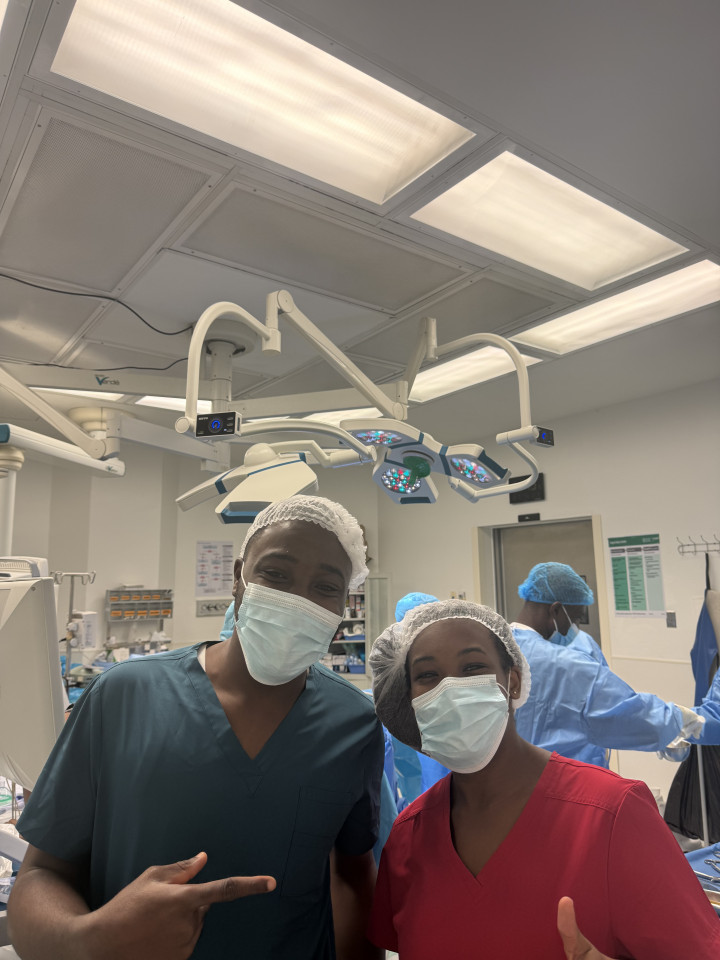
One day, I was in the Burn Unit with Katie. Seeing the patients bandaged up with tubes attached to them, completely dependent on others for basic tasks, moved me in a way that the Level 2 Surgery rotation never could. Papa Nurse asked Katie and me to help a patient who goes on her daily walks around the unit. We approached her—a 35-year-old woman hospitalized due to a gas explosion that had left her with burns from her ankles to her knees, all over her arms, and on her face—and prepared her for her walk. She seemed frustrated, but in a defeated sort of way, because she kept having to tell Katie and me how to fold her sheets and tie them around her—things she wouldn't have to think twice about outside the hospital. She kept shaking her head in disapproval of herself and her condition. Once we finally started walking, the dragging of her feet reminded me of my late grandpa, and the way she talked sounded like myself when I spoke about my interests.
When she opened up about how she developed her passion, it was strikingly similar to mine. When she was around my age, she took Biochemistry, Anatomy, Chemistry, and most of the pre-med prerequisites. She wanted to work in a hospital and become a doctor, but after volunteering at a hospital, she realized her true passion was food. That led her to dedicate her life to work almost equivalent to the U.S. FDA—but in Ghana. As she talked about her life story, I almost started crying. She sounded so defeated, as if this hospital stay was her "new life" now—one where she feared she'd never leave and never get her old self back. I wanted to ask her what happened, but she mentioned that being in the Burn Unit gave her constant flashbacks to the explosion. It hurt too much to talk about, and she tried to forget it as best she could. I didn't ask because I didn't want her to open up and then leave later—I couldn't bear the thought of her reliving that pain just for me to walk away afterward. Later, the nurse told me that on June 16th, she had been all alone when the gas explosion occurred, giving her second- and third-degree burns. She had only a 20 percent chance of living, yet, 32 days later, she is walking and talking.
When I heard about the time of the incident, I remembered that we were at Mole Park. It put into perspective that even people from my own family could be going through a life-changing event—all alone—while I was just blissfully unaware. Seeing her in that condition made me think of all the irresponsible things I have done in my life: driving at 3:00 a.m. (knowing that's when drunk people drive, according to my mom), neglecting my medical health for 14 years, and staying out of my way when I had no business doing so. Every time I looked at her face, I couldn't see her—I kept seeing one of my family members' faces replacing hers, and then eventually mine. At that moment, I was reminded that I can wake up one morning unaware of a fate I cannot escape.
–Dani Domkam
Still Time to Learn
July 15, 2026
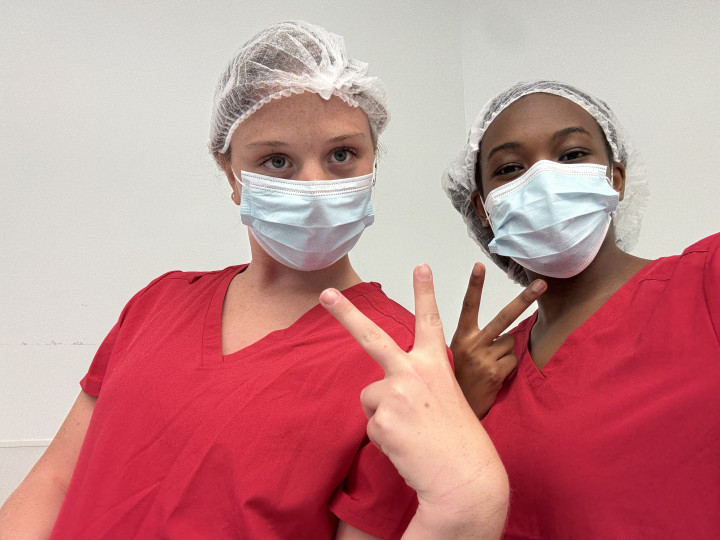
Originally, I had my sights set on Orthopedics and Maxillofacial Surgery. But watching those surgeries in person was grueling—intensive, demanding, and frankly, not something I could see myself enjoying day after day. I realized that my interest in those fields was more intellectual than practical, and observing them up close helped me understand that admiration for a specialty doesn't always mean it's the right fit for me.
I went into orthopedic surgery with high interest. The procedure looked incredibly intensive and time-consuming—obviously. Watching the surgeons have to use a great deal of strength and effort to align a bone into place, something they didn't have to do in gynecologic surgery, really put me off. At that moment, I realized the specialty was not for me. The smell didn't help either. They used a tool that seals blood vessels to prevent the patient from profusely bleeding during surgery. This tool essentially "burns" them sealed, filling the room with the scent of flesh and smoke. Honestly, I was not prepared for the smell, and it grossed me out.
The next day, I watched maxillofacial surgery. I couldn't see the procedure very well because three surgeons were hovering over the patient. Still, the surgery didn't interest me at all. I didn't like the sound of the doctors cracking the patients' teeth. I'm honestly thankful I saw that, because for that specialty, you either go to dental school or medical school, and I had been on the fence about which one to apply to. Now, I am definitely going to apply to medical school without any lingering regret.
As I was watching the anesthesiologist, I could see myself doing that job more in the future. Dr. Alejandro, an anesthesiologist, was present both days I spent in the Level 2 Surgery Unit. I watched him give patients their shots, then step out of the room. He would return later, check on the patient, and then move on to do the same in other operating rooms. I know his job is undoubtedly stressful and carries immense responsibility—but from my perspective, it appeared less physically and mentally taxing than the other surgical roles I observed. He moved with a quiet efficiency, never rushed, always in control. That observation made me more open to anesthesiology than I had ever been before coming on this trip. It wasn't just the pace that appealed to me—it was the precision, the calm presence, and the ability to make a critical difference without being consumed by the intensity of the operation itself.
–Dani Domkam
A Sunday of Worship and Friendships in Ghana
July 13, 2026
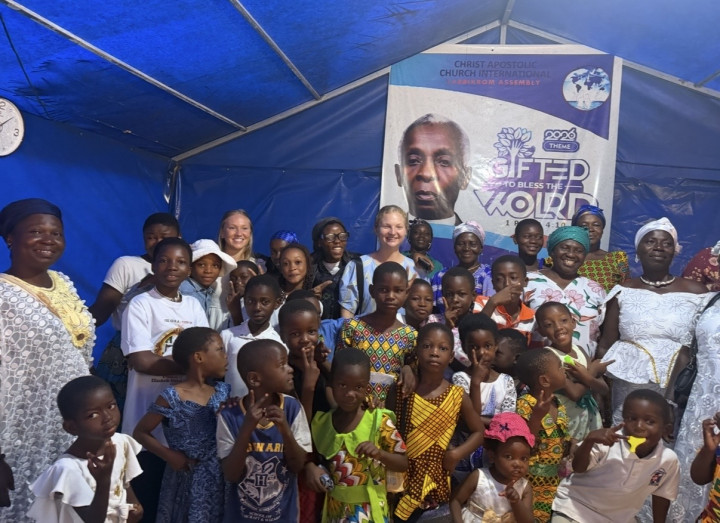
As you may have seen in other blog posts, a few of us have become friends with a large group of local children. We try to visit them throughout the week. On Friday, we packed up our remaining toys and headed to their family compound. As soon as we arrived, their faces lit up with excitement. Clara was especially happy to see us because she had a surprise for each of us. She ran back to her house and returned with single-serving cups of ice cream. It was a wonderful surprise. In fact, many of us had been talking about how much we wanted ice cream once we returned to the United States, making the treat even more meaningful.
After exchanging gifts, we met a new friend named Princess. She was 22 years old and the mother of three of the young children we had grown close to during our time in Ghana. Princess and Clara invited us to see their new church, and Mary Hanna and I quickly accepted. They explained that they had previously attended the large church visible from their home, called Lighthouse Church, but had recently begun attending a much smaller congregation which they have helped start up.
As we walked behind their homes, they led us to a small shed-like building that served as their church. They unlocked the door and proudly showed us around. Before we left, they invited us to attend the Sunday morning service at 7:00 a.m. Of course, we gladly accepted.
Sunday morning arrived, and I was awake before 6:30 a.m. Mary Hanna and I put on our dresses and walked to the church, which was only a short distance away. When we arrived, we noticed many of the children were still wearing their night clothes while completing their morning chores. Clara came running out of her house, ecstatic to see us. She laughed and said, "You are early!" Mary Hanna and I looked at each other, realizing we should have expected this. Dr. Anderson had mentioned several times the concept of "Ghana time," referring to the relaxed cultural perspective on punctuality. In Ghana, arriving late is generally not considered rude or disrespectful. We asked Clara just how early we were, and she explained that church would not begin until sometime between 8:00 and 8:30 a.m. She invited us to wait inside the church while everyone finished bathing and getting ready for the service.
Around 7:40 a.m., we realized we were getting hungry, so we walked back to the house for a quick snack. Shortly after 8:00, we returned to the church. By then, everyone was ready, and we were greeted with open arms and warm smiles. The pastor, Samuel, did an excellent job speaking in both Twi, the local language, and English. He also explained each part of the service, which I greatly appreciated because I had never attended a Pentecostal church before.
Throughout the service, we sang hymns in both Twi and English, participated in a Bible study recap, and listened to a sermon about sacrifice. The pastor explained that true sacrifice requires a willing heart and pure intentions. He emphasized that genuine sacrifice involves giving up something of value in order to strengthen one's relationship with Christ. The service continued with more singing, dancing, and the offering. At the end of the service, the young girls we had been visiting performed a dance they had learned only the day before. Watching them perform was a joyful reminder of the love and support within their community. The kindness they showed us throughout our visit made us feel truly welcomed and included. We are grateful they wanted to share such an important part of their lives with us by inviting us to their church. Although we will be sad to say goodbye and return home, we know that next year's group will be welcomed with the same love and generosity that we experienced, bringing the girls just as much joy as they brought us.
- Taylor Chesser
The Breathtaking Ghanaian Naming Ceremony
July 12, 2026
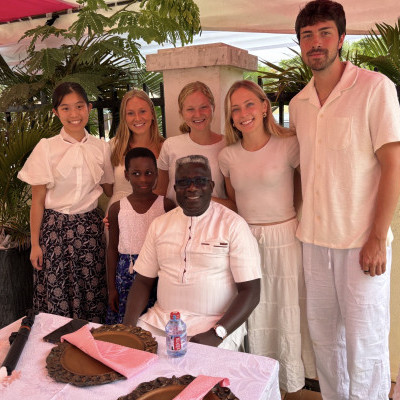
About a week ago, Dr. Anderson presented us with an opportunity to go to a traditional Ghanaian naming ceremony at one of his highschool friend’s houses. With knowing absolutely nothing about what that might entail, I agreed to go. Little did I know that it would genuinely turn out to make one of my favorite days of this entire trip. On Saturday, July 11th, Fender, Fender’s daughter Afia, and Dr. Anderson led Carlton, Rachel, Taylor, Mary Hanna, and I to Accra for this ceremony to officially name little Jayda.
Immediately, we were greeted with the most welcoming smiles and hugs by Elfreda and Gertrude. Elfreda (baby Jayda’s grandmother) and her husband Stephen (Jayda’s grandfather) hosted the ceremony and the after party at their breathtaking house. The front yard was enveloped with pink and white decorations for the six week old baby girl. It was filled with beautiful balloon archways, chairs covered with white roses, elegant pink canopies, huge bouquets of white and pink flowers, and so much more. It was clear how cherished baby Jayda already was, and it was truly captivating how much effort each person put into the event. Jayda’s parents, Stephanie and Kobby, have an amazing village surrounding them, and it was clear how Jayda has the same. Dr. Anderson has told us from the beginning of our orientations how community oriented Ghana is, and it was completely evident at this ceremony.
Just when I was marveling at how impressive the decorations were, the family continued to blow me away with the food and drinks they treated us with. Our starters were a delicious mixture of plantain chips, flour chips, and salted peanuts and we had the option to choose from a huge variety of drinks. Our lunch was jollof rice, fried rice, Kelewele, shito, and a delicious salad. On our way to the ceremony, Dr. Anderson told us that the family went the extra mile to make us feel welcomed. He was completely right. They set up a table full of delicious wines, drinks, and sodas just for our group. We were checked up on every 10 minutes and made sure our bucket of ice was never empty (this was also the first time we have had ice the whole trip so that was a wonderful surprise). We truly were taken care of so well.
As amazing as the food and decorations were, the most incredible part of the experience was the company and the atmosphere. It seemed once every single guest entered the gate to this ceremony, all of their worries were left at the door. There was not a single moment of negativity, and it was clear that every person at the ceremony was there to celebrate Jayda and her family, and to have a good time. With kids running around inside giggling, music blasting outside, and no lulls in conversation, the air was filled with joy. We sat with Dr. Anderson and his high school friends, who showed us old videos of him and told funny stories. It was clear how it did not matter how many decades passed since high school, or how far apart any of them lived from each other. Their friendships seemed so pure and full of love- and it was a good glimpse into what truly matters.
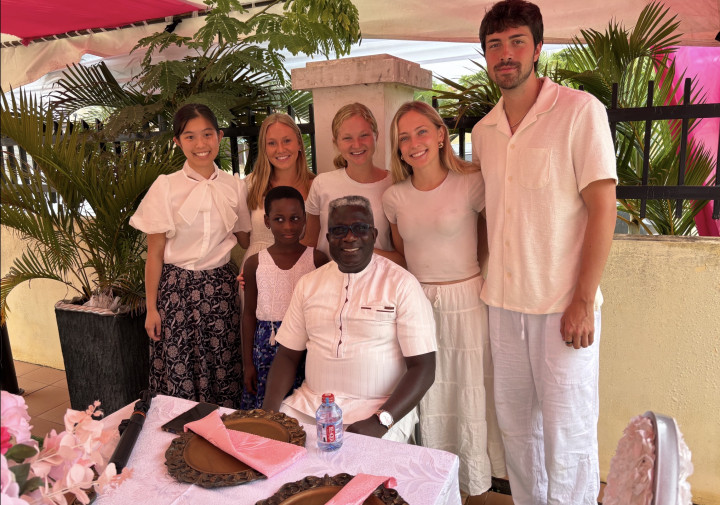
After begging Dr. Anderson to let us stay longer at the ceremony, we were able to fit in a little more conversation and a little more dancing. I gained a new friend in Theodora (one of Dr. Anderson's lifelong friends) and we decided that we would now be best friends. We ended our time there with a big group picture and were sent off with generous to-go meals and promises to see each other again. After experiencing the pure joy in those 6 hours, I feel extremely honored to have been a part of their special day. Not only do I have a new appreciation for the value of supportive communities, but I have a new will to make everyone I meet feel as important and included as Elfreda and her family made me feel.
- Jordan Nowicki
One More Weekend
July 10, 2026
With only one more weekend left on this wonderful trip abroad, and this chapter of my life I call college, I found myself feeling a mix of emotions. I was so tired but also so grateful for this truly once-in-a-lifetime experience in Ghana. Over the past couple of weeks, I’ve created so many incredible memories, seen places I never imagined going, and truly learned more than I ever expected before this trip. Time was passing by so fast, and I caught myself stepping outside to hold onto the moments just a bit longer.
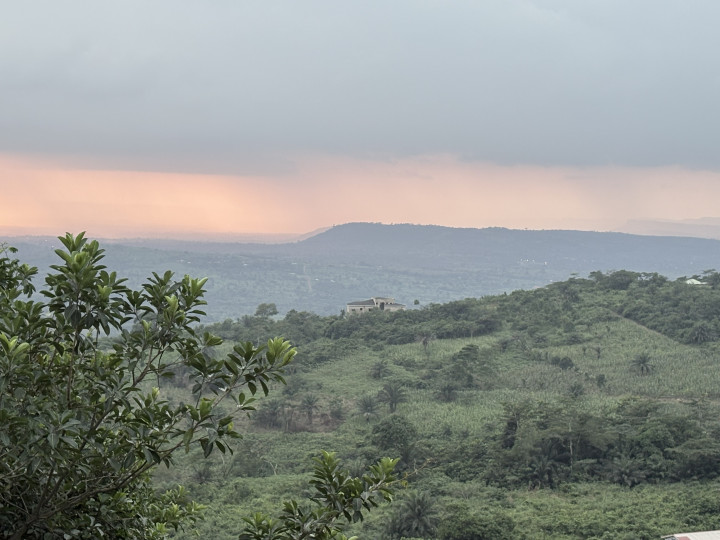
As I sat on a small ledge outside our homestay, letting my feet dangle over the edge, I breathed in the fresh air and let myself enjoy this very moment.
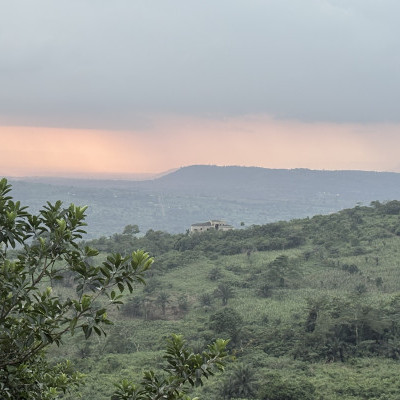
Before me, the sun was setting behind the rolling green hills, painting the sky with beautiful streaks of soft orange and pink. A lone house rested on top of a hill in the distance. The scene was oddly poetic. Behind me, I could hear the laughter and chatter of my classmates inside. I watched as the swallows then glide across the sky with a sense of lightness I both envied and admired.
A gentle breeze brushed against my skin and rustled the trees around me. The sky had now turned a foggy blue as the clouds dimmed the world for night to come. The birds had returned to their nest nestled right under the balcony above me, and the symphony of crickets had slowly gathered. I realized I don’t remember the last time I had let myself simply sit outside and enjoy the world around me. There were no cars honking, no bright city lights, and no one dragging me to do something. I was simply a visitor in their world.
For a little while, nothing else seemed to matter.
And then a thought hit me. I will never be 22 in Ghana on this study abroad again.
Yet, the world continued on without a care. I may revisit Ghana when I’m older, but things change fast. The place will be much different than how it was before, and I most definitely will not be with the same group of people again. Time had moved so slowly in the beginning when we first arrived, and now it was disappearing in the blink of an eye. From complete strangers to living together and actually bonding with one another, I realized I had spent more time with these people than I had ever spent with even my close friends. Traveling abroad has a way of changing a person in ways I would have never imagined.
It was bittersweet. I sighed and took a deep breath before standing up from my spot on the ledge, taking one last look at the view before me. I think I really enjoyed this trip, and I’ll remember this one quiet evening in Ghana, when time slowed down just enough for me to look back and appreciate all I've been able to do.
- Rachel Jin
Being Accused of Witchcraft
July 10, 2026
This past week my study abroad group and I had the opportunity to observe at Greater Accra Regional Hospital. Through this opportunity I was able to shadow the Intensive Care Unit (ICU), Pediatric Intensive Care Unit (PICU), Neonatal Intensive Care Unit (NICU), Emergency Department, Surgery, and Burn Unit. Seeing different departments each day allowed me to see and learn so much about a variety of topics. The day that stood out most to me was Tuesday, when Dani and I shadowed in the ICU.
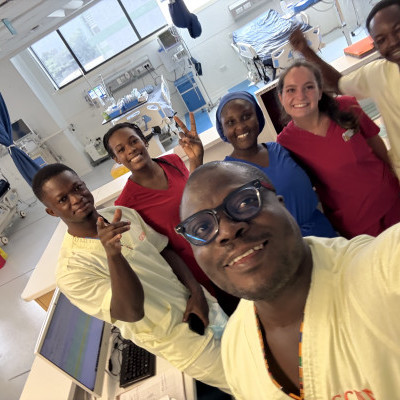
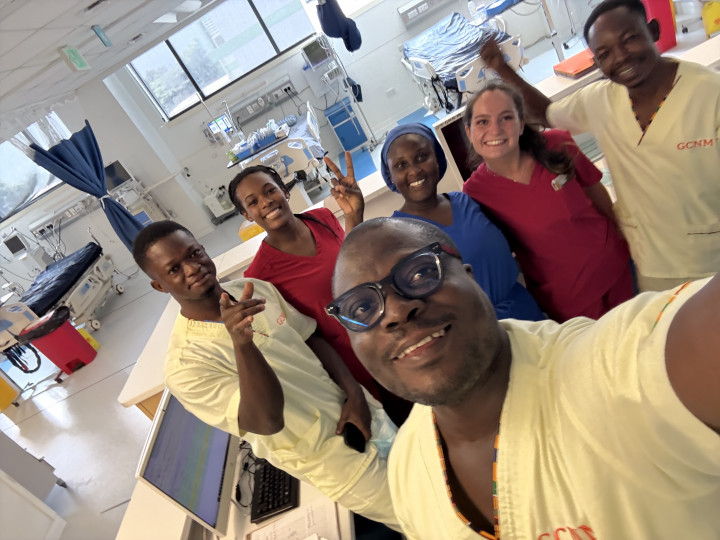
When we began observing in the ICU, Dani and I were greeted by nurses Gloria and Anistasia. As the day progressed, Dani and I grew closer to Anastasia, and we had such an enjoyable time with her despite the ICU being a little slow that day. We also grew closer to three nurse residents working in the ICU, Paul, Philip, and Richard. We talked with them for a long time about the differences between the United States and Ghana. I pointed out that American society is a lot more individualistic, whereas Ghanaian society is community focused. I explained that this made Ghana feel more welcoming and positive than the United States. Paul then asked me what new things I’ve learned while I’m here that I am going to take home with me. This conversation really stuck with me because I’ve been doing lots of personal reflection on how positivity and hospitality can have a huge difference in interactions with others, even if they are brief or with a stranger. The people in Ghana are never scared to wave, smile, and make sure you know you are welcome in Ghana as a foreigner. This makes interacting with everyone so enjoyable and uplifting. Small moments like these have been some of the most memorable experiences of the whole trip for me. I know I want to bring Ghanaian hospitality back home with me to the United States.
Right before parting with Anistasia, Dani and I wanted to show off our new knowledge of African games. We showed her that we knew how to play 24611, a fast-paced game involving clapping. When it was my turn, I grabbed her hands, and I shocked her. She was so surprised by the static shock she jumped and looked genuinely confused. I asked her why she reacted this way and she informed me that she’s never experienced static shock before! I tried explaining to her that it occurred through static electricity, but she was very skeptical and instead called me a witch! In many African countries, including Ghana, witchcraft is deeply rooted in culture. Belief in witchcraft remains widespread in Ghana, though individuals’ views vary. Many Ghanaians do not practice witchcraft themselves, but rather lean on it for explanations for everyday life. For instance, some locals will blame witchcraft when any kind of misfortune occurs; such as serious illness, poor mental health, infertility, persistent poverty, and professional failures. So, when I shocked nurse Anistasia and she accused me of witchcraft, I was not insulted by this because I was educated on the culture. If anything, I found this moment amusing.
Eventually I was able to convince Anastasia of the physics behind static electricity by blowing up a latex glove and letting Dani rub it over my hair. Dani and I remained close with the ICU staff throughout the week, and we make efforts to stop by their department to say hello. I am so excited to make more friends next week, learn more, and even have the opportunity to teach others something as well.
-Katie McIntyre
The Abdominal Wall Spindle Cell Sarcoma
July 10, 2026
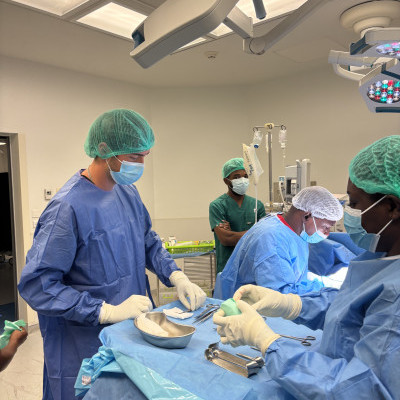
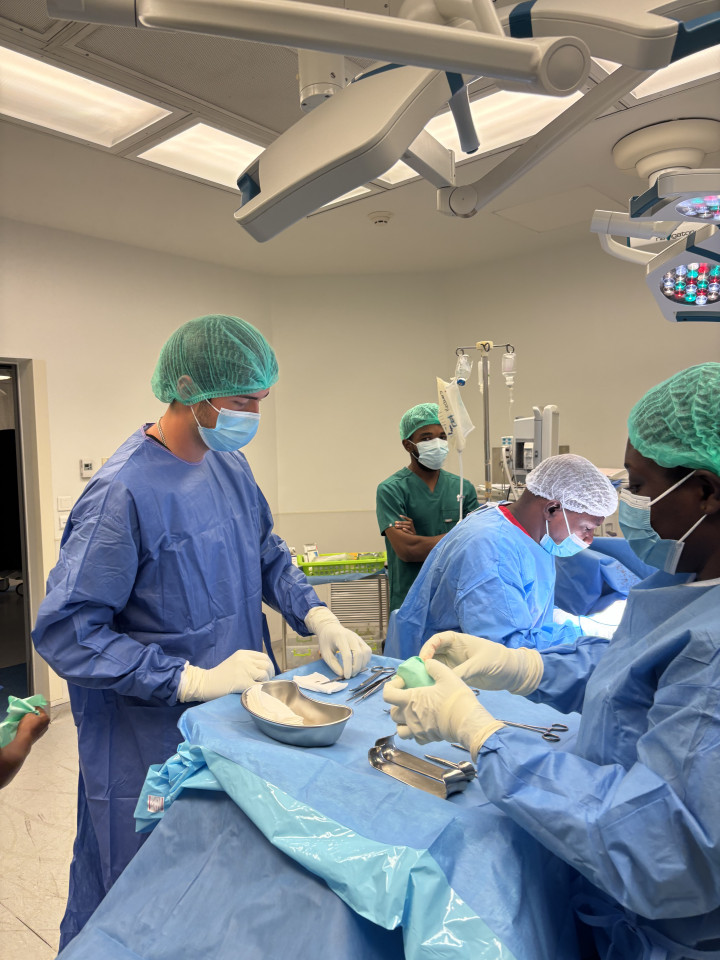
Today, I got the amazing opportunity to scrub in with Doctor Twumasi, the head surgeon, Precious, the assistant surgeon, and Mildridge, my fellow surgical tech at the scheduled surgical unit in the Greater Accra Regional Hospital. The surgery being performed was the excision of an abdominal wall spindle cell sarcoma.
The procedure started with me scrubbing into the surgery, something which I had never done before and foolishly assumed it was easier than it actually was. The entire process was incredibly meticulous, requiring me to do things like wash each of my individual fingers in a certain order and keep my hands raised above my stomach the entire duration. The circulating nurse, Lyn, was thankfully very gracious in teaching me proper aseptic technique, and eventually I was able to stand with the team.
I joined about 20 minutes in, so the surgery was decently underway. The night before this, I had watched over 2 hours worth of videos about basic surgical instruments. My love for wood working and tools lead me to fall in love with the different sizes and types of instruments, with the unique shape of each giving them their own personality. Now standing over the Mayo stand, the once convoluted tray of metal clamps and blades started to make more sense.
Working with Mildridge, I was able to start following along with the logic of the surgery, anticipating which tools the surgeon would probably need next. For example, anytime Dr. Twumasi would use the Bovie electro-surgical blade, he would clean it with the scalpel. I soon started having it on hand for him, even cleaning the tool off myself when I had the chance. I also handed different clamps and scissors for the suturing, which ended up having some unexpected complications.
After the sarcoma was completely removed, there was a moment of stark silence. Everyone in the room stared at the now gaping hole the size of a basketball in this man’s abdomen. While it didn’t strike me right away, as Dr Twumasi grabbed opposite ends of skin and pulled them together, I soon realized that the wound was too big to close. The first attempt to dress the wound consisted of Dr. Twumasi separating the skin from the underlying tissue, trying to loosen it and make it more pliant. This required 3 people, and thankfully he looked to me as his third pair of hands. Using two Babcock clamps, I pulled and held the skin up while he went under and separated the layers. While this greatly improved the situation, there was still no way the wound would close. After about 2 minutes of quick conversation between Dr. Twumasi and Precious, they came up with a plan. Dr. Twumasi called for some nylon tubing, in which he would first suture the two farthest ends of the wound together as close as he could. Then, he would use the nylon tubing to cover the exposed suture, bridging the gap left behind. This worked perfectly, as they were now able to close up the wound from either end, and just leave a small opening in the middle like a suitcase that you can’t quite close.
As they finished the last few sutures, I noticed something creeping up from under the patient's still exposed tissue. It had an entirely different color than the surrounding tissue, something which concerned me and I pointed out to the surgeon. Once again, everyone stopped for a moment and took a deep breath. The man had gotten a hernia, and his intestines were slowly pushing out from under the skin into the open wound. Dr. Twumasi then started undoing the sutures, reopening the wound to fix the hernia. Eventually, the wound was re-closed with no further complications, and was reduced from the size of a basketball to the size of a plum.
Today, I got the amazing opportunity to scrub in with Doctor Twumasi, the head surgeon, Precious, the assistant surgeon, and Mildridge, my fellow surgical tech at the scheduled surgical unit in the Greater Accra Regional Hospital. The surgery being performed was the excision of an abdominal wall spindle cell sarcoma.
The procedure started with me scrubbing into the surgery, something which I had never done before and foolishly assumed it was easier than it actually was. The entire process was incredibly meticulous, requiring me to do things like wash each of my individual fingers in a certain order and keep my hands raised above my stomach the entire duration. The circulating nurse, Lyn, was thankfully very gracious in teaching me proper aseptic technique, and eventually I was able to stand with the team.
I joined about 20 minutes in, so the surgery was decently underway. The night before this, I had watched over 2 hours worth of videos about basic surgical instruments. My love for wood working and tools lead me to fall in love with the different sizes and types of instruments, with the unique shape of each giving them their own personality. Now standing over the Mayo stand, the once convoluted tray of metal clamps and blades started to make more sense.
Working with Mildridge, I was able to start following along with the logic of the surgery, anticipating which tools the surgeon would probably need next. For example, anytime Dr. Twumasi would use the Bovie electro-surgical blade, he would clean it with the scalpel. I soon started having it on hand for him, even cleaning the tool off myself when I had the chance. I also handed different clamps and scissors for the suturing, which ended up having some unexpected complications.
After the sarcoma was completely removed, there was a moment of stark silence. Everyone in the room stared at the now gaping hole the size of a basketball in this man’s abdomen. While it didn’t strike me right away, as Dr Twumasi grabbed opposite ends of skin and pulled them together, I soon realized that the wound was too big to close. The first attempt to dress the wound consisted of Dr. Twumasi separating the skin from the underlying tissue, trying to loosen it and make it more pliant. This required 3 people, and thankfully he looked to me as his third pair of hands. Using two Babcock clamps, I pulled and held the skin up while he went under and separated the layers. While this greatly improved the situation, there was still no way the wound would close. After about 2 minutes of quick conversation between Dr. Twumasi and Precious, they came up with a plan. Dr. Twumasi called for some nylon tubing, in which he would first suture the two farthest ends of the wound together as close as he could. Then, he would use the nylon tubing to cover the exposed suture, bridging the gap left behind. This worked perfectly, as they were now able to close up the wound from either end, and just leave a small opening in the middle like a suitcase that you can’t quite close.
As they finished the last few sutures, I noticed something creeping up from under the patient's still exposed tissue. It had an entirely different color than the surrounding tissue, something which concerned me and I pointed out to the surgeon. Once again, everyone stopped for a moment and took a deep breath. The man had gotten a hernia, and his intestines were slowly pushing out from under the skin into the open wound. Dr. Twumasi then started undoing the sutures, reopening the wound to fix the hernia. Eventually, the wound was re-closed with no further complications, and was reduced from the size of a basketball to the size of a plum.
- Carlton Burns
The Performances in the Level Two Theatre
July 10, 2026
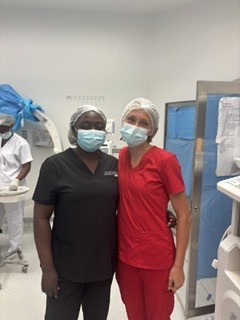
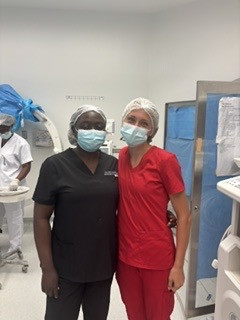
On Tuesday, July 7th, I was able to observe a wonderful performance in the Level 2 theatre at the Greater Accra Regional Hospital. With lead surgeon, Dr. Obeng, leading the show, my classmate Carlton and I observed three fascinating pediatric surgeries. The three procedures were: Fistula Repair, Hypospadia Repair, and Orchidopexy. Since I have never observed surgery before this week, I had no idea what to expect. Yet, those six hours were some of the most fruitful moments of my professional career.
Pediatric surgery has always been one of the most compelling specialties to me and observing the well-renowned pediatric surgeon Dr. Obeng just confirmed my passion for that area. Right away, nurse Lyn walked through each case with us, and described what the surgery would look like. With Dr. Obeng and all of the professionals in the room being extremely receptive to my questions, my knowledge bank of pediatric surgery and different disorders in young males grew rapidly. The first surgery of a Fistula Repair on a one year old boy required Dr. Obeng to close up an abnormal opening between his urethra and genital skin. I learned that the patient was born with this urethrocutaneous fistula and it has caused his urine to bypass his sphinctor and leak out. This problem could’ve been extremely problematic as he grew older, yet with Dr. Obeng’s hour-long fix of suturing and using a catheter to solidify the urethra placement, he now has a normal urethra.
The second surgery was a Hypospadia Repair which involved correcting the condition of Hypospadia where the urethral opening is on the underside of the penis instead of at the tip. This two year old boy’s urethra was corrected by suturing up the abnormal opening and then forming a new urethra around a catheter to encourage the healing body to form the correct urethra. While walking us through every step of the procedure, we were taught various surgical techniques and learned how to be creative with equipment. When getting the introduction to the Greater Accra Regional Hospital, we were informed by Mary how their shortage of equipment forces them to be innovative with their work. We saw first hand how they use old IV tubes and rubber gloves as tourniquets. How the surgeons tied surgical forceps and gauze to the end of the patients bed to makeshift a retractor. It was brilliant. Their lack of supplies did not slow them down in the slightest- and a lot of their techniques actually seemed to work better than fancy and expensive equipment.
The third surgery was an Orchidopexy which worked to realign an undescended left testis in a six year old boy. Dr. Obeng made a new pouch for the testis in its correct spot and moved it from its spot in the lower abdomen to the new pouch. She walked me through the anatomy and possible causes for this abnormality and encouraged me to take pictures to remember what she taught me. While Dr. Obeng could have easily ignored me only address her colleagues, she went out of her way to give me detailed explanations and even had me help grab her equipment. Afterwards, I had the chance to talk with her about how much she loves her field and insight into life in pediactric surgery. I now have a new spark to never give up on pursuing medicine and a desire to find my way back to the Greater Accra Regional Hospital someday for another performance.
- Jordan Nowicki
Where Hope Weighs Ounces
July 10, 2026
Shadowing in the NICU at Ridge Hospital on July 7th was a top tier experience. Being in a room full of newborns, observing tiny people who just started their lives, and providing their first time care is an unforgettable experience. Madison and I spent time in the recovering premature and urgent units and got to hold and swaddle crying babies. The babies were adorable.
We mainly shadowed in the recovering premature unit as the other units were highly occupied. In there, I saw lots of infants with jaundice or G6PD as the nurses there called it. I asked one of the nurses why there were so many cases of G6PD, and she said that the condition is common in West Africa simply due to genetics. It was surprising yet interesting to learn about another tropical condition/disease such as malaria and sickle cell that primarily affect West African populations. Babies that had G6PD were put under blue UV light. The light’s purpose was to break down protein-bonded hemoglobin, so that it could be excreted. It was explained to me that G6PD can also be caused by a lack of breastfeeding, and that lack of breastmilk could be a result of numerous things such as lack of nutrients, stress, etc. I learned that there is a millet-type feed they give to nursing mothers called zonkom which provides the body with galactose therefore helping produce milk. It’s highly nutritious and stimulates milk production. I appreciated that instead of immediately turning to prescription pills that could stimulate lactation, Ridge Hospital (and healthcare overall in Ghana) start off with natural foods and herbs mixes. As the common saying goes, you are what you eat.
Another interesting case I saw in the NICU was an infant with gastroschisis, a birth defect in which the opening of a baby’s abdominal wall allows the intestine and organs to protrude outside the body. I saw two cases of gastroschisis on that day. One of them was a baby who had an abdominal wall, while the other was missing an abdominal wall, so a plastic bag was used in place. I also remember seeing a baby who had a right arm fracture from C-section complications. She had hyperglycemia due to her mother having gestational diabetes, so she was a bit on the heavier side compared to the other babies in the room as her birth weight was 4.1 kg. To fix her fracture the NICU decided that a referral to orthopedics soon would be the next steps. These cases were unfortunate and emotional to view, but it was fortunate that all the babies were making adequate progress.
Overall, I gained valuable experience shadowing in the NICU unit. I appreciate that even though sometimes supplies were limited, the staff still tried their best. You could tell the admiration each doctor, nurse, and other staff had for their jobs, and that in itself was very inspiring to me.
- Sydney Apraku
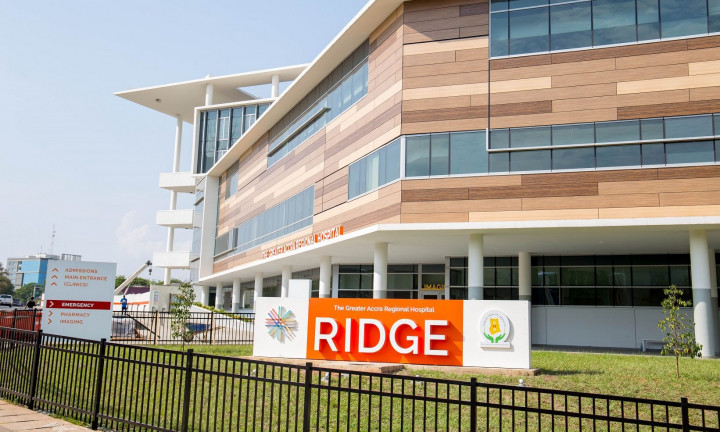
*NOTE: Photos of patients and units were prohibited at the hospital, so the header is a picture of the exterior of Ridge Hospital from garh.gov.gh.
A Ghanaian Bed and Breakfast
July 10, 2026
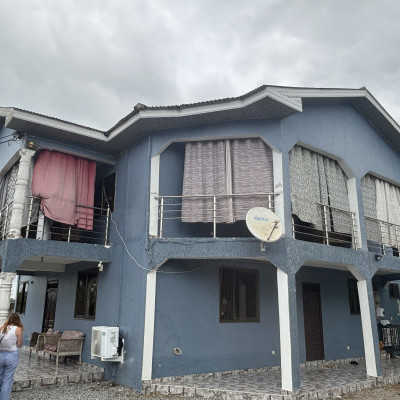
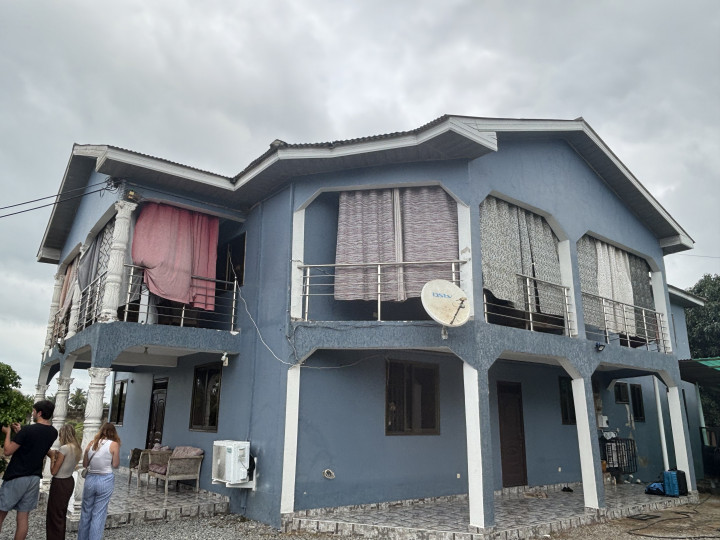
This past weekend was our free weekend in Ghana, when we were allowed to travel outside of Mampong and explore more of the country. EK, Carlton, Jordan, and I decided to spend our weekend in Elmina, a small town a short drive from the city of Cape Coast. Instead of staying at a resort or hotel, we decided it would be a more interesting experience to stay in an Airbnb, so we found one a few miles outside of the town.
We woke up early Friday morning to make the four-and-a-half-hour drive with our driver, Kojo. As we neared the Airbnb, Kojo had trouble getting through the terrain because the roads were unpaved and flooded. The car had difficulty making it through, and we even had to turn around at one point to find another way. Thankfully, though, we were able to make it to the Airbnb. When we arrived at the Airbnb, we had to call the host to let us in the gate. After introducing himself as Kwesi, he greeted us and led us inside, where he introduced us to his 25-year-old son, Michael, and his dog, Cabron. After this, he showed us to our rooms, and Michael offered to give us a tour of the area. He showed us the path to the beach and the resorts in the area. The shore was lined with giant rocks to keep the ocean from eroding the shoreline, but there were some gaps of beach in between them. One of the resorts nearby was called the Lemon Beach Resort, which had a restaurant. This was the only restaurant within walking distance from the bed and breakfast, so we ate there every night.
While on the tour, we had dinner with Michael, then headed back to the house. Later that night, when we had settled in, Kwesi’s wife knocked on our door to offer us oranges she had just cut. On Saturday morning, we were woken up at 6:00 AM by the sound of a blender and people walking around in the hallways. Michael and Kwesi were making us fresh orange juice, eggs, and toast for breakfast. They asked how we wanted our eggs cooked, and EK told them she wanted them over easy. They didn’t know how to make over-easy eggs, only fried and scrambled. They told us that they looked it up and tried their best, and the eggs ended up turning out great. It became clear to us that this stay was less like the Airbnbs we are used to in the US and more like a traditional bed-and-breakfast, where the host stays in the same house and prepares some of your meals. We spent the day on Saturday reading on the beach, hanging around the pool at the resort nearby, and walking up the beach near Elmina.
On Sunday morning, we woke up, had breakfast, and then went outside to leave. However, Kojo informed us that the car would not start. Michael and Kwesi attempted to help us jump-start it, but it did not work. Kwesi called a mechanic to help us, but he said it would be a while before he arrived because mechanics typically don’t work on Sundays. The issue was that our battery was dead, and the starter wasn’t working. Luckily, the mechanic arrived, and Kwesi ended up giving us the battery from his car because the mechanic didn’t have one, and we were able to get the car working again. We planned to leave Elmina around 9:00AM to get back to Mampong early, but we didn’t leave until around 11:00AM. However, this wasn’t our only issue on the way home. The driver got turned around a few times and had to pull over to ask directions. When we had already been driving for 6 hours, the sun was beginning to set, and we were still only around halfway. At one point, we had to pick up a man looking for a ride to work, who gave us directions back to Mampong. His name was Bennett, and he was in our car for around an hour. We talked almost the whole car ride. He even gave me his recipe for peanut butter soup because I told him that was my favorite Ghanaian dish. He told us that he worked in a research lab in Medie, and that he was going to work the night shift. Once he got out in Medie, our driver knew where he was going, and we made it back within a couple of hours.
- Ethan Neall
Animals in a Resort?!?!
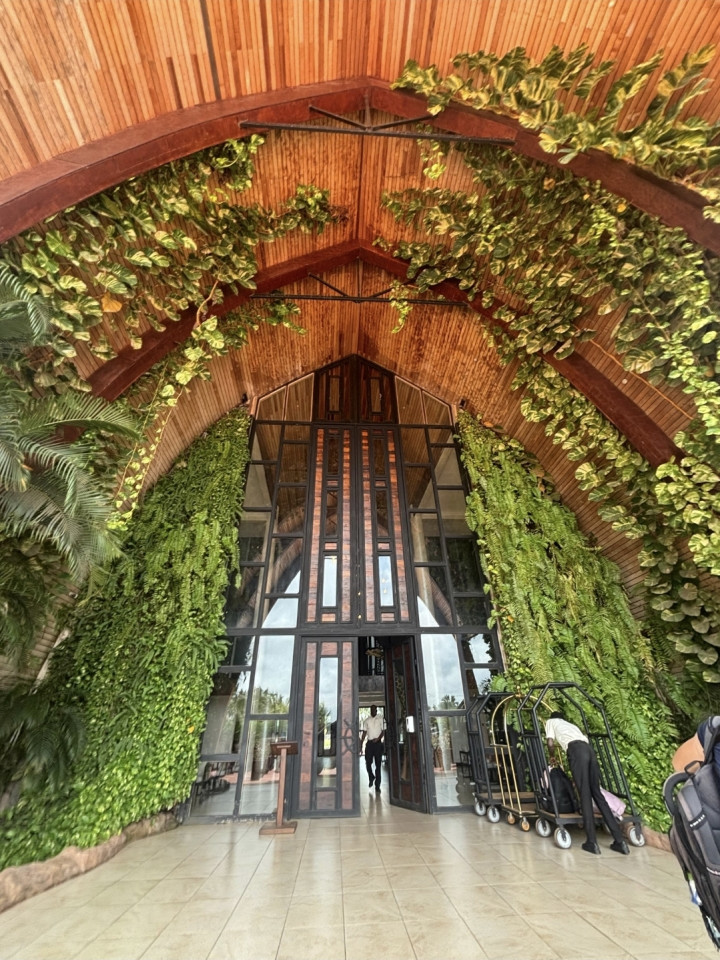
July 10, 2026
On the days of July 3rd to July 5th, we were given a free weekend to do whatever we liked. We all chose different locations and my group decided to take the advice of the previous year before, to go to a place in Big Ada called “Aqua Safari Resort.” We decided to book 3 rooms and I luckily was able to get a whole room for myself, which was a nice change of pace compared to our previous hotel visits. Once we made it there, it took a while for the hotel to have our rooms ready. So we decided to take a stroll around the resort and see what our future plans may be. We even just relaxed at this man-made pond that had a horse statue, flowers, and koi fish in the water. We explored the different things around, such as the restaurant, pool, beachside, and even had places for some sports; more on that later.
We also quickly found out why it has “Safari” in its name as there were tons of animals roaming around such as horses, donkeys, peacocks, chickens, swans, tortoises, and birds. The horses especially would just eat in front of you and we learned halfway through the day that you can ride the horses for a small fee, and we definitely were. Besides that, there were two animals that took the spotlight; an albino peacock and black swan. I would also try to take beautiful pictures of them whenever I could find the chance, especially of the albino peacock since it felt like he really enjoyed the photoshoot. Nonetheless, it was really cool seeing animals just be comfortable around humans.
Once we got ourselves situated in our rooms, we would proceed to head out to do activities and eat dinner. I ended up finding my extreme interest in table tennis and had a mini tournament within our group. I lost in the final match but I swore to get my revenge back home in Atlanta. Table Tennis ended up becoming a common activity between me and another group member. We also tried out volleyball, normal tennis, and even archery; the archery was especially fun and I felt like Robin Hood. The dinner was extremely good but the wait time did take a while, so we decided to pre-order in advance for the following breakfast.
The second day of the resort was the most interesting to me as I did some horse riding and did some canoeing. As someone who is not the best swimmer and has a little adversity to water, I would freeze up once the waves looked above eye level and start paddling again once they lowered down. The horse ride on the other hand was pretty calm, just holding on at a steady pace and even the guide took some pictures for me. It was overall a fun experience and I recommend anyone who wants a relaxing, fun experience at a resort with some creatures involved.
Maximiliano Villeda-Macias,
A Transformative Day in the ICU
July 10, 2026
On Friday, July 10, I was able to spend a very eye-opening day on the intensive care unit (ICU) at Greater Accra Regional Hospital (GARH). While on this trip, we are able to spend two weeks doing rotations at GARH. My favorite day, by far, has been in the ICU. I was a little afraid as to what I would see on the unit, because I have never been in any ICU before, but what I saw honestly might have changed my career path forever.
I started out at the ICU with Rachel and Nhyiraba. Nhyiraba, a high school student also shadowing at GARH, has been tagging alongside us all week. I was rather shy towards her at the start of the week, and she was shy as well, but we quickly became great friends. I learned that she wants to be an anesthesiologist and is also an only child (among many other things)! We exchanged Instagram accounts and were able to bond about things that I was not expecting, such as videogames and music. I am very grateful that I got to meet her, and she has been part of why my time in the hospital has been so enjoyable!
Aside from the new friend that I have made, my time shadowing nurses and doctors and observing in the ICU was genuinely transformative. It was, admittedly, a very slow day. We only had one patient, but the nurses and doctors were so helpful about explaining her case to us. She was recovering from a craniotomy and was unconscious. When we initially arrived at the ward, she was in respiratory distress and was experiencing stridor. The nurses were going to put an oropharyngeal airway (OPA) into the patient’s mouth to depress the tongue to prevent airway obstruction, but she had a gag reflex, so they had to take it out. A few doctors came over, and they were considering intubating her. Thankfully, her condition improved, so they did not have to resort to this. Intubating someone (putting an endotracheal tube down into their trachea) is extremely invasive, so they were trying to avoid this unless absolutely necessary. It completely takes over the work of breathing for someone. I am very grateful that her condition has improved and they did not have to do this.
One of the nurses, Simon, was particularly helpful in educating us. He allowed us to take vitals for the patient every 30 minutes, and we all took turns documenting SPO2, temperature, blood pressure, heart rate, and respirations. He also explained what all the machines she was hooked up to do. She had a central venous catheter (a central line) placed, and he let us know that central lines are often used when you need to push a large volume of IV liquids or when you need IV access for an extended period of time. He let us input the volume of liquids she was receiving and the amount of time he wanted it to be done by to calculate the drops per minute. I was also able to prick her finger to test her blood glucose, which thankfully I was comfortable with because of the health screenings! Because of this experience, I am reconsidering my career path. I am now very interested in shadowing in an ICU in the United States, and possibly becoming an ICU nurse as opposed to a labor and delivery nurse.
- Emma Carr

The Malnutrition Ward
July 10, 2026
One of the most fulfilling days so far on this trip was my day shadowing a dietitian in Princess Marie Louise Children’s Hospital (PMLCH).Unlike many students on this trip, my intention is not to go to medical school but rather to become a clinical dietitian. I was (and am) so excited to get the opportunity to have a well-rounded view of the health systems in Ghana, but at my core I love learning about the role food plays in our health outcomes. So, once I finally got the opportunity to shadow a dietitian in the country, I was elated. Last week, I was able to shadow Daniel, a dietitian at the children’s hospital, for a day.
To begin, it is important to note that, as a dietitian at PMLCH, you are primarily treating children suffering from malnutrition, specifically undernutrition. When taking a tour of the facility the day before my full day of shadowing, it was definitely difficult to see young children in a state of severe malnutrition; however, it was a chance to learn since seeing how you treat these patients is an opportunity that isn’t as easy to come across in the States.
Starting off the day, Daniel brought Sydney, Carlton, and me to his office to make the feeds for the admitted patients. His office had a sink without running water and a fridge where the sterilized bottles and some materials were held. He started preparing F75, a therapeutic milk that contains 75 kcal for every 100 ml. This milk is used in the first stage of treatment of severe acute malnutrition in order to stabilize the patients. This feed has a high sugar content and is not intended for weight gain. After a few days, rehabilitation and weight gain are prioritized, and patients are given F100, 100 kcal for 100 ml. This milk has more protein and calories, and we also saw Daniel prepare this. Daniel gave us little cups and allowed us to try the drinks. The drinks just tasted like sweet milk. The F75 was unbelievably sweet, and the F100 was slightly less so. Us students joked that the sugar went straight to our heads and that the children are sure to love it.
After preparing the feeds, Daniel brought us along to a meeting that he was holding for nurses in the hospital. The meeting was basically a crash course on malnutrition. We learned the different types and how they go about diagnosing a patient. A child was even brought in that had been diagnosed with severe acute malnutrition, and we were shown the physical signs you would observe. We learned to look at the child’s hairline to see if it was sparse and had a light brown color to it, to see if the ribs or spine’s vertebrae were visible, and to look for edema, among other things.
At the end of the day, we got to ask some questions about what we learned, and in turn he asked about the healthcare system in the US. It was such a wonderful day. Seeing the things I learned about in school in real life and understanding the way treatment was given was so rewarding. I am so grateful for Daniel’s time and PMLCH for hosting us! I can’t wait to learn more about Ghana's nutrition system while here.
- Madison Bradford
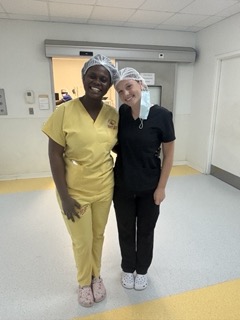
First Observation of a Ghanaian Surgery
July 10, 2026
On Wednesday, Ethan and I headed to the 24 hour surgery ward in the Greater Accra Regional Hospital. We had heard from others that this was a hit or miss unit in terms of there not always being emergency surgery being performed (which is good because that means no one needs it). They usually know within the first hour or so whether surgery will be performed that morning and there were in fact two when we arrived at the unit. One was a neurosurgery case where they needed to drain some of the cerebral fluid from a child’s brain. While this one was scheduled for 8 am, it actually began after we left at 2 pm. The other case was a laparotomy which was being performed because the patient’s sigmoid colon was twisted. The objective was to remove it and stitch the descending colon and rectum together.
Although this was not Ethan’s first time shadowing a surgery, it was mine, so I was slightly apprehensive but also very excited. The surgical team was very kind and answered all of our questions while also teaching the nursing students who were observing as well. The surgeons were Dr. Twumasi and Dr. Umar while the scrub nurse was Barbara. All three of them made an impact on us as they performed the two hour surgery. One of the coolest things was being able to see everything from the administration of anesthesia which included propofol, Fentanyl, and Lidocaine to the waking up of the individual and the closing of the incision. I will not go into details of the actual surgery for privacy reasons but it was very cool to see. I was not nervous at all as they made the first cut and was calm and very intrigued during the whole process. One of my favorite parts was the scrub nurse, Barbara, ordering around the nursing students. The biggest rule in the operating room is to keep everything sterile and do not touch anything if you are not in the proper attire. Many of her orders came from the fact that the nursing students would accidentally touch something without being sterile and it was now contaminated. Barbara held control over the operating room and was quick and efficient in handling the instruments along with making sure we could see everything going on during the surgery. The procedure went well with no complications and when we left the operating room at the end of our day, we said our goodbyes and thank you’s. It was an extremely successful day and I am so glad that we were able to witness how an emergency surgery is handled in Ghana. I am also grateful that the staff was so kind and welcoming and the willingness to answer all of our questions at the end!
-EK Jordan
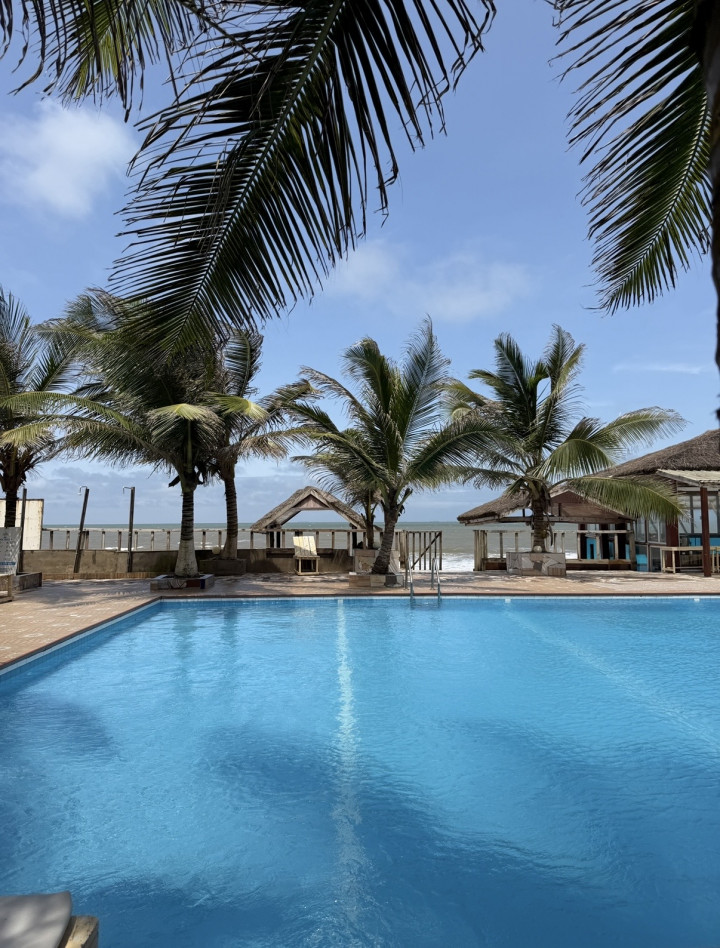
A Weekend Worth the Risk
July 10, 2026
As we approached the free weekend, our group's indecision led us to change our plans a couple of times. We were hesitant at first, trying out a place nobody we knew had ever stayed at, but we wanted to venture out while we were in Ghana. After a long time spent researching, we landed on Ocean Green Beach Resort. All the adventures we had experienced in previous weeks made us want a weekend to relax. Ocean Green seemed like just the place to relax. We quickly noted there was AC, a pool, a restaurant on site, and other “needed” amenities. As we set out, we were prepared that the roads may be rough and it would be about a two-hour drive. Two hours was nothing to us after all the driving we have done. Leading up to the trip, we were still very nervous about how the place would truly be. We had experienced hotels in Ghana that advertised WiFi and AC, but it ended up being false advertising, so we were very nervous this would be the case at Ocean Green. As the maps got us closer and closer, I became more and more worried. Many buildings were unfinished, you couldn’t see the ocean, the roads it wanted us to turn down were not roads, and the “roads” we could use were in terrible condition. By this time, my palms were working up a sweat. The next straw was the road being so flooded we had to ask a local if our van would make it through the puddle. He assured us that we would, he then asked if we were headed to Ocean Green. This was promising. In my head him knowing this resort made me think it was a popular and commonly used place. We finally began seeing signs, and I got more and more at ease. As we made our last left turn and headed down the hotel's entrance, I was excited, but more questions arose. We were staying in one of the village houses, and as we pulled in, the village houses seemed far from the beach, and a wave of disappointment came over me. I was under the impression all the village houses were this far, but thankfully I was wrong. After check-in, we learned our house was located right next to the hotel. Our house had its own beachfront balcony and was very close to all the entertainment areas. This was exactly what we had imagined.
Before check-in, the staff were very welcoming and allowed us to change and keep our stuff in a separate hotel room while our house was cleaned. This allowed us to get our bathing suits on and head straight to the pool. Because of this, we got an entire extra day out of our free weekend! Our expectations continued to be met. As our weekend continued, we became more and more thankful we chose Ocean Green. The food and drinks were amazing, the staff was very friendly and tended to us well, our room was all we could ask for, and the pool felt amazing. The only letdown was the gigantic waves and the trash that had been washed ashore, causing us to steer clear of the ocean. As our first night continued, we had a wonderful dinner and intended to come to the lounge area to watch the Ghana soccer team play in the World Cup. We later fell asleep and did not make the 1:30 am game. The staff had tried to wake us up for the game, and hearing the knocks on the door had scared us. This incident and the idea that everyone knew where the four “Obronis” were staying raised some concern. We were later moved to a connected hotel room, which was also very nice. The way staff reacted and being able to see both the house and hotel was great and just assured me that I would recommend this place. As the weekend continued, we had a great time. It was a nice break from the early wake-up calls, the constant go-go-go, the schoolwork, and the constant group interaction. Venturing out and everything playing out better than imagined was very rewarding. Exploring a new area was very fun and lit a fire for more travel experiences. I am very thankful for the staff, the warm water with amazing pressure, the perfect weather, the constant sound of beach waves, the freezing AC, and the great food and drinks. The free weekend was much needed. Dr. Anderson timed this weekend perfectly, and the four of us had a wonderful time.
-Taylor Chesser
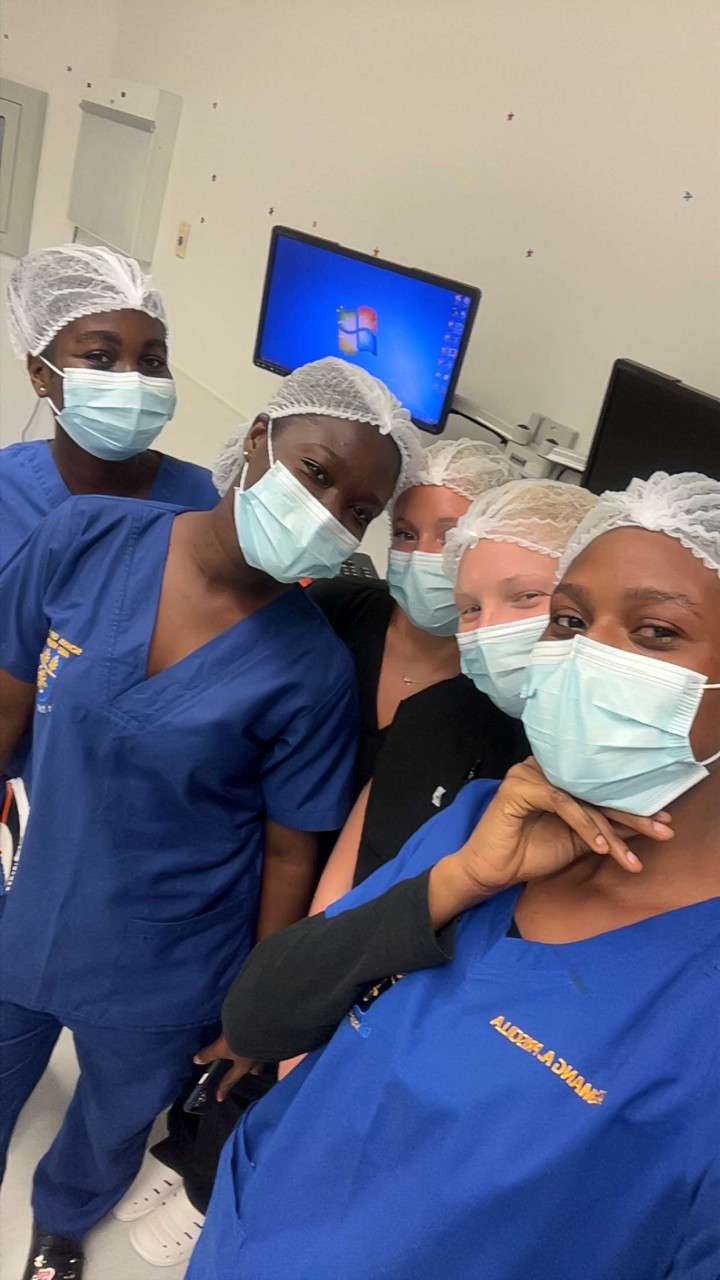
A Day in the Emergency Surgery Unit
July 10, 2026
Today was one of the most memorable days of my clinical experience so far as we spent the day in the 24-hour Emergency Surgery Unit. The morning began by meeting the charge nurse, Linda, who welcomed us and gave us a tour of the department. She showed us the operating theatre, the room where sterile instruments are stored, the area where the instruments are cleaned and sterilized, and the room where patients wait before being taken into surgery. She also mentioned that there were three surgeries scheduled for the day and told us that we had gotten lucky because you never really know what cases will come through the doors.
After a brief orientation, Nurse Linda handed us hairnets and showed us where to wait. Once we had our surgical attire on, Taylor and I immediately struck up a conversation with four nursing students from the University of Ghana: Priscilla, Maline, Doreen, and Judith. They were all in their final semester of nursing school and around our age, so we had plenty to talk about. We shared our career goals, explaining that Taylor and I are pursuing the PA and NP paths while they are preparing to become registered nurses. It was fascinating to learn about their educational journey. Compared to the United States, students here enter the workforce much sooner, which means they have to decide on their career paths much earlier in life.
While waiting for the first surgery, we spent some time in Nurse Linda's office as the nursing students practiced patient assessments and discussed clinical scenarios. It was interesting to hear patient care from a nursing perspective and see how they prepare for real-life situations.
The first surgery of the day was on a nine-year-old boy who had suffered a laceration to his scrotum after falling onto an iron rod while playing soccer two days earlier. His procedure involved debridement and suturing of the wound. Since this was my first time witnessing surgery in person, I was completely captivated. Watching the anesthesiologists, surgeons, and nurses work together so seamlessly was incredible. Everyone in the operating room was welcoming and even brought us stools so we could have a better view. Dr. Obbang, the lead surgeon, completed the procedure efficiently while maintaining a calm and focused atmosphere.
After a snack and about an hour of waiting, we hoped the next case would be a patient with an arachnoid cyst so we could observe a neurosurgical procedure. Instead, the second surgery involved a one-year-old boy with an anterior abdominal wall abscess related to a ventriculoperitoneal (VP) shunt that drains excess fluid from the brain into the abdomen. Although we were only able to watch part of the procedure before leaving, it was fascinating to observe. The lead surgeon, Dr. Meshac, and assistant surgeon, Dr. Michael, demonstrated remarkable precision and attention to detail. What surprised me most was how calm and relaxed they were, even taking the time to talk with us just before beginning the operation.
Before heading out, Taylor and I took a picture with our new nursing student friends and joked that they had a place to stay if they ever visited the United States. Throughout the day, everyone we met was incredibly kind, welcoming, and eager to teach us. Their willingness to answer questions and ensure we had the opportunity to learn made the experience even more meaningful.
Although today's experience confirmed that surgery is probably not the specialty I see myself pursuing, I am incredibly grateful to have witnessed it firsthand. Seeing the teamwork, precision, and compassion that go into every procedure gave me a whole new appreciation for surgical care. Taylor and I will be returning to the unit next week, and I can't wait to see what new cases—and friendly faces—are waiting for us.
-Mary Hanna Hiers
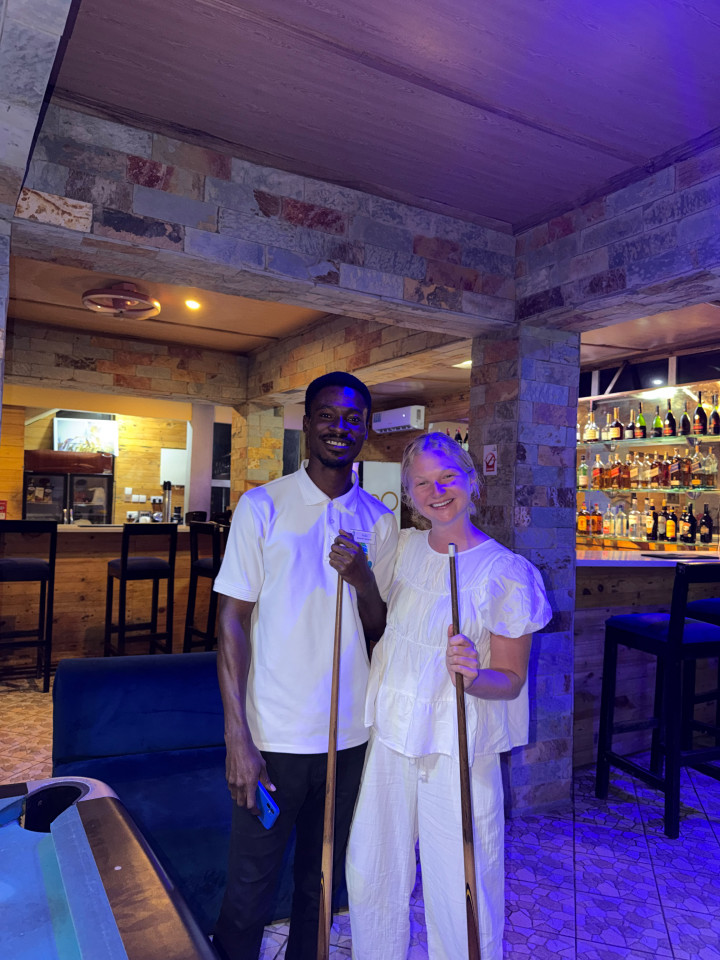
Making Friends Through a Game of Pool
July 10, 2026
After several busy weeks of traveling, community health screenings, and shadowing in hospitals, our weekend at the resort felt like exactly what we needed. We spent the entire day relaxing by the pool, soaking up the sunshine and enjoying the chance to slow down for a while. It was one of those days where nothing extraordinary was planned, yet it ended up becoming one of my favorite memories from the entire trip.
Because there were not many guests staying at the resort, there were almost as many staff members as visitors. That made it easy to get to know everyone, especially Felix, the bartender. From the moment we met him, he always had a smile on his face. He was a mixology specialist who took so much pride in his work. Rather than quickly throwing together drinks, he carefully prepared each one with fresh ingredients and attention to detail. You could tell he genuinely loved what he did, and that enthusiasm made every conversation with him enjoyable.
After spending the afternoon swimming, we all got ready for dinner. We loved our meal from the night before so much that every single one of us ordered the exact same thing again. While we waited, everyone gathered around the television to watch the World Cup alongside the resort staff. It was fun to experience such a globally shared event together, even while being thousands of miles from home.
Later that evening, the pool table finally opened up, so Dani, Taylor, Katie, and I decided to play. I grew up playing pool because my dad always wanted my siblings and me to know how. The rest of the group had either never played before or had only played a handful of times. Taylor and I, who have earned the nickname "the aunties" because we're the older ones who always go to bed early, teamed up against Katie and Dani, the younger girls.
We laughed almost the entire game. It became surprisingly competitive, and somehow Taylor and I managed to pull off the win with every one of our striped balls in the pockets while Katie and Dani still had two solids left on the table.
As we were finishing our game, Felix walked over and challenged me to a match. Naturally, the rest of the group quickly decided that if I won, we deserved free drinks. The pressure was officially on.
The game was close from start to finish, but somehow I managed to sink the eight ball first and win. We all erupted in cheers, high-fived, and celebrated the victory. True to his word, Felix disappeared behind the bar and returned with a specialty drink he had created just for us to try. It was such a simple moment, but one that perfectly captured the joy of the evening.
Looking back, what made that night so memorable was not the game itself but the conversations we shared and the friendships we formed. We spent hours talking about our lives, learning about one another's cultures, and laughing together. It reminded me that genuine connection does not require speaking the same language perfectly or growing up in the same place.
Sometimes all it takes is a smile, a little friendly competition, and the willingness to start a conversation. Games have a unique way of bringing people together, no matter where they are from. This experience reminded me to never be afraid to reach out, introduce myself, and make new friends. Some of the best memories are created with people who were complete strangers just hours before.
-Mary Hanna Hiers
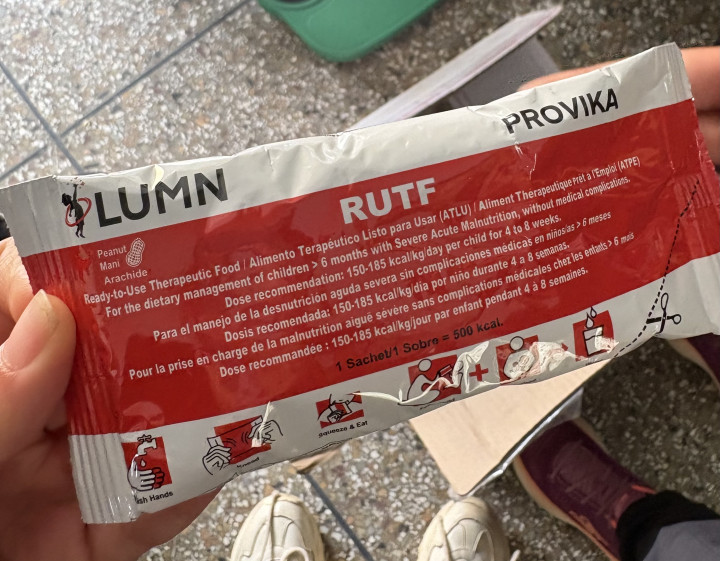
Seeing Kwashiorkor: Knowledge to Reality
July 03, 2026
On June 30th, after the heavy rains had flooded much of Accra and swept all our plans off course the day before, we set out once more to shadow at a Ghanaian hospital. With sleepy eyes and bellies with plenty of coffee, we climbed into the van and started the drive, hoping the weather would work with us this time. Nestled among the busy streets of Accra stood the Princess Marie Louise (PML) Children’s Hospital, which had just celebrated its 100th anniversary. I was surprised to see the hospital had existed even before Ghana’s independence. That morning was my first time shadowing in a hospital, and I could not decide whether to be excited or nervous. As we gathered in the conference room, I could not help but look around. The painted walls had faded into a washed-out pink, and the windows, yellowed with time, suggested the building’s age. A stark contrast was the modern technology scattered throughout the room, such as telephones, AC units, projectors, and a TV. Everything felt so out of place, much like us, a group of American students sitting inside a Ghanaian hospital.
The hospital’s clinical director later entered, welcoming us with a presentation on the mission and history of PML Children’s Hospital. Then a familiar name, “Dr. Cecily Williams,” appeared on the screen. I could not believe it.
I was sitting in the very hospital where she had first described kwashiorkor, the same condition I had learned about in class from my professor and study abroad director, Dr. Alex Kojo Anderson. Until then, kwashiorkor was simply another topic buried among many other lecture slides and exams. Suddenly, it had a place, a history, and soon, an experience attached to it.
After a tour of the hospital and the wards, I began shadowing in the Nutritional Rehabilitation Unit. Before seeing any patients, I sat with the staff and other volunteers, sorting the good soybeans from the bad. These soybeans would later be ground to produce nutritious food that complements the child’s diet at a low cost. It was a small but meaningful effort to provide care to people in need, even beyond standard healthcare. My first patient was a six-month-old boy recovering from kwashiorkor, a form of malnutrition caused by a severe lack of protein, which commonly occurs when the firstborn is weaned too early due to the birth of a second child and does not receive enough protein. The condition can lead to edema, swollen abdomen, brittle hair, stunted growth, and many other serious complications. I had been learning about malnutrition in class, but seeing the people and circumstances behind the diagnoses for the first time was completely different.
As the nutritionist examined him, I assisted with recording the baby’s vital signs, length, weight, mid-upper arm circumference (MUAC), and edema level. His symptoms had mostly subsided, but level 1 edema was still present, and at his age, his current weight should have been double his birth weight. He eagerly passed the appetite test for Ready-to-Use-Therapeutic Food (RUTF), looking absolutely adorable with his face smothered in the delicious peanut butter micronutrient paste. The nutritionist recommended that the mother use RUTF as a supplement while continuing to breastfeed to support milk production and to return for a checkup 2 weeks later. Dr. Anderson reassured his mother that, despite his stunted growth, he would likely recover given that the child was still under 2 years old.
After the consultation, Dr. Anderson explained that the mother reported her milk had dried up, preventing her from properly feeding her child. Typically, when a mother is pregnant, her body prepares itself by creating prolactin to stimulate milk production. When the child begins suckling at the breast, her body produces oxytocin, triggering the milk let-down reflex. A mother’s breastmilk is very special and provides the exact nutrients that the child needs. However, without it, families typically cannot afford formula and feed the child’s hunger with food that may not provide enough protein for proper growth.
Walking out of the hospital, I could not stop thinking about how truly amazing and full-circle this experience was. I had begun by sitting in a lecture learning about a condition, to seeing where it all started, and finally helping to consult and assess a child with kwashiorkor. The morning did not just teach me a lot about malnutrition. It showed the importance of bringing the knowledge we had learned to reality.
-Rachel Jin
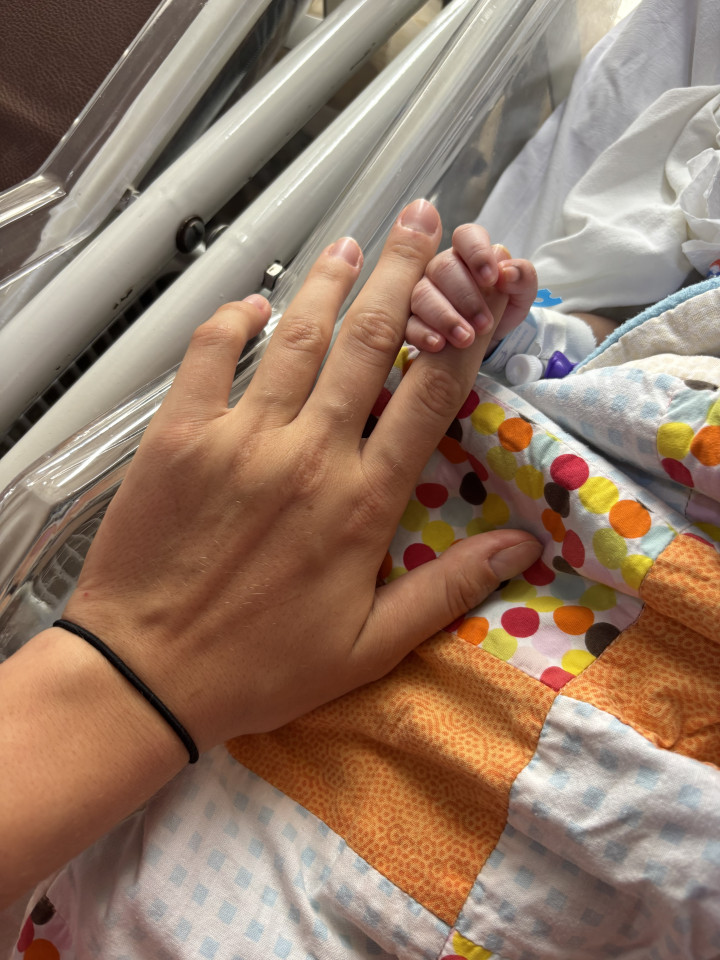
The PML Children’s Hospital Emergency Room
July 03, 2026
My last day of shadowing at the Princess Marie Louise Children’s Hospital was spent in the Emergency Room. Spending the day there with my classmate Carlton and a visiting Italian nurse named Simmone gave us invaluable insights into the healthcare system in Ghana. We started off our day with a doctor named Stephanie who had just started at PML Children’s Hospital that same day. The emergency room already had seven patients by 8:00 am – which almost brought the unit to capacity. Dr. Stephanie and Dr. Carl Hasfold (who joined PML three weeks ago) introduced us to a few patients and briefed us on their cases in great detail. Two of the kids were under five years old and both of their initial diagnoses were pnemonia, and there was a three year old with diarrhea. After asking the doctors millions of questions, they started explaining their diagnosis process and had us practice our clinical skills.
As Dr. Hasfold was walking us through how to use a stethoscope to listen for specific symptoms- and letting us practice on the patients ourselves- he discussed their steps for diagnosing their patients. He said that unlike in the United States, where we have intricate tests like antigen testing to diagnose pneomina, they don’t have equipment or the funds to preform these experiments. Therefore, they have to rely almost soley on clinical symptoms to diagnose their patients, and possibly use testing to confirm it. Dr. Hasfold compared his insight he gained observing the United States healthcare at Johns Hopkins to his experience practicing in Ghana, and reflected how much his detective skills and creativity has grown in Ghana. The creativity he was talking about became very clear when observing how these doctors practice without access to a ton of equipment. Dr. Hasfold placed an IV into a patient by using a rubber glove as a tourniquet and pieces of cardboard boxes as “sticky-notes” to write laboratory orders on. While in the United States, we complain about doctor shortages and not enough Autoclave machines, these hospitals have extremely high staff turnover and kids have to use old bottle caps as spoons to eat their hospital foods. This gave me an invaluable perspective into what is truly necessary to have an effective healthcare system and it was very grounding.
After collecting the temperature of a patient and the demographic information of another patient, we met with the charge nurse Madelyne who took us under her belt for the rest of the day. It was truly such a wonderful few hours working with Madelyne (a local Ghanaian) and Simmone (an Italian who spoke poor English) as we all had language barriers with eachother but we worked together unjudgmentally to cultivate understanding. While Madelyne could have let us sit and observe her, she let each of us greet a patient, take their vitals and blood glucose levels, and chart all of their information. During this time, I was able to cultivate my interpersonal clinical skills, even through language barriers, and learn new ways to become a globally and culturally educated healthcare professional.
- Jordan Nowicki

Helicobacter Pylori Infection in the Morning Meeting
July 03, 2026
This week, we shadowed multiple units at the Princess Marie Louise Children’s Hospital (PMLCH) in Accra. I am extremely grateful for this opportunity, since it gave me a first-hand experience of both public healthcare and how limited resources are not an excuse to give suboptimal care to patients. During my day of shadowing the dietitian, I got the chance to attend one of the morning meeting that were led by the hospital staff. The meeting covered the topic of Helicobacter pylori infection, a bacterial infection leading to the onset of gastric inflammation and ulceration.
The first half of the meeting focused on the pathology of the disease, going into detail about the biochemical and physiological effects of the urease produced by the bacteria and how it leads to inflammation and ulceration. In short, the urease secreted by the bacteria converts urea into ammonia and carbon dioxide. The ammonia produced reacts with and neutralizes the acid in the stomach, creating an enviorment that is safe for the bacteria to thrive and bind to the mucosal layer. While this information wasn’t necessarily new or groundbreaking, it was the fact that it was being taught in a children’s hospital in Ghana that gave it its significance. The knowledge I had gained about biochemical and microbiological processes in the US held its relevance across the world here in Ghana, allowing me to utilize my education in the context of a real working hospital in another country. This reassured me that the time I spend educating myself in school makes me apart of something larger than just the university or even the country, but instead connects me with a community of educated individuals that spans the entire globe.
The second half of the meeting focused on the clinical signs and diagnosis of the infection in children. In a hospital environment like this with few resources available, diagnoising patients is done almost solely with clinical features, with lab tests being used only for confirmation of the diagnosis. The presentation therefore went into many clinical or “alarm” signs that the physicians must look for in a child, with the lab tests only being recommended if they are confident in their diagnosis. This includes things like vomiting, weight loss, and bleeding, but no fever present and normal bowel sounds. Another interesting point about H. pylori in particular is that 50% of people carry the bacteria in their stomach already, but are simply asymptomatic. This prevents doctors from being able to take a simple biopsy of a sick patient’s stomach, since its mere presence isn’t enough to confirm the reason for symptoms being present.
After the presentation, the floor was opened up to take questions from the room. It was at this moment that Dr. Niezer, one of the leading physicians at PMLCH, had entered the meeting. Upon chiming in to one of the medical students questions, she began elaborating about the diagnostic process with specifically the parents of the patients. She spoke about how the culture in Ghana can severely impact a parents choice in providing care for the child, at one point saying, “we don’t have money for healthcare, but we have money for funerals”. This quote sat heavy in my mind for the rest of the day, questioning the importance of culture over health here in Ghana. The funeral services here in Ghana are extravagant, with huge parties being thrown that last all day and people dressing in beautiful purple and red attire. Dr. Niezer was speaking to the fact that many parents here in Ghana decide that healthcare for their children is not worth the expense, but then spend that exact same money on an extravagant funeral for their child.
Coming from a place where this would not be the norm, it is hard for me to wrap my mind around why a parent would prioritize a funeral over the health of the child. However, with my very limited time spent in the healthcare field, I have come to quickly realize that dwelling on the reasoning for one’s personal healthcare decisions is unproductive, since it is physician’s job to take care of the patient, not challenge the patient based off what you think is right.
-Carlton Burns
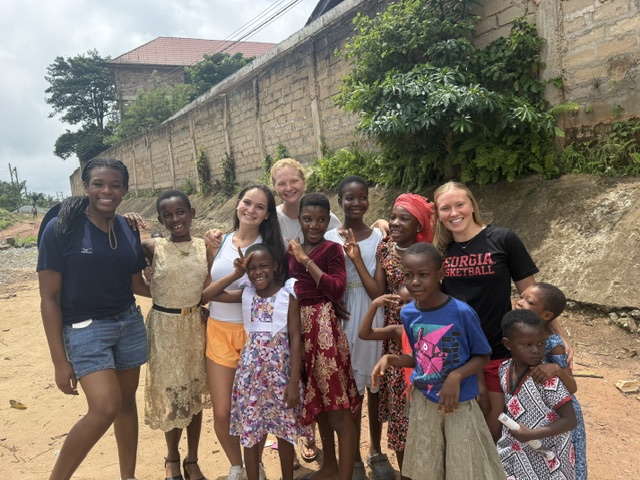
Friends in Mampong
July 03, 2026
This past week I had the pleasure of making several new friends in our neighborhood in Mampong, Ghana. My friends, Taylor and Mary Hanna, met a group of sweet girls near our house on one of their afternoon walks. When they returned home, they shared fun stories and local games with Dani and me. On the upcoming Sunday, Taylor, Mary Hanna, Dani, and I all walked down the road to visit the girls and play games with them. I’m not sure what I expected this interaction to look like, but it definitely took me by surprise. The girls ran to us, clearly very excited to see us. They gave Dani and I hugs before we even had a chance to introduce ourselves! I learned in this moment that the kindness and hospitality rich culture in Ghana is not limited by age.
Through this interaction, I got to know Clara (coral headscarf), Judith (maroon cardigan), Comfort (gold dress), Anita (light blue dress between Judith and Clara) Roberta (purple multicolored dress), Sweetie (red, black, and white dress), Matina (dark blue dress), and Pricela (dark blue shirt). The girls taught us how to play outside games like 24611, which require lots of clapping and stomping. They laughed at my poor attempts to match their movements, but I didn’t mind at all. We played for hours without realizing how quickly time passed.
Wednesday, we walked back to see the girls and even brought Ek and Ethan. They were super excited to make more friends and have the opportunity to play with us. This day was also extra special because it was Clara’s 13th birthday, and that Saturday would be Roberta’s 8th birthday. We brought them presents and sang happy birthday to them, which resulted in so many smiles and laughs. The children were so full of joy and curiosity, especially about all 6 of us. We let them touch our hair and skin and ask plenty of questions about each other’s lives. They loved holding our hands, hugging us, and getting piggy back rides on the walks around the town. We played games together for hours and had so much fun. It was even more difficult to leave the girls this day because they held onto our hugs for extra long.
This weekend our study abroad group has independent plans, but when we return back to Mampong we are all excited to go back to visit the girls and play some more. The children in this neighborhood spread so much joy without realizing it. While becoming closer to the girls in the neighborhood, I have learned that Ghanaian culture involving the openness toward foreigners is not limited by age. The children were all extremely excited to see all of us and teach us games that we could all play together. This openness and pure joy the children shared will follow me and I am certain I will remember all of my new friends and the lessons they have taught me.
-Katie McIntyre
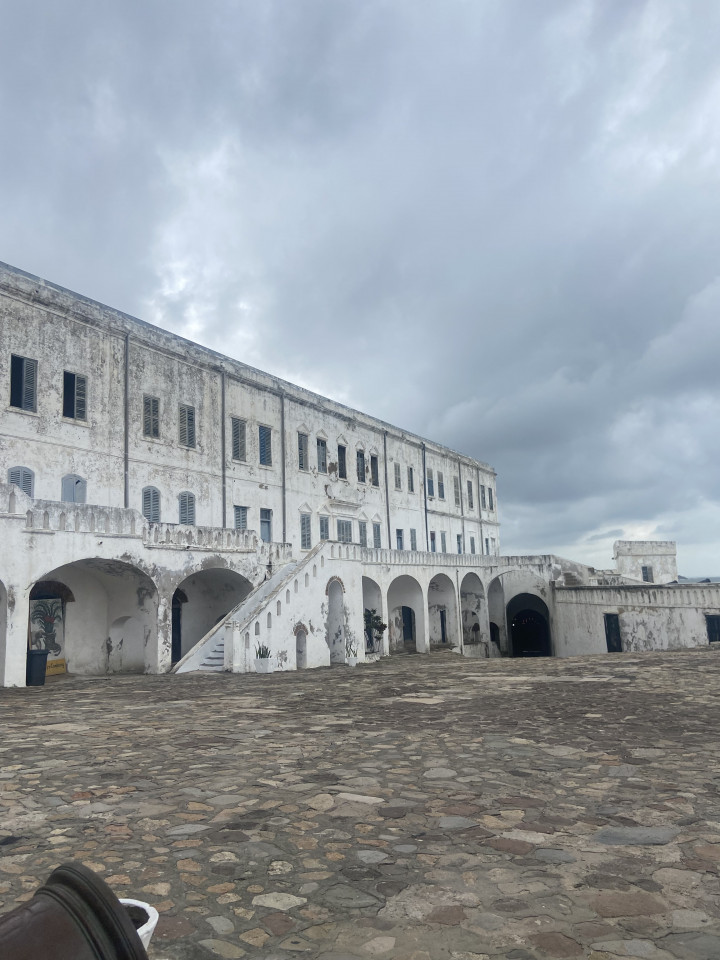
Insights at Cape Coast and Princess Marie Louise Children’s Hospital
July 03, 2026
Touring the Cape Coast Castle was an eye-opening experience. We arrived at the castle on Saturday, June 27. During the drive, I was mesmerized by the views of the ocean and coastline. The views were a manifestation of the surreal beauty that would descend before my eyes. At initial appearance, you can tell quite easily that the castle was built by the Swedes. The architectural style was different from its surrounding buildings, which had a culturally more Ghanaian style. For example, Cape Coast Castle has wooden floors and granite rock walls, which contrasts the tile flooring and cement walls of Ghanaian-styled buildings. The view of the Atlantic Ocean was beautiful, and the canons on the balcony gave insight that the castle also served as a military fort. At the coastline were numerous fishermen boats with flags of various countries, including Ghana. However, behind all the external beauty of Cape Coast Castle, there lies deep sorrow and dark intentions in its history.
Our first stop of the tour was at the male slave dungeons. Upon entrance, you could feel the shift in energy. The environment became solemn. Our tour guide explained to us that this first cell’s floor had been excavated of the human feces, blood, sweat, and tears of the slaves, however the other cells still had the remains. We then went to the female cellars and saw the little to no sunlight, high heat, cramped dungeons. The most notable factor was the floor that was at least four inches thick of nearly fossilized human excrements. It was an extremely emotional moment.
What also caught my eye was the sheer contrast between the slave dungeons below, and the European living spaces above. The European rooms were massive for just one to a few people, had an abundance of light, and huge windows that allowed for proper ventilation. The color scheme was a different as well. The walls were granite white, while the slave dungeons were black stone. Once the tour ended, I felt well informed about an aspect of Ghana’s history. It was sad but knowledgeable.
After being in Cape Coast, we went to travelled to Accra for insight at Princess Marie Louise Children’s Hospital (PMLCH). My visit to the above 6-month unit at PMLCH was incredible. I was able to shadow Dr. Pelegia, and she explained to me the thought processes of providing diagnoses depending on urine, blood, and stool samples. A specific diagnosis that stuck out to me was a 10-month-old patient that had a malaria-induced seizure. Dr. Pelegia explained to me that because of the seizure, we would have to diagnose the malaria as a ‘complicated malaria’ case instead of uncomplicated malaria.
Another aspect of PMLCH that intrigued me was learning how to diagnose and treat malnutrition in infants. Daniel, the dietitian gave Madison, Carlton, and I a thorough lecture on malnutrition and how to use the MUAC tape to determine if a child is underweight, overweight, or normal. In treatment, we learned the different feeds such as F75 and F100 as part of the treatments to solving malnutrition. Seeing cases related to this malnutrition and dietetics was fascinating albeit emotional.
Overall, I thoroughly enjoyed our visits to PMLCH and Cape Coast Castle and learned so knowledge important to both my heritage and history through the sites.
- Sydney Apraku
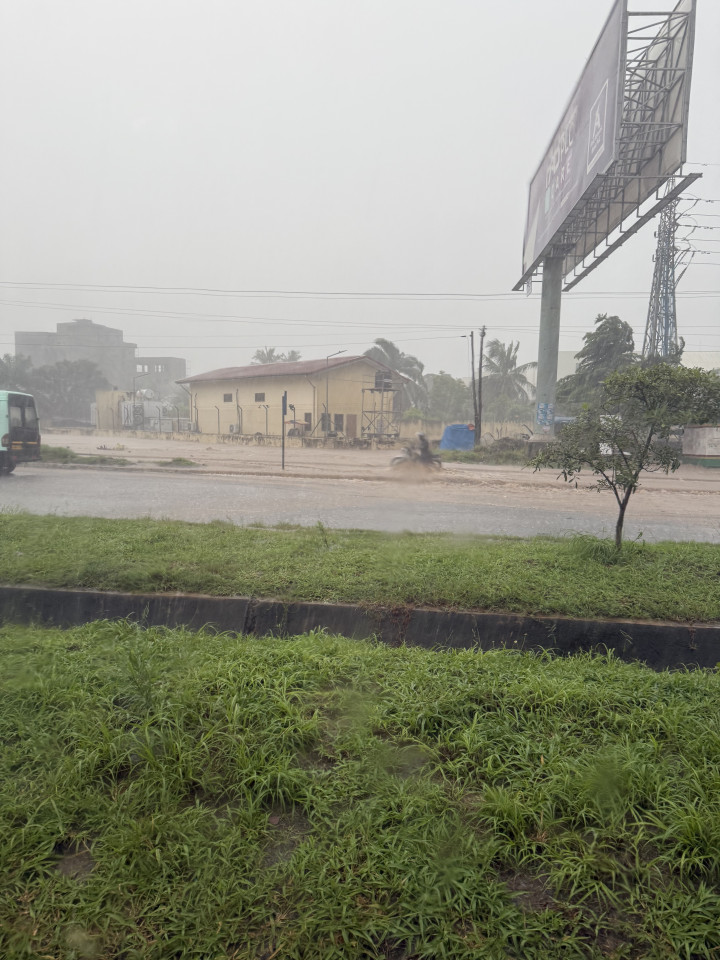
Rain and Detours
July 02, 2026
On our first day of clinics, Monday, June 29th, we were all prepared to go start our rotation at the Princess Marie Louis Children's Hospital. When we started driving on the roads, it was very foggy outside—yet we thought nothing of it. As we got closer to Accra, the rain and traffic started getting heavier and heavier. An hour into the trip, we still had almost another two hours according to the GPS, when we were supposed to get there in thirty minutes. The more we progressed, the more we saw how the rain started to intensify the water accumulation. The river nearby started to overflow, gushing water into the traffic on the other side of the median. There was a pool of water that cars kept getting trapped in when they tried to cross it. Bystanders helped push the cars out while other people had to resort to walking. I would estimate the water on the other side of the traffic was about three feet deep, while the water on our side was around one and a half feet. At this point, we had been in the car for about four hours with no progress toward our destination—we were already over two hours late. Dr. Anderson turned to us and gave us an ultimatum: either we continue to the hospital, where conditions were worse and patients were less likely to show up, or we go to the mall instead. Collectively, we chose the mall.
When we arrived, it had not occurred to us that the power would still be out. The mall was dark, with only outside light illuminating the interior, and all the stores were closed. There was nothing important, like exchanging money, that we could do there. Katie, Mary Hanna, Taylor, and I decided to grab something to eat at Le Must, a sandwich place. After that, we went to ShopRite to buy some snacks for the rest of the week at the hospitals. After an hour or so, we all went back to the van to return home. The drive back to the house was much better—there was less rain and no deep pools of water we needed to bypass.
Although when we arrived at the house, there was also no power. We had nothing else to do, and Ethan wanted to buzz his hair off. He got scissors and we all started to cut his hair. We made some weird shapes and a failed bowl cut before we started to buzz it off with the hair trimmers. This process took around forty minutes, and then we sat outside for a while and talked. Dinner time came around, so we gathered around the table and ate pasta with tomato sauce and mangos. At the table, we discussed how we were going to readjust our rotations to ensure everyone still got to do the options that they wanted. It was not the clinical first day we had imagined, but looking back, it taught us something valuable about flexibility and patience.
Dani Domkam
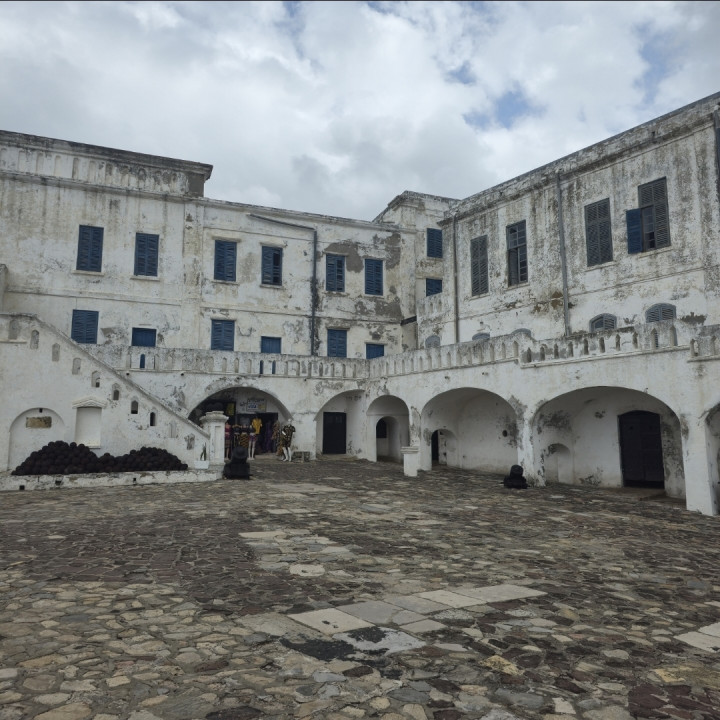
Cape Coast Coincidence
July 02, 2026
On June 27th, after spending the week doing our community health screenings and working as hard as we could. We would travel down to Cape Coast to do some sight seeing and after experiencing a bumpy ride, we were gonna relish this short one-day visit. We first visited the Kakum National Park and walked on the Canopy trail in between the trees. It was my first time ever doing anything like this and I quickly learned I have a little fear of heights. The canopy was shaky and it definitely felt like I could turn over any moment, but the tour guide did say they haven’t had an accident in 31 years and the canopy had ropes all around it. This definitely relieved me and made me more confident that I won’t be the one to break that streak. Nonetheless, it was such a fun and cool experience being able to be high up and transverse across the trees. I would recommend everyone to try it at least once in their lives.
The second place that we visited and my personal star of the show for me was definitely Cape Coast Castle. It is an extremely historic place that requires respect when you enter and seeing the conditions that people suffered being right in front of your eyes is an experience, given if you know and understand the history. An example being how the floors of the dungeon were higher up than originally constructed as the build-up of bodily wastes such as feces, blood, etc layered over the floor and remembering that people lived in these conditions, with barely any air, water, space, or even any of the basic human conditions. As we finished getting a tour of the dungeons, we then checked the living quarters of the governor of the castle to really see the difference in how they viewed themselves. You can see the spacious rooms with windows on every wall, private rooms for whatever interests the governor had, and even a private wine cellar with more space than some of the dungeons.
This especially caught my interest as one of the books I was assigned to read, specifically “Homegoing” by Yaa Gyasi, has the setting of the Cape Coast Castle playing a big role in the beginning of the story and especially at the end, I won’t spoil how and I recommend you to read it but anyway, seeing the very place that the story I read starts at and ends at gave me a sense of immersion. It led to me mixing in the book with the tour, imagining the characters in the dungeons or the living quarters as they lived in. This in a sense really increased my interest in a book and led to me reviewing it again to see if there were any details or themes that I may have missed. This ended up helping me for my book discussion as I truly felt comfortable in my understanding of the book. So I definitely recommend you visit and pay your respects here at Cape Coast Castle.
Maximiliano Villeda-Macias
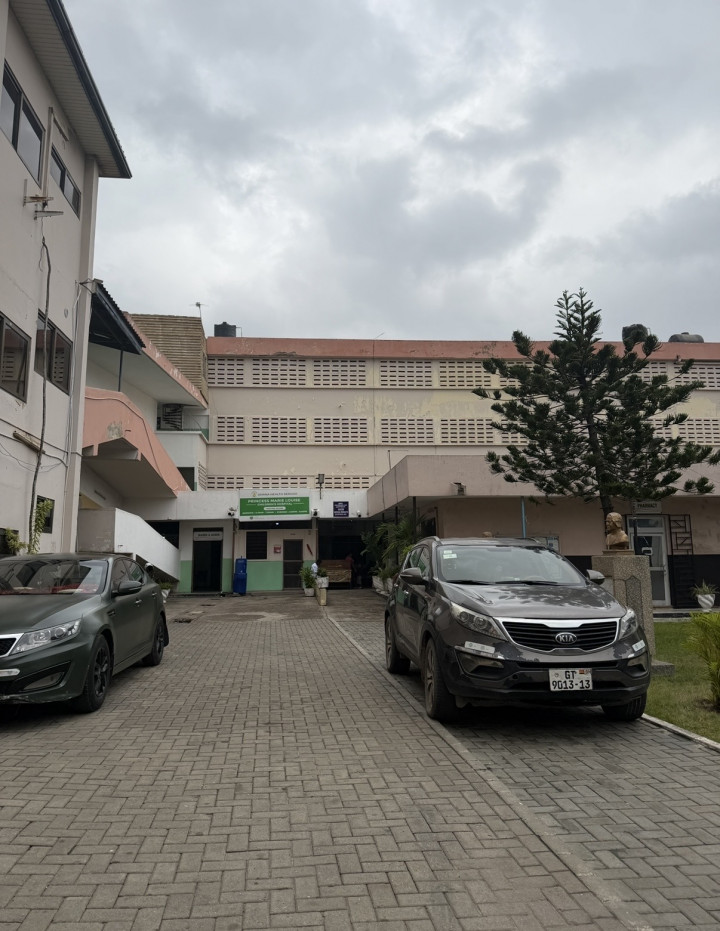
Learning Beyond the Textbook
July 02, 2026
This week marked the beginning of my clinical shadowing experience at Princess Marie Louise (PML) Children's Hospital in Accra, Ghana. Going into the week, I was a little nervous. The first day brought some unexpected challenges and a bit of chaos, making me wonder what the experience would be like. Thankfully, things quickly settled down, and by my second day I was already learning a lot of information. Every day at PML has offered not only new medical knowledge but also a deeper understanding of how healthcare is delivered in a different part of the world.
Princess Marie Louise Children's Hospital recently celebrated its 100th anniversary, making it both the oldest and largest children's hospital in Ghana. Although it has approximately 110 patient beds, it is much smaller than many pediatric hospitals in the United States. The hospital also faces unique challenges that affect daily operations. Located in the heart of Accra, patients and healthcare workers must navigate heavy traffic and the busy surrounding market just to reach the hospital. During Ghana's rainy season, flooding creates an even greater obstacle. On Monday, flooding was so severe that we were unable to travel to the hospital, and many staff members and patients were also unable to make it in. It was a powerful reminder that access to healthcare depends on much more than simply having a hospital available.
As a century-old building located near the Gulf of Guinea, PML is also showing its age. Years of exposure to salty sea air have taken a toll on the structure, and renovations are desperately needed. Funding, however, remains limited. Another challenge is that the hospital does not have its own full-time surgeons. Instead, visiting surgeons perform scheduled operations once a week. If a child requires emergency surgery outside of that schedule, they must be transferred to another hospital, where traffic can make every minute count.
During my first two days of shadowing, I spent time in both the Pediatric Intensive Care Unit (PICU) and the Under 6 Ward. The PICU felt more like a neonatal intensive care unit because nearly every patient was less than two weeks old. It was incredible to see such tiny patients receiving specialized care, but it was my day in the Under 6 Ward that became the most educational.
One of the physicians, Dr. Zara, guided me through morning rounds as we discussed each patient's condition and treatment plan. Some young patients were recovering from severe tonsillitis, ear infections, and febrile seizures. One child needed additional laboratory testing, but the family was struggling to afford it. Seeing financial limitations directly influence medical decision-making was eye-opening and highlighted challenges that many healthcare providers face every day.
What stood out most was the number of children being treated for sickle cell disease. In fact, the majority of patients in the ward that day were living with the condition. Sickle cell disease is an inherited blood disorder in which red blood cells become sickle-shaped instead of remaining round and flexible. These abnormal cells can block blood vessels, reducing oxygen delivery to tissues and causing painful crises, anemia, infections, and organ damage. In Ghana, sickle cell disease is especially common because the sickle cell trait provides partial protection against severe malaria. Individuals with one copy of the gene are more likely to survive malaria and pass the trait to future generations, resulting in higher rates of the disease in malaria-endemic regions.
The physicians emphasized the importance of regular sickle cell clinic visits, where patients receive ongoing monitoring and preventive care. Families carry clinic cards documenting appointments, helping providers track follow-up visits. Missing these appointments can have serious consequences, as one physician gently explained to a mother whose child had been hospitalized after missing clinic visits. Throughout the day I also learned about common treatments, including intravenous fluids, blood transfusions, antibiotics, and monitoring for complications such as hemolysis and kidney problems through serial urine testing.
Beyond the medical knowledge, I also noticed many differences in everyday hospital routines compared to those I have seen in the United States. Patients stayed in open wards without private rooms or curtains, and family members typically sat beside them in a single plastic chair. There was no air conditioning, with open screened windows providing ventilation. During rounds, many patients walked into the hallway to meet with the physician instead of the physician visiting each bedside. Perhaps the biggest difference was that families were responsible for purchasing prescribed medications from the pharmacy before treatment could begin, rather than medications being supplied directly by the hospital.
After only two days of shadowing, I have gained a tremendous appreciation for the resilience of both the healthcare providers and the families at Princess Marie-Louis Children's Hospital. Every day presents new challenges, but it also presents opportunities to learn, adapt, and provide compassionate care. This experience has reminded me that medicine extends far beyond diagnoses and treatments. It is shaped by culture, resources, infrastructure, and the determination of those who continue to care for patients despite the obstacles they face.
-Taylor Chesser

The Surprises in Ghanaian Cuisine
July 02, 2026
One thing that I have really come to love is the food here in Ghana. The food, as well as the entire dining experience, is quite different from what I am used to in the United States, and it has definitely been an adjustment. If I have learned anything from my time here, it is that Ghanaians are in no hurry and that time is more of a suggestion. This mindset also applies when dining out. The food here is made from scratch, so there is no rush behind the cooking process. Meals come out when they are ready, meaning you may get your food 30 minutes before the person sitting next to you. Waiting can be frustrating at times, but it also makes you appreciate the freshness. It is evident that they take pride in their food and the fact that it is homemade, but that comes with a price—not knowing exactly when your food will arrive or what surprises might be waiting in it.
One particular dining experience where this was especially evident was when we had dinner at Lilian’s Restaurant in Mampong. We had eaten there a couple of weeks earlier after church one Sunday, so we were already familiar with the restaurant and with Lilian, the owner, who was incredibly kind. Feeling particularly bold, Katie and I decided to order the okra stew with banku and fufu. We both love okra and do not mind its slimy texture, so we were excited to try the stew. After waiting about an hour to an hour and a half, our stews were among the first dishes to arrive.
At first glance, the stew was a dark green color, which made sense; however, there was definitely a lot more than just okra. For example, Katie found a small crab in hers, which had the whole table surprised and laughing—everyone except Katie, who found it a bit alarming. My okra stew came with fish. In Ghana, fish is very different from what I am used to in the United States. When you order fish, they are not skimping—you get the entire fish, head, eyes, and tiny teeth included. All of the bones are still present, and if you are not careful, one can easily get lodged in your throat. Fish is commonly used in stews and sauces in Ghana, giving many dishes a distinct fishy flavor. This does not really bother me; however, there have been a couple of times when the flavor has been a little too overpowering for my taste.
At that same dinner, Ethan and Carlton ordered peanut butter soup with goat. Much to their surprise, their soup included a goat snout and several small goat teeth, which brought even more laughter to the table. Despite the unexpected additions, they happily enjoyed every bite.
Dining out in Ghana—and the food in general—is undoubtedly different from what I am used to in the United States. I usually do not encounter this many surprises in my food, and meals rarely bring this much laughter and conversation back home. Despite the unexpected discoveries, the food here in Ghana is incredibly fresh, flavorful, and made with care. Every meal is an experience, and it has become something I genuinely look forward to each day. I will surely miss the fresh, homemade food—maybe just not the fish eyes, fish bones, and goat teeth!
-Mary Hanna Hiers

From Classroom to Clinic
July 02, 2026
On our first day shadowing at Princess Marie Louise Children’s Hospital, I had the opportunity to shadow the dietitian, Daniel, in the malnutrition ward. As a dietetics major, I was especially excited for this experience because I spent much of my senior year studying malnutrition. Throughout my education, it has been ingrained in me that identifying and treating malnutrition should be one of a dietitian’s highest priorities because it affects healing, growth, immunity, and overall health. Malnutrition also increases a patient’s length of hospital stay, leading to higher healthcare costs. After shadowing several dietitians in the United States, I was curious to compare dietetics practice in Ghana with what I had previously observed.
I was surprised to discover that the nutrition care process is remarkably similar in both Ghana and the United States despite the significantly fewer resources available in Ghana. Daniel walked us through the ADIME process—Assessment, Diagnosis, Intervention, Monitoring, and Evaluation—using a real patient. As he explained each step, everything I had learned in the classroom came rushing back. We used weight-for-age growth charts to determine the severity of the patient's malnutrition and developed a PES (Problem, Etiology, Signs/Symptoms) statement. It was incredibly rewarding to see concepts I had spent years learning applied in a real clinical setting.
There were three senior undergraduate nutrition students who translated for us as Daniel interviewed the patients’ mothers. Listening to each mother's story and learning how her child's malnutrition had developed was both fascinating and heartbreaking. Studying malnutrition in textbooks is one thing, but seeing its effects firsthand was an entirely different experience. It was emotional to witness children suffering from severe malnutrition, yet it was also reassuring to know they were receiving the specialized care they needed to recover.
One aspect that stood out to me was how much of the nutrition assessment relied on listening carefully to each mother's story. Beyond the measurements and growth charts, understanding the child's feeding history, illness, and home environment was essential to providing the most appropriate nutrition intervention. It reinforced that good nutrition care is just as much about communication as it is about clinical knowledge.
The malnutrition ward itself was very small and crowded, especially with four of us shadowing alongside the three nutrition students. It was evident that the hospital operates with fewer resources, staff, and amenities than many hospitals in the United States. However, what stood out to me most was that the quality of patient care never seemed compromised. Every interaction was compassionate, thorough, and patient-centered. Daniel clearly cared deeply about each of his patients while also taking the time to teach us throughout the day.
I left the hospital feeling incredibly grateful for the opportunity to connect my classroom education with real-life clinical practice. This experience reinforced why I am so passionate about nutrition and healthcare. More importantly, it reminded me that exceptional patient care is not defined by abundant resources or advanced technology, but by knowledgeable providers who genuinely care about the people they serve.
-Mary Hanna Hiers
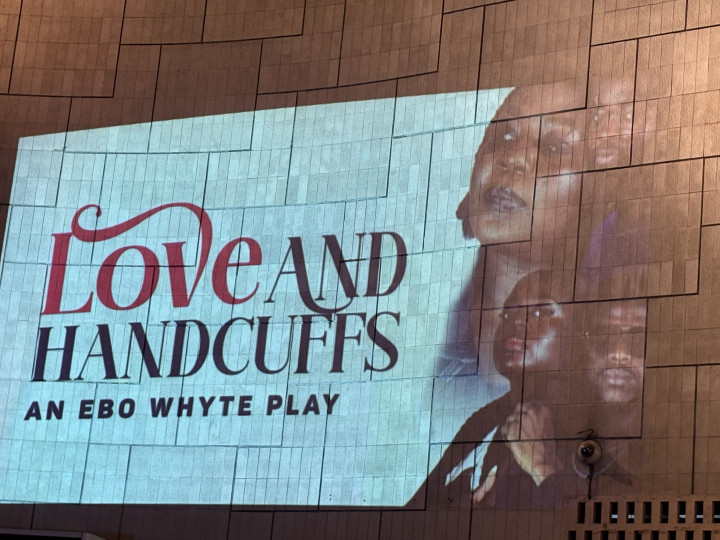
Reflections on Love and Handcuffs: Our First Ghanaian Play!
July 02, 2026
This Sunday, the 28th of June, our cohort unexpectedly got the opportunity to go see a stage play in Accra. Two days before, Dr. Anderson got a call while we were all in the van together. He paused the call and asked the group if we were interested in going to see a play that Sunday. We would have just gotten back from a long day in Cape Coast the night before, but all of us eagerly looked around at each other and agreed that it would be an experience we couldn’t miss.
The play we saw was called Love and Handcuffs by Ebo Whyte and was performed at the National Theatre. The National Theatre had a grand, polished structure inside and out. Before the play started, I ran to get some plantain chips and sat down, antsy for the show to begin. Thanks to Dr. Anderson’s connections, we were able to get amazing seats right in the front and center.
The play was a comedy-drama which revolved around a man named Dave, who owned a publishing company. His day off was interrupted when a notorious thief came into his business asking him to publish a book. Dave, his wife, the thief, and a police officer all become involved in a hilarious entanglement. The main themes that stood out to me were respecting women (although they can be complicated, haha), being intrinsically motivated to change yourself, and loving people for who they are instead of what they can give you. The show was captivating, and my eyes were glued to the stage the whole time. (You can read Ethan Neall’s blog post for more details!)
I felt pretty self-satisfied when I caught some of the Ghanaian-specific knowledge and jokes. For example, there was a moment when the wife started chasing the police officer with a large pestle, and I recognized it as the kind you would use to pound plantains to make fufu. Another example was when a character made reference to the mandatory national service that all accredited tertiary institution graduates complete for a year. I was excited that I understood the significance of the comment. There were definitely some jokes I didn’t quite get, but I loved hearing the audience’s reaction to them nevertheless!
One thing I found interesting was comparing American theater culture to this play. For one, I thought it was really interesting that the lights above the audience stayed on throughout the performance. Personally, I think this created a feeling of connection with the stage that is different from what you would see in the United States. In the U.S., plays tend to be observed rather than interacted with, but that wasn’t the case here. During the play, there was a phrase that went something like, “When Josh [,the thief,] is around, keep your antennas UP!” This became a refrain that the audience enthusiastically repeated. Seeing the audience interact with the play surprised me, but it made the experience even more fun. Of course, that could have been due to the nature of this particular play, but it was still a fun observation.
This is an experience that I’ll remember for a long time. If you ever visit Ghana, go see a play!
- Madison Bradford
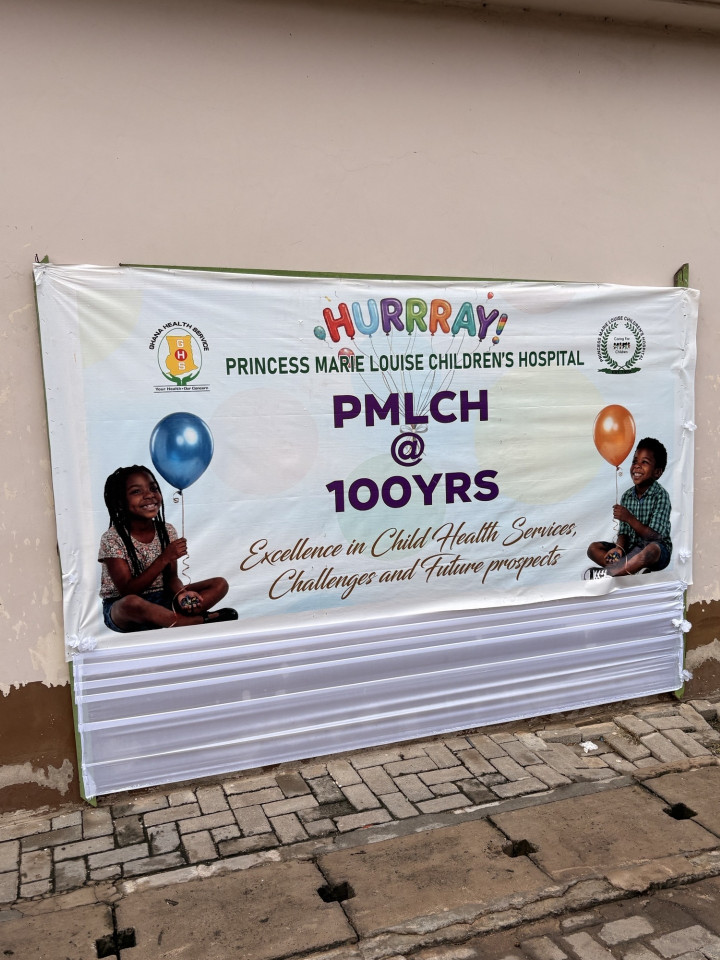
Beyond the Chaos: My First Day in the Pediatric ER
July 01, 2026
On July 1, I got the once in a lifetime opportunity to shadow a senior nurse in the pediatric emergency ward at Princess Marie Louise Children's Hospital in Accra. I have never been in the emergency department at any hospital before, so I really did not know what to expect from this experience. I went in pretty anxious, and expected the ward to be a very chaotic, fast paced environment where the doctors and nurses would not have time for students.
My expectations, to my delight, were very wrong. When we entered the hospital, we arrived right on shift change. The night staff was getting ready to go home and the morning staff was coming in eagerly to take their place. Due to these circumstances, we were told to sit and wait in the nurse’s lounge until the senior nurse from the day shift arrived and would come to fetch us. Rachel and I sat excitedly, waiting to be called upon.
While waiting, three nurses walked into the longue, visibly tired from their long shift. We greeted them and only one of the nurses acknowledged us. The energy in the room seemed a bit off. Shortly after they entered, one of the nurses became upset and started shouting at another nurse, speaking a mixture of Twi and English. Another nurse chimed in, angrily shouting at the other. This is when the argument started. These two nurses began yelling at each other, and the third nurse tried to mediate the dispute, to no avail. I internally prayed for the senior nurse to come and save us from the awkwardness that Rachel and I felt in that moment
Thankfully, a morning meeting was called. Our saving grace from the tension in the nurse's lounge. One of the staff members began giving a presentation on H. pylori and gastritis. It went into great detail regarding how to test for, diagnose, and treat gastritis in the pediatric population. I was not educated at all on this topic beforehand, so I found this to be extremely informative and interesting. I love how much depth the presenter went into! She was very engaging and really knew her stuff.
After the morning meeting, we went back to the ER and introduced ourselves to the senior nurse, Akosua. She was extremely friendly and eager to answer any questions we had. She divulged that she also taught alongside practicing nursing, which made a lot of sense because she was a phenomenal teacher! It was a rather slow day in the ER, so we only had a few intakes. We saw a girl in sickle cell crisis, a baby with jaundice, and two young boys in acute respiratory distress. We observed the senior nurse started a saline IV for the girl in sickle cell crisis and she explained to us the importance of fluids for patients with sickle cell. Furthermore, Rachel and I were able to utilize a nebulizer to administer albuterol (called salbutamol in Ghana) to the two boys in respiratory distress. We then started them on oxygen.
In between caring for the patients and learning more about sickle cell disease, which is a lot more common in Ghana due to it being an adaptation to malaria, we also got the chance to have some really insightful conversations with the senior nurse. We talked with her about how Ghanaian politics influenced healthcare, about the financial struggles that a lot of patients face, and about overcrowding in government owned hospitals (among other topics). I was very intrigued to get a window into this other side of Ghana. She was being very realistic and upfront about issues in Ghana’s healthcare sector.
Alongside the negatives, she also spoke about the positives. Ghana’s government owned hospitals are much more affordable in comparison to hospitals in the United States and they make it a point to see as many patients as they can. For example, one room in the ER contained 23 beds to help as many people as possible. Hospitals in Ghana are also a lot more resourceful and creative with what they have. Furthermore, she stated that she wanted to stay in this country. She emphasized that Ghana is what she knows and has come to love, and that she would never want to move anywhere else due to her love for her country and how fulfilled she is from being a pediatric nurse here. Her dedication to her career and love for the pediatric population really inspired me in my future endeavors as a prospective nurse and gave me an entirely new, positive outlook on life.
- Emma Carr
Shop Rite: The Light in the Darkness
July 01, 2026
On Monday morning, we were on our way to the hospital when intense rain and flooding deterred us away largely because we could not even move out of the spot our car was stuck in. We watched as people’s belongings such as chairs, clothes, shoes, and more drifted along with the water and could only imagine the damage it was causing beyond our car. After about an hour stuck in the same spot, Dr. Anderson told us that many medical professionals would not make it into the hospital as well. We decided to divert to the mall instead so we could take care of grabbing groceries for the weekend along with going to the Mifi store to reload on Mifi. When we got to the mall, we immediately discovered that the majority of the place was out of power. The entire mall was dark except for a few select stores such as the two grocery stores which had power and were operating as normal. This struck me because the rest of the place was dark and the whole outside was experiencing a torrential downpour yet the light from these stores beckoned like an oasis. I thought that this was very interesting largely because the grocery stores were explained to us in the beginning as being for the richer population in Ghana or at least a place where people go who want others to believe they have money. Knowing this and seeing that these places have power while those who work in markets or rely completely on markets are not able to work or get the goods they need when it rains. Especially in such a heavy downpour like Monday, there is a good chance that many goods and stands were washed away which is often people’s livelihoods and their only chance to get supplies for the week.
In the United States, power is often diverted to supermarkets so that fresh produce and meats will not spoil and go to waste. This could also be the case in the mall, but I did notice that a lot of restaurants which also have fresh food did not have any power either. I feel as if in the United States, restaurants, especially fast food, have backup generators so that the food is not spoiled and the customers can have somewhere to go when they are not able to cook at home. While this observation shows the difference between the two countries, I think it also goes back to the point that supermarkets are seen as being a wealthier means of acquiring goods and food and therefore are prioritized over other restaurants and stores in the mall. I thought that this was a good representation of the disparity between different classes in Ghana and how even just a street away from the mall with heftier price tags, there is one of the biggest markets in Ghana selling items for much cheaper. There are more markets and stands across Ghana than supermarkets and I think that is a good representation of the more typical way of life and what we experienced in the mall was atypical. This was also evident as there were many outsiders in the mall as well. It was very eye-opening to visit both the market and the mall and see both perspectives especially on a day that had the worst flood Accra has seen in a long time with many people dead and several missing.
-EK Jordan
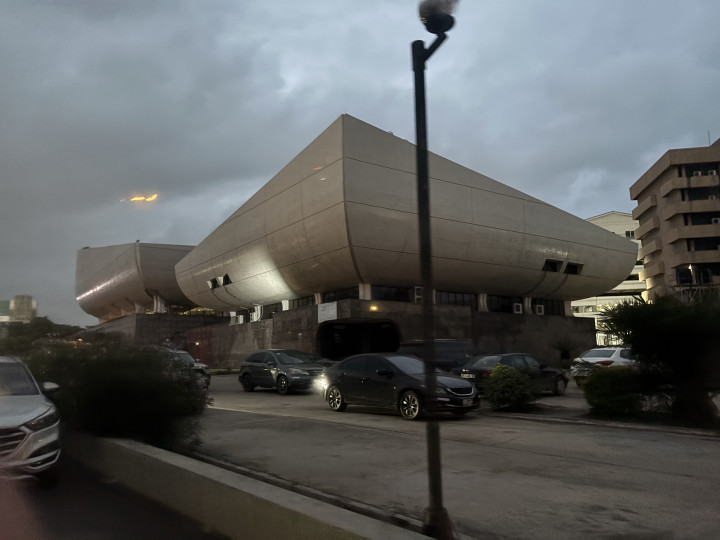
A Night at the Ghanaian Opera
June 29, 2026
On Sunday, we had the opportunity to attend a production at the Ghana National Theatre in Accra. The play was called “Love and Handcuffs,” and it was written and directed by a local Ghanaian playwright. We had tickets for the matinee show at 4:00 PM. When we arrived at the theater, we were struck by the building's massive sail-shaped walls. The building was designed by Chinese architects to look like a gigantic ship or a seagull spreading its wings, celebrating Ghana’s maritime heritage and inspired by African art. When we entered the theatre, we were greeted by a brass band playing in the lobby along with popcorn, fresh juices, donuts, and kebabs for us to snack on. As we took our seats, we were led to the second row in front to enjoy the show.
Someone in our group had said that African plays are very dramatic and exciting, similar to the soap operas that we fell in love with at the hotel in Oda. We were not disappointed. The story opens with a book publisher named David in his shop. One of his clients is a woman named Esme who rides a motorcycle and recently tried to get her book published by him. He tells her the good news that her book had an order for 1 million cedis' worth of copies. The two have a close relationship, which is not looked favorably on by David’s wife, Mabel, who is suspicious of Esme’s intentions. Specifically, she is suspicious of the romantic flirtations with her husband. Mabel comes into the scene, and Esme leaves, and Mabel becomes angry with David for flirting with Esme. After Mabel leaves and David is left alone again, a suspicious man named Josh comes into the shop. Josh explains that he was a member of a crime syndicate. While explaining, he steals some of David's items off his desk without David noticing, to show how skilled he was and still is as a criminal. He has a book he wants David to publish and tells David he graduated with a degree in French and classics before turning to a life of crime due to financial pressures. Josh leaves, and the police stop by, threatening David, telling him they know he is harboring a criminal. The play continues, following the relationship between the four characters with several interjections by the police who are trying to catch Josh. At a meeting in David’s office, Josh recognizes Esme, and they both discover that they know each other because they went to college together. Josh falls in love with Esme and decides to leave his life of crime and turn himself in to the police, turning over a new leaf. Josh allows the police to arrest him under certain conditions that he lays out. The story ends with David and Mabel reconciling and Josh owning up to his crimes.
When the play ended, all the actors went back onstage for another group dance, and the play's writer, Ebo Whyte, came out. He talked about the play and how he was motivated to write this play because of an interaction with an armed robber who turned his life around for the better. He then said that he had some special guests in the audience, and pointed out Dr. Anderson and us, having us stand up to be recognized. As we were driving home, we all wanted to return every Sunday to watch a performance at the theater.
- Ethan Neall

Newfound Appreciation for the Football Spirit
June 26, 2026
I have never watched football (soccer), and I never quite understood why people loved watching sports so much. What was so fun about it? You sit in front of a TV, cheering for players you barely know as they kick a ball around the field. How does a random team you associate with make you so happy?
When I went to Ghana, my group decided to watch Ghana’s soccer match against England after our second day of community health and nutrition screening in Old Town-Oda, and I did not have high hopes. I figured people would just be casually drinking, chatting, and scrolling on their phones in the hotel lobby as the game played in the background.
However, when I got downstairs, we were instead ushered into our van and driven toward town. The sun had set, and it was dark when the van pulled past a huge crowd gathered along the road and suddenly stopped. Our driver, Fender, got out and simply said, “We’re here.”
As soon as I hopped out of the van, I realized I wasn’t just going to watch any football game. I was going to experience it the Ghanaian way: as a community event. The number of people packed together like sardines, the humid Ghanaian heat, and the excited energy radiating off the crowd were overwhelming and caught me by surprise. After squeezing my way to the front, I realized there wasn’t enough room, but the people there were so friendly, and along with Fender, they found me a chair in the middle of the crowd.
The game had already started for about half an hour, but the atmosphere was still contagious. I watched as England stole the ball from Ghana and raced down the field while people around me yelled “Foul ball! Foul ball!” in unison. I was completely clueless about what was happening, but as I asked my classmate, Max, and my professor, Dr. Anderson, questions, I slowly began to understand the game. I would celebrate a little each time Ghana had possession of the ball, or England missed the goal. Whenever England went for the shot, my heart completely stopped, and I couldn’t help but sit on the edge of my seat. I also couldn’t help but groan in frustration and shout “Why?” especially when Ghana almost scored, only for the ball to be blocked by their own teammate. Before long, I found myself becoming just as invested as everyone else, and I even got to take my first-ever picture at a football game.
The match eventually ended with six minutes of overtime, and Ghana bravely fought to the end. We ended in a tie, but the crowd erupted in cheers and applause. People jumped up and down, high-fived each other, and celebrated the great match. The adrenaline was pumping in my veins as I high-fived Dr. Anderson and some of my classmates.
Although Ghana did not win, they made a historical statement by drawing against one of their former colonizers and one of the “Kings of Soccer,” and advanced further in the World Cup. By the time we got back to our hotel, it was really late. Although we had to wake up so early the next day, none of us really cared. We were all so happy and excited by the experience we just had. Before that night, I had thought football was simply a boring game where people kicked a ball around the field and did not understand why people cared so much about it. Still, sitting in the crowd with so many other Ghanaians and my group members, I finally understood it wasn’t just about the game but about the feeling of community and pride as everyone came together to celebrate one thing. This experience truly gave me a new sense of appreciation for the sport and the incredible Ghanaian football spirit.
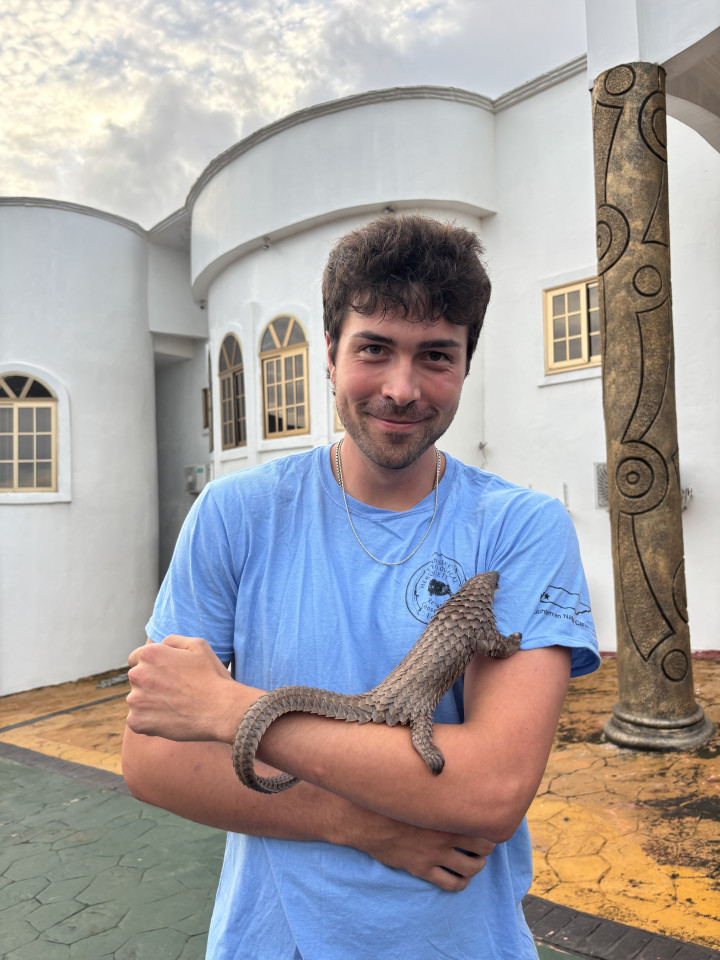
A Well Intentioned Attempt at Pangolin Rehabilitation
June 26, 2026
When people talk about poaching in Africa, the first image that comes to mind may be rhinos and elephants being killed for their ivory or lions and tigers being skinned for their pelts. In reality, the most poached species in the world is actually the pangolin. Having never seen a pangolin before, this came as a huge surprise to me. However, upon seeing it in person, it became obvious.
The first thing to notice about the pangolin is its beautiful and unique scales. This is what the poachers harvest, since it is believed that they have special medicinal properties that can be used in traditional medical practices. There are multiple different species of pangolin, but they are extremely rare to find in the wild. Embarrassingly, is it this fact that brought me, Jordan, Madison and Emma to make a well intentioned mistake with the pangolin we encountered in the car park.
After playing with the pangolin for a while, the four of us realized that we were the only ones left outside. We turned to each other and started sympathizing with the animal, thinking about how helpless it seemed and that it would never make its way back to the wilderness safely without aid. Soon, a spot was picked out just outside the hotel compound where we decided it would be best to set the pangolin free. Standing there, we researched the different kinds of pangolins in Ghana and their natural habitat, landing on the African Tree Pangolin as the most likely candidate. Given this information, we set it free in a grassy area that was close to a small collection of palm trees.
After setting the pangolin down, we marveled at our initiative and environmental awareness, believing that we had helped keep the endangered species alive and well. We watched as the pangolin walked in circles, taking a few steps into the grass and then promptly returning to our feet. Ignorant to the meaning of this behavior, we shared our prideful thoughts about the job well done and had even talked about releasing it further into the wilderness to aid in its rehabilitation. It was at this moment we heard someone yell from the hotel gate. Regina, a worker at the hotel, had come out and was shouting at us for something. Confused, we walked toward her, asking her if she needed help. She promptly jogged straight by us and made a straight shot for the pangolin, who was still sitting on the barrier of the grass. She picked up the pangolin, chuckled, and walked back inside with it. It was at this moment we realized it was her pet, which we had tried to heroically release back into the wilderness. We profusely apologized, but the embarrassment had already set. We ran back inside laughing, knowing full well she would never let us anywhere near the pangolin again.
- Carlton Burns

The Barefoot Soccer Game
June 26, 2026
On Saturday, June 20th, Dr. Anderson’s nephew Kojo took our group on a walk throughout the town of Mampong- Akwapem. After strolling, we arrived at a soccer field which we had decided was the point in our walk to turn around and go home. Right before we were about to leave, a few of us got an urge to go play with a couple of locals who were kicking the ball around. I, personally, was terrified of playing with them since I have grown up watching players from African countries, like Ghana, play on TV. I would try and replicate their game play and my mom would have me practice my soccer skills barefoot- since it is proven to significantly improve your footwork. After working up the courage to go talk with the 4 guys, about 8 of us joined their soccer game where the goals were two cinder blocks.
I was playing barefoot, along with the 4 locals: Kojo, Kojo, Kofi, and Kwame. It was one of the most fun pickup soccer games I have ever played. Growing up, I learned how soccer legend Pele became great by playing barefoot- so I practiced in my yard without shoes on as well. When I was younger, playing barefoot made me feel almost connected with these soccer players from around the world who practice barefoot. It made the game of soccer feel grounded and like an international equalizer. It did not matter who had the most expensive cleats or lightest shin guards. All that counted was one's passion for the sport and their skills they have cultivated through the years.
Playing with these Mampong- Akwapem locals just confirmed how universal the game truly is. While only a few words were spoken, plenty was said throughout those 30 minutes on the field. We did not understand the same language, but we knew how hard to play the ball and how to cover eachother on defense. The gameplay became our language. Immediately, we learned how to read each other’s bodies to predict where the other was going to make their run. I learned here just how many ways there is to communicate that doesn’t involve spoken speech. All of my coaches from home drilled into me the importance of specific verbal communication. Yet, during this pickup game, my teammates and I seemed to do perfectly fine without intricate speech. I understood Kofi wanted the ball at his feet when he pointed to them, and he knew I was going to launch the ball up the field when he saw my left foot planted next to the ball.
For a short while, we all had the exact same goal: to win this one game. We truly played as one team. As a selfless unit, working to support each other. Kofi told me during the game, “You to score goal.” Shortly after, we perfected our overlap runs and give-and-gos which led to both of us assisting each other to hit that cinder block and score a goal. With all of our bare feet on the ground, we were connected through the grass and the ball. My appreciation for the game of soccer has never been higher, as it is one of the few games that can be played in almost any area with almost any item. It serves as a point of connection when the entire world tells you to separate from those different from you. With different hometowns, skin colors, genders, and languages, this soccer game served as proof that those differences are entirely meaningless. We were teammates who shared the love of the game and understood the unspoken language of fútbol. These four players will forever go down as the teammates who taught me the most about the game of soccer with no words and bare feet.
- Jordan Nowicki

Ghana vs. England: A Night to Remember
June 26, 2026
I had the wonderful opportunity to watch the Ghana vs. England FIFA game on June 23 in Ghana. At first, I was simply planning on watching the game in my hotel room with my roommate and a few of my other peers. However, Dr. Anderson and our bus driver, Samuel (nicknamed “Fender”), invited us out to go see the game at a watch party that was being held outside in Oda. I did not quite know what to expect, but once we arrived, I was glad that I decided to not stay inside and embrace the unknown.
Once I departed the bus, it was immediate chaos. There were easily a hundred people (if not more) and everyone was crowded around a relatively small TV that was showcasing the match. I have never experienced anything quite like it before. Most of us were quickly ushered to the front of the crowd, although some of us stayed behind. Half of our group sat in plastic chairs in front of the TV while others (including myself) sat on the concrete floor. It was a “get in where you fit in” situation. A few of the men sitting up front saw that we were all wearing Ghana jerseys (except for Carlton) and found it amusing that we were rooting for them. Despite being foreigners, we swiftly got accepted into the crowd. We all had a common goal: making sure that Ghana came out on top.
I had previously never been particularly interested in soccer, but this match definitely caught my attention. The excitement was palpable. There was an undeniable sense of pride in the air that Ghanaians possess for their soccer team. It was electric. Some people were standing around in the back of the crowd talking; others were completely locked into the game. Their energy was infectious. I could not help but get invested when I typically do not have a care in the world for sports. In that moment, I felt unity and solidarity with the Ghanaian people. I genuinely wanted the Black Stars to win. When they missed a goal against England, it stressed me out. When Benjamin Asare, their amazing goalkeeper, kept England from scoring, I cheered with all of the people in the crowd. I clapped until my hands hurt. I had heard that Ghana takes soccer seriously, but in that moment, I felt it.
In the end, Ghana and England tied 0-0. The people in the crowd took this as a win and their excitement and joy crescendoed. I was high-fiving random people, jumping up and down, and clapping even more vigorously than I ever had before. I felt pride that England did not win against Ghana – something that I have not felt for a U.S. sports team in my life. As we started to leave the gathering to return to the bus, the energy throughout the group had completely changed. We entered with low energy, not knowing what to expect, and left being complete abuzz about the match. It was an amazing feeling that brought us all closer to each other and to the Ghanaian people.
- Emma Carr

Trials, Tribulations, Twi
June 26, 2026
This week we began our community health screenings, and in turn I began my study of Twi, the most spoken indigenous language in Ghana.
Throughout this week (June 21–26), our cohort set up shop in multiple Methodist churches in Oda (the Eastern Region) and served their local communities. As students, we completed health screenings that consisted of taking blood pressure, anthropometric measurements, and blood measurements of glucose and iron levels, etc.
As a group, we all had the opportunity to rotate through all of these stations during the day. Our group had gotten much of the technique needed to perform these tasks down fairly quickly, but the bigger problem to tackle was our ability to communicate properly with the patients we were seeing. My classmates and I all wanted to show the utmost respect we could to the communities we were inserting ourselves into, and this is one of, if not the, most important ways to do so.
As most of our health screenings took place away from major cities like Kumasi and Accra, many of the people we were seeing at the screenings were not completely fluent in English and preferred to communicate in Twi. During the very first day, I knew close to nothing of the language. I was humbly reminded just a few minutes into working with the patients of how important it would be for us to put effort toward learning Twi. If you cannot properly communicate with the people you are supposed to be serving, you can cause frustration, inaccurate results, and ineffective screenings. To get by, our group heavily relied on Sydney, a fellow student who was familiar with Twi.
After that first day of health screenings, we students got the motivation we needed to start seriously studying Twi. A few classmates and I gathered in a room and started running through basic phrases and pronunciations. For example, I learned "Medaase" (pronounced meh-dah-ah-seh), meaning "thank you." It is probably our most-used word.
The next couple of days, I was more than nervous to put my Twi to use out of fear that I would create more misunderstandings or look foolish. However, these worries were minor compared to the possibility of causing harm to a patient by not trying at all. Each day I received encouragement, both verbally and intrinsically. Nothing is more satisfying than asking a patient to "Mepawokyɛw, dane wo ho" ("Please, turn around"), and they do so without hesitation.
The few words of Twi I was able to use over the following days elicited a few laughs of surprise and/or amusement. As a group, we picked up more and more Twi each day. There were many instances where people laughed at our poor Twi, but I frankly understood—it made me laugh as well, but it also pushed me to become more knowledgeable and accurate. Despite getting laughed at at times, you also come across those who give you a few pats on the back and words of encouragement to continue your studies of the language.
Although there can be much apprehension on this journey, I feel so blessed to have the opportunity to push myself out of my comfort zone and learn. Undoubtedly, being challenged to communicate and truly cater to the people I want to help will allow me to become a better health professional (and person) in the future.
– Madison Bradford

Meeting Kojo
June 26, 2026
This past week the group and I travelled to the Eastern Region of Ghana to participate in free health screenings. We provided five days of volunteer work in order to give the locals some perspective on their health status. Each day we travelled to a different community, so that we were able to spread our impact. Methodist churches in all five areas allowed us to set up our health screening in their buildings, which was especially kind and immensely helpful. Days were long and tiring, but it was so lovely to have kind staff and locals around us. It was shocking the number of patients we encountered with no idea of their medical history, such as diabetes or hypertension. In our time in the Eastern Region of Ghana, I have noticed the people here are especially kind and grateful for our presence. Of the five days of our volunteer work, the third day was the most meaningful to me personally.
On Wednesday this week, the third day of our free clinic, we travelled to the Ayirebi-Oba Methodist Ascension Church. Here I had the joy of meeting my new friend, Kojo. Kojo was a patient at the health screening; a kind old man who wanted to genuinely speak to me and get to know me. He immediately stood out to me because his shirt looked identical to Charlie Brown’s, which made me laugh initially, but made him easily identifiable. He began stopping me every time I tried to walk past him, and we spoke over and over again. He arrived in the middle of the day, so the wait for the screening grew to be lengthy. This resulted in our conversation growing longer and more periodic. He liked to call me “Akua” and he liked reminding me this was my name because I was born on a Wednesday. Here in Ghana, the day of the week you are born holds great significance, and it becomes a part of your name. The people here refer to these names casually, but it felt different as a foreigner only being calling by my Ghanaian name. Kojo would call out ‘Akua!’ any time he wanted my attention, which seems like an insignificant detail, but something about this made me feel accepted. Although I already understood that the name Kojo comes from being born on a Monday, he enjoyed reminding me of this fact, I think it was likely because he was proud. He joked with me that when I return to the United States, I’d need to tell everyone that my real name is Akua.
Kojo briefly left the health screening but soon returned with an old friend of his. Another kind man, even older than him, who was unaware of his entire medical history! I was so glad that Kojo was able to convince his friend to come get checked, so he had some answers to his current state. I was also glad Kojo had returned with his friend because it meant we could talk some more. We joked and shared laughs up until his friend completed his screening as well. Looking back on this interaction, I wish I had gotten a picture with him before we left the community, because he has played a huge role in my emotional experience on this trip. Instead of just telling me I was welcome in Ghana, he showed it. Through sharing his country’s traditions and culture with me, Kojo made me feel included. These interactions sound trivial, but our conversation we shared deeply touched me and I am certain I will remember him and his yellow and black polo forever.
Katie McIntyre
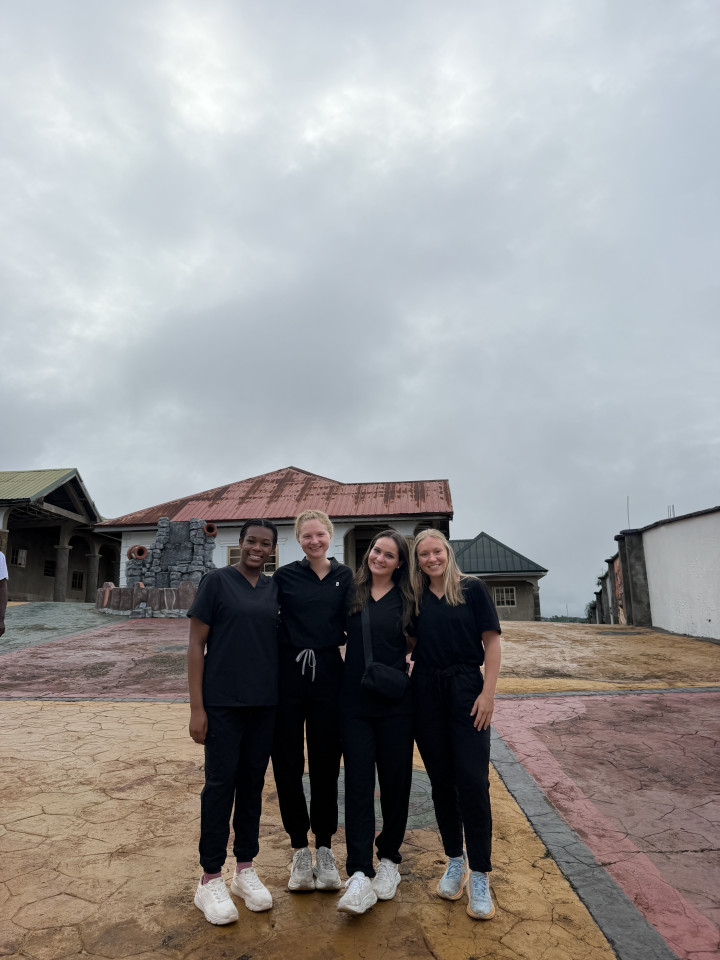
Lost in Translation
June 26, 2026
On our fourth day of community health screening, St.Luke Cathedral-Oda welcomed us to volunteer at their church. I started with pricking, and it turned out to be a great success. Working with Ek, we found a great rhythm, and all the patients were cooperative with our Twi. Some even encouragingly enunciated words or offered alternative ways to say things, which helped us improve our phrases.
About two days before, when I was the greeter, I remember saying "wadidi ahi"(I am guessing it meant did you eat your age) while asking for a patient's age. They laughed so hard that one of them nearly fell off the crutches, repeatedly calling me "oboroni" (which means foreigner). From that day on, I made more of an effort to speak Twi and thought I was understandable — but I was extremely wrong.
When I went to greet, it was a whole different story. Struggling to speak Twi would be an understatement. I was greeting all alone during the after-market rush, when all the teenagers from the local school arrived. I tried asking for their information in Twi, and they either ignored me or laughed to tears. I knew I wasn't the best, but I was confused because I had used the exact same phrases on earlier patients that day and they responded perfectly. I think I just got a really tough crowd. Thankfully, I got a translator to help out for about five pamphlets. I started mimicking what she said to the patients — but I butchered it, so I went nonverbal and tried listening again for another five pamphlets. Then I tried again and finally got the hang of it. Greeting the patients ended up better than I expected. I still got a lot of laughs, but I did not mind at all because I knew I was trying.
Usually I work with Katie for the whole day, but since she was at the lipids station, I was buddied up with Ek for basically the whole day. We got through the measurements pretty fast, with just a few hiccups. We didn't know how to tell people they needed to scoot up a little on the scale. My translation — my poor phonetic translating — was wrong again. Apparently, according to the patients listening to me attempt Twi, I was telling the patient to "stay on the scale" while gesturing for her to get off. Ek and I were then saved by the patients who had been listening to our attempts while waiting for their blood pressure.
Lastly, I went to the pricking station and met some patients who surprised me. There were more older people afraid of being pricked than younger kids. I tried to distract them by asking if they watched Love Island or any soap operas — none of them answered, I'm guessing out of nervousness. I had to be a bit tougher with them, meaning I had to grab their arm to keep them from flinching while I was pricking.
Overall, although this day had the highest turnout, we communicated very well on what needed to be done — who was going where and who needed to fill in where. I really hope there are still more people who need help coming into the clinic and receiving the care they need.
Dani Domkam
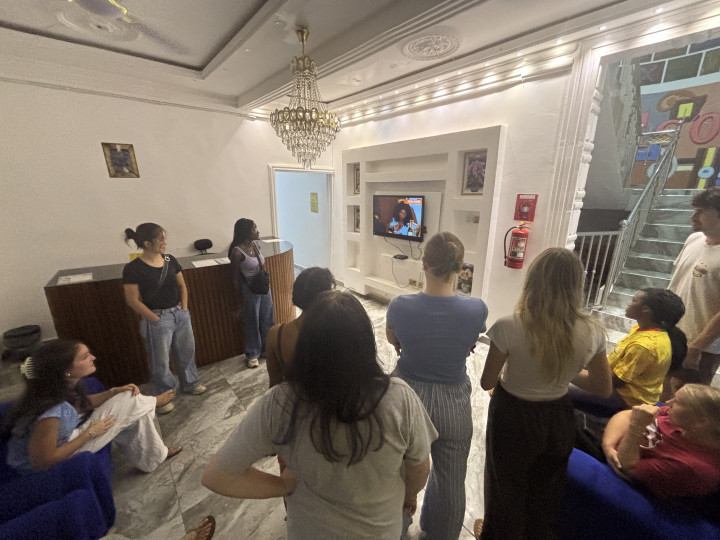
Discovering African Soap Operas
June 26, 2026
Coming to Ghana, I knew there would be less internet access than we have back home, so I was prepared to unplug for a while. During the trip so far, that assumption had been correct. Service had been spotty, and the portable WiFi devices that we carry around, called “MIFIs,” tended to stop working frequently. One of the only screens that we have been able to tune into reliably has been Ghanaian cable TV.
On Sunday, we checked into our hotel in Akim Oda in the Eastern region. From this hotel, we left every day this week to work in mobile clinics in the surrounding area. When I came downstairs to the hotel lobby on the first night, the whole group was there surrounding the TV. They were all watching an African soap opera that the hotel staff had put on. The soap we watched was called “Fragile Comfort.” We caught the show halfway through and tried to figure out the plot. At first, we thought it was about an affair. The main character brought a woman named Josephine into the home, and we assumed they were having an affair. After watching for a minute, we looked up the name of the show, and it turned out that the two were conspiring to commit fraud to get themselves out of debt. When I went back to my room, I turned the TV on and scrolled through the Ghanaian channels. The channels on the Ghanaian TVs are grouped based on similarity. There are a bunch of religious channels, news channels, infomercials, and then there were a few channels that were dedicated to West African soap operas. The shows and movies tended to be very similar to one another. They were extremely melodramatic, had poor video and audio quality, and had backing soundtracks that would extend throughout many scenes without ending. All of this made these programs all the more entertaining.
I was interested in the movies and shows, and decided to look online for information about some of the ones I came across while scrolling through the channels. One pattern became clear as I looked into each one, none of the soap operas seemed to come from Ghana. When I looked up each one, the vast majority of them were from Nigeria. Many people are familiar with Bollywood, the Indian film industry, similar to Hollywood in the United States. However, fewer are aware of Nollywood, which is Nigeria’s movie-making industry. It was confusing to me at first why most of the movies and shows that I saw were Nigerian rather than Ghanaian. But the more I thought of it, the more it made sense. As I have traveled through Ghana, I have seen many things that could be developed and capitalized on but are not. For example, we drove past the center of the world map and the largest tree in West Africa without any sign of them being there. There are many places that would be ideal real estate for resorts, tourist destinations, industrial plants, shops, etc., that have not been developed. Dr. Anderson told us that corruption within the Ghanaian government hinders investment and development, keeping the economy stale and many potential industries nonexistent. This causes Ghanaians to look outside the country for goods that could otherwise be produced in Ghana. This extends to the movie industry. With a population of around 35 million, Ghana has the potential to have a robust and successful movie industry, but a lack of investment in the movie industry causes Ghanaians to look to foreign countries like Nigeria to produce entertainment. Although the Nigerian soap operas were entertaining, I’m hoping to turn on the TV someday and see a few more Ghanaian soap operas.
- Ethan Neall
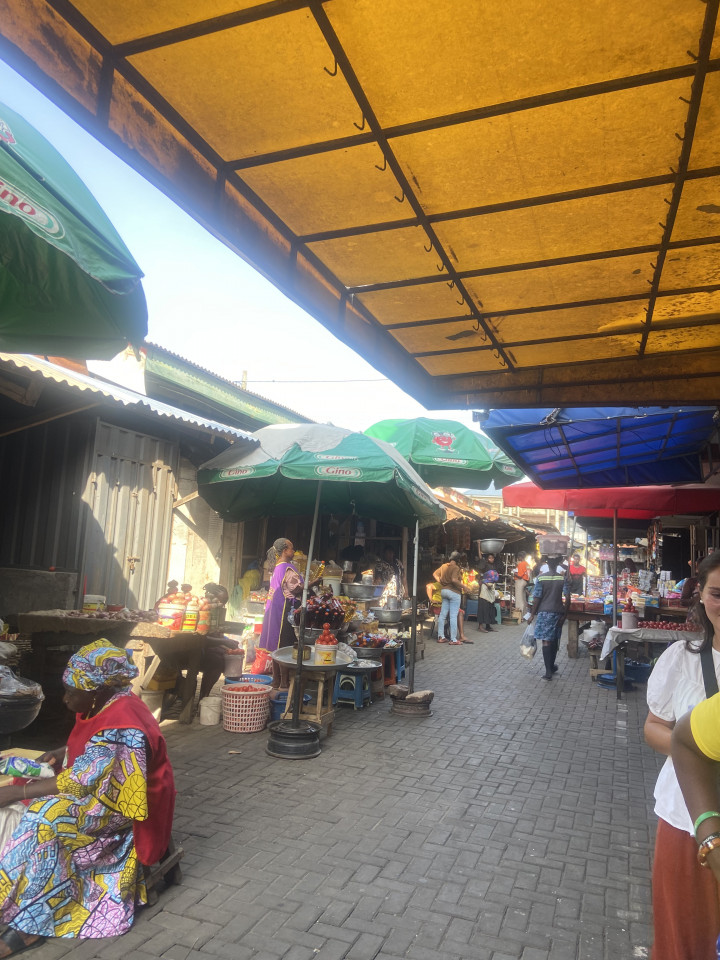
Merry Madina Market
June 26, 2026
The Madina Market that we visited on June 12 is one of the most vibrant places we have visited while on this trip. The jumble of sellers shouting food items, bargaining, and people just having simple conversations filled the atmosphere. There was never any dull moment there.
I remember roaming through the market trail and seeing the booths set up. Fish, snails, fruits, vegetables, and clothing were all being advertised to my left and to my right. As I was walking along the pathway with my group, I saw some market women walking with goods on their heads. I thought it was fascinating how people in Ghana carry all sorts of products on their head, although it is mainly food products. I think it is an innovative idea, the sellers make it seem so effortless, and I’m pretty sure it helps with posture.
I remember when we stopped at the coconut booth. There was a man who oversaw the booth, and he used a machete to crack open the coconut and shape it. Everyone got their own to eat, but I shared one with Rachel since both of us knew that we could not finish one on our own. My first sip of coconut water was incredibly refreshing. It had a sweet, nutty, and a bit sour earthy taste. I was battling the hot, Ghanaian sun, and crowded market all day, so getting a taste of the coconut water was amazing. Our tour guide, Matilda explained the nutritional benefits of drinking coconut water, explaining how it is high in electrolytes. She also mentioned that if we did not have access to regular water bottles on our trip, then coconut water straight from a coconut was another option. At that moment, I was grateful that I was traveling in a tropical country like Ghana, which has an abundance of fruits growing on local trees.
Another stop at the Madina Market was attending the meat/butcher section. Dr. Anderson gave a caution before allowing the group to proceed inside that the meat is displayed in ways that we may not be accustomed to viewing, so we had a choice to not enter. My curiosity got the best of me, so I peeked inside the meat section, saw a carcass then humorously decided to go explore a different section.
I went to some booths that were selling jewelry, specifically beads for the waist, hand, and ankles. They were beautiful: colorful with intricate designs and showcased the beauty and creativity of Ghanaian culture. I admired the booth for a while before hearing that we had to depart for the journey of our trip.
Overall, the Madina Market in Ghana was an eye-opening experience. I enjoyed learning about how the majority of Ghanaians shop for their groceries and the contrast in the types of food and showcasing styles compared to the United States.
- Sydney Apraku
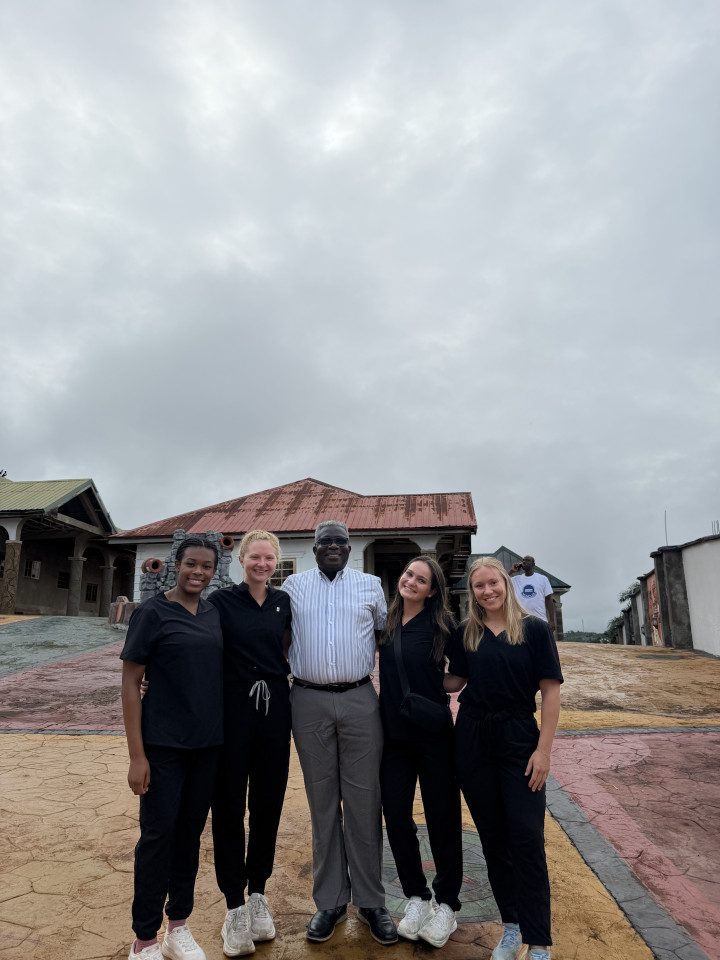
Serving with Purpose: Community Health in Ghana
June 26, 2026
This week, we explored the surrounding communities of Akim Oda, Ghana, visiting five different Methodist church locations to conduct a variety of health screenings. Reverend Solomon, a longtime friend of Dr. Anderson (our professor), has accompanied us to each location, introducing us to the communities and helping us become comfortable with the area. We have had an incredible turnout, and being able to assist individuals who lack access to healthcare has been an incredibly rewarding experience.
Each morning, we gather for breakfast around 6:00 a.m., dressed in matching scrubs, either black or red. After breakfast, we load the van with all of our screening supplies and head to that day’s location. The drives to each community are relatively short, with the longest being about 45 minutes. As we arrive at each Methodist church, the ministers warmly welcome us. Many of them have taken the time to pray over our group and express their gratitude for our willingness to come to Ghana and serve our fellow brothers and sisters in Christ. Their kindness and hospitality have been truly inspiring. The fact that they willingly set aside time from their busy days to guide and welcome us speaks volumes about their character. After the introductions, we quickly begin setting up our stations. Church members, along with our bus driver, whom we all call Fender, help move tables and chairs in front of the pews so we can organize our equipment and prepare for the patients.
The screening process begins as community members, who become our patients, are greeted at the door. One of us asks several questions regarding their age, whether they have eaten that morning, if they have a history of high blood pressure or diabetes, and whether they are experiencing any specific pain or concerns. On our first day, we were able to communicate with most patients in English. As the week progressed, however, we found ourselves relying more heavily on Twi, the local language. Initially, this presented a significant challenge for our group. Although Dr. Anderson had introduced us to basic Twi phrases before our trip, we had not anticipated needing them so frequently. After our first day, we returned to the hotel and created a "cheat sheet" with common phrases such as "high blood pressure," "did you eat," and "what is your age." With the help of local resources, including Fender, we translated these phrases into Twi. This preparation made an enormous difference during the remainder of the week.
After registration, patients move to the anthropometric station, where we measure their height and weight using the metric system and calculate their Body Mass Index (BMI). Accuracy is very important during this process. Patients remove their shoes, empty their pockets, and stand on the scale facing away from the measurements. Ideally, their height and weight result in a BMI below 30. Once their measurements are recorded, they are escorted to the next station. Between each station are two designated "floaters," whose role is to guide patients through the screening process and ensure everyone reaches the correct station efficiently. The next stop is blood pressure screening. Patients are seated comfortably with both feet flat on the floor and are encouraged to relax for approximately two minutes before we take their blood pressure. Once the reading appears on the machine, we determine whether it falls within a normal range or if it should be repeated after allowing the patient additional time to rest. After recording the reading, the patient is escorted to the finger-prick station. At this station, we measure both hemoglobin and blood glucose levels, which provide information about iron levels and blood sugar. Factors such as eating breakfast or menstruation can affect these values. After cleaning the patient's finger with an alcohol swab, we perform a small finger prick using a lancet. From that single prick, we collect blood into two separate cuvettes then allow each machine to analyze the appropriate sample. Ideally, hemoglobin levels fall above 10 and below 16.5 or 17.5, depending on the patient's gender, while blood glucose levels should remain below 126.
Following these screenings, patients wait to meet with Dr. Anderson. During this consultation, he reviews each patient's results while one student enters the data into an Excel spreadsheet and another prepares to perform an additional finger prick for lipid testing when necessary. Patients with diabetes or high blood pressure are often selected for this additional screening. While assisting at this station, I have been able to overhear many of Dr. Anderson's conversations with patients. A common theme has been the importance of lifestyle changes, including eating more vegetables, exercising regularly, limiting sodium and seed oils, and maintaining a healthy weight. If cholesterol testing is needed, patients receive another finger prick. This time, instead of using cuvettes, the blood is transferred with a micropipette onto a specialized test strip, and the machine measures cholesterol levels. Depending on the patient's results, the machine may report total cholesterol, LDL ("bad") cholesterol, HDL ("good") cholesterol, and triglycerides. Based on these findings, Dr. Anderson provides individualized recommendations regarding diet and lifestyle before patients return home.
The people of Ghana have been incredibly welcoming and genuinely grateful for our presence. For many, the opportunity to receive free healthcare within their own community is extremely rare. Some individuals simply cannot afford healthcare, while others live too far from the nearest medical facility. Being able to provide care to those in need has reinforced why service is such an important part of healthcare. This week of community outreach has been an unforgettable experience, and I am grateful to have played a role in it.
As we begin our next three weeks working in the local hospitals, I am excited to continue learning. Observing healthcare in a country outside of the United States has been incredibly eye-opening, and I feel truly blessed to have this opportunity.
—Taylor Chesser
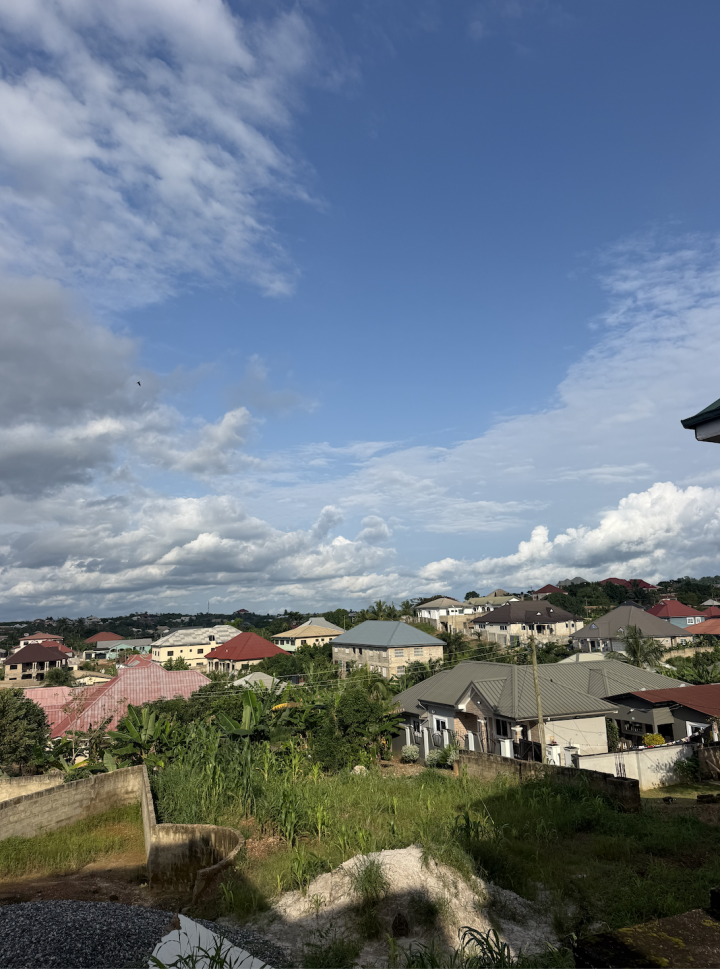
Walks Through Ayirebi-Oda
June 26, 2026
Walking around the communities in Ghana has become one of my new favorite hobbies, especially in the town of Ayirebi-Oda. Whether it's watching the sunset or stopping by a nearby market to browse the snacks, every walk is filled with joy. This week, we have been conducting community health screenings, which require us to stay indoors for most of the day with very little movement. By the time we get back to the hotel, we are usually exhausted. However, getting outside for a walk is exactly what we need and always does the trick of re-energizing us. There is something so exciting about wandering through the town, never knowing exactly who you are going to meet or what you are going to discover. Each little market is unique, especially when it comes to the snacks. There is something so exciting about trying foods that we don't have back home in the United States before continuing on our walk.
One walk with Taylor after our third day of community screenings was particularly memorable. Instead of taking our usual right out of the hotel, we decided to go left. We discovered a new market and, although we didn't buy any snacks, I was able to find the toothpaste I needed. We continued walking until we came across two carpenters, Emanuel and James, who were renovating a building that would soon become a shop. Alongside them were two dogs that they enthusiastically tried to sell to us. They were very convincing, insisting that one of the dogs was the biggest in the area and assuring us it would fit just fine in our suitcase. Despite their best sales pitch, we decided to leave the dogs behind and not bring them home with us. Emanuel and James were incredibly kind, and we shared many laughs before continuing on our walk.
From what I have observed during my two weeks in Ghana, people spend a great deal of time outdoors, whether they are walking home, sitting outside their homes, or simply enjoying each other's company. It is evident that community is an important part of daily life, and being surrounded by that has made us want to slow down and do the same. Everyone is quick to wave with a big smile, and many people stop to introduce themselves and start a conversation. They are genuinely excited to meet us, and we always leave those conversations with our cups a little fuller.
Shortly after leaving the carpenters, Taylor and I met Esther, a young woman in her early twenties who was carrying beans home from the market. She was very kind and even invited us to her home to try her leftover pine nut soup. Although we politely declined, we exchanged phone numbers so we could stay in touch.
After saying goodbye to Esther, Taylor and I decided to climb a steep hill to get in a little more exercise and enjoy a better view of the town. Huffing and puffing our way to the top made us realize just how out of shape we were, but we were proud of ourselves, and the view made every step worth it. As we looked out over Ayirebi-Oda, we reflected on how grateful we were to be in such a special place and how sad we would be to leave this community. We both agreed that if we were ever to live in Ghana, Ayirebi-Oda would be our first choice.
The people truly make this place what it is, and there has not been a single moment when I have felt anything less than welcomed. These walks, especially this one, have become some of my favorite memories because of the people walking beside me and the incredible individuals we meet along the way.
-Mary Hanna Hiers
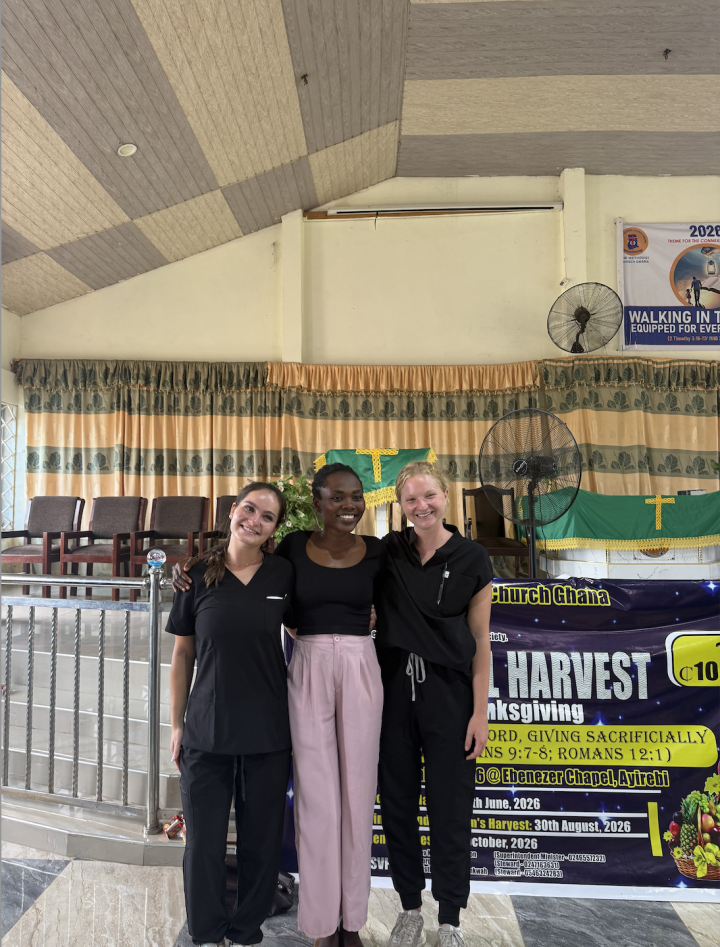
Teamwork, Twi, and a Turning Point
June 26, 2026
Our third day of community health screenings in Ayirebi-Oda in the Eastern Region marked a significant turning point for our group. Because community health screenings were completely new territory for most of us, we knew from the start that things would not be perfect and that there would be many challenges along the way. During the first two days, we definitely experienced those challenges, but we quickly learned from our mistakes and improved each day.
While there were several areas we needed to work on, our biggest challenge was learning more Twi, the local language, because many of our patients spoke very little English. This language barrier was preventing us from providing the level of patient care these people deserved, and we knew we needed to do better. After our second day, we all went back to the hotel and spent time studying Twi. We wrote down helpful words and phrases, such as "Wadidi?" ("Have you eaten?") and "Maakye" ("Good morning").
Looking back on that third day, I truly saw the improvement that we had all been working so hard to achieve, and I could not have been prouder of our progress. Through teamwork and communication, we overcame adversity and adapted to unexpected situations with confidence. Everything ran more smoothly than it had the previous two days, and it was incredibly rewarding to witness just how much we had grown in such a short period of time.
We set up all of our medical equipment, tables, and chairs around 7:45 a.m., and just as we finished, a rush of people began walking through the doors. Carlton, our greeter, did an incredible job remaining calm, even as the number of patients quickly grew. Seamlessly, everyone flowed from station to station, and you never would have guessed it was only our third day.
My second rotation that day was serving as the greeter. I asked patients about their medical history, whether they were experiencing any pain, and if they had eaten before coming to the screening. This was where our Twi practice from the night before made a huge difference. While I did my best and was able to communicate with many patients, a young woman named Vincentia came to my rescue.
She served as a translator while still allowing me to take the lead in caring for each patient. She was incredibly welcoming, patient, and encouraging. We bonded over the fact that we had both recently graduated from college and were continuing our education by pursuing master's degrees. Although I felt overwhelmed by the language barrier at times, her smile and generosity quickly made those feelings disappear. She was the warm and reassuring presence I needed, and I hope to carry that same kindness into my future interactions with others. By the end of the day, we exchanged phone numbers so we could keep each other updated as we pursue our future goals.
Looking back, I am so proud of our group and the progress we made in such a short amount of time. We overcame many obstacles through teamwork, communication, and a shared commitment to our purpose: helping others improve their health.
I am especially grateful that I had the opportunity to work alongside my new friend, Vincentia. I hope I can make others feel as welcomed, supported, and encouraged as she made me feel. Experiences like this remind me that while language differences may exist, kindness is a language that everyone understands.
I am excited to continue serving these communities and making a meaningful impact, one patient at a time.
-Mary Hanna Hiers
Roadside Enjoyment
June 25, 2026
On June 23, 2026, we experienced our second day in Akyem-Oda conducting health screenings for the surrounding communities. Because it was only our second day, some of us were still reflecting on and refining our skills, but we did much better than the day before. Although many of us were tired after the screenings, we knew we had to pull through because today was the long-awaited World Cup group stage match between Ghana and England. This match was particularly interesting to me for a couple of reasons. First, since we are currently in Ghana, we were definitely going to support the home team. Second, I was fascinated by the history between the two nations. I have always enjoyed matches between countries with shared history, and this was no exception.
As a group, we decided we were going to watch the game; if it meant suffering the consequences of being tired the next morning, so be it. However, as the 8:00 PM kickoff approached, we realized our TVs could not broadcast the match, and we had to come up with a backup plan. We decided to head out to the street to find a place to watch. Our bus driver, Samuel, kindly drove us to a spot about 15 minutes away. When we arrived at the watch party, a massive crowd was huddled around a single small TV. The locals treated us incredibly well, even pulling up chairs for us to sit right at the front so we could fully experience the vibrant culture.
I ended up separated from most of our group, sitting slightly toward the back with Dr. Anderson on my left and another group member nearby. On my right, a local named Ibrahim struck up a conversation with me. He wanted to know why we were visiting, if we were enjoying our time in Ghana, and asked various miscellaneous questions about the United States. Ibrahim and I chatted during the brief breaks in the match, trading questions back and forth. We also talked about the game itself, analyzing plays and discussing how the teams were performing. Whenever the crowd cheered for a great Ghanaian play or booed a foul against them, we joined right in and soaked up the atmosphere. When the game ended in a tie, the crowd erupted in joy, with everyone jumping up and hollering. It was incredibly reminiscent of my time back in Mexico, where everyone would watch matches out on the streets and have a blast. This was such a wonderful experience, and I hope to do it again when Ghana plays in the knockout games.
Maximiliano Villeda-Macias

Ghana and England Group Stage Game
June 24, 2026
On Tuesday, we completed our clinical around 2:30 pm and went back to the hotel. We knew there was going to be the Ghana game at 4:00 pm Eastern time back home so 8:00 pm our time. This timing was a lot better than the last game which started at around 11:00 pm so we did not even have the chance to watch it. Knowing this information, everyone agreed they wanted to watch Ghana and England play so we decided to all put on our jerseys we had gotten earlier last week and to meet down in the lobby to watch it there. As 8:00 pm rolled around, we discovered that the game could not be accessed on any of the TVs as they were not showing it and none of us wanted to waste all of our MIFI streaming it. Luckily, our bus driver, Fender, who has become a part of our group, offered to drive us all somewhere to watch it. It was a very generous gesture as it meant he was also committed to staying for the entirety of the game. All of us except Mary Hanna went downstairs with our jerseys on (Carlton forgot his, but it was okay) and were greeted with a surprise! Dr. Anderson had decided to join us in going to watch the game.
We were not quite sure where we were even going to watch it, but we trusted Fender and Dr. Anderson. Soon pulled up to a house with at least one hundred people outside crowded around a tv screen. We knew this was the place. As we unloaded the bus, we began to garner a lot of attention from the viewers and even some of them clapped as we walked through the crowd. We were led by someone through the mass of people down to the very front where we were all given chairs and told to slide down in them so as to not block the people’s view behind us. This was electric. The crowd was fired up throughout the game even more so as time began to dwindle and England had not scored on Ghana yet. Ethan and I began to talk to some of the Ghanaians behind us about players on the team and they asked us why we were cheering for Ghana. We told them we cannot stand England as well, so we wanted Ghana to win! They were very kind to us and asked us questions about why we were in the country. When Ghana tied England, there were cheers as loud as if they had won the game. We quickly left but said goodbye to our new friends and thanked the people who had allowed us to come to their house and watch the game.
Pulling up to a random person’s house as foreigners to watch a soccer game was not on my bucket list this trip but I am so glad that we were given the opportunity to do it. This experience just reaffirmed my previous comments about the kindness and community of the Ghanaian people. The welcoming nature and willingness to come all together for a soccer game and especially to let strangers crash the party is something that you do not see often anywhere else. When living in a foreign country for five and a half weeks, you want to feel familiarity and a sense of belonging in order to be comfortable and Tuesday night helped me a lot with that. The willingness to include us in their festivities and their want to be kind and talk to us was everything I needed to fill my cup for a long while. I am thankful we went there instead of just sitting in the lobby! It is so important to do random things and meet strangers because you never know how it might uplift someone’s day, including your own.
-EK Jordan
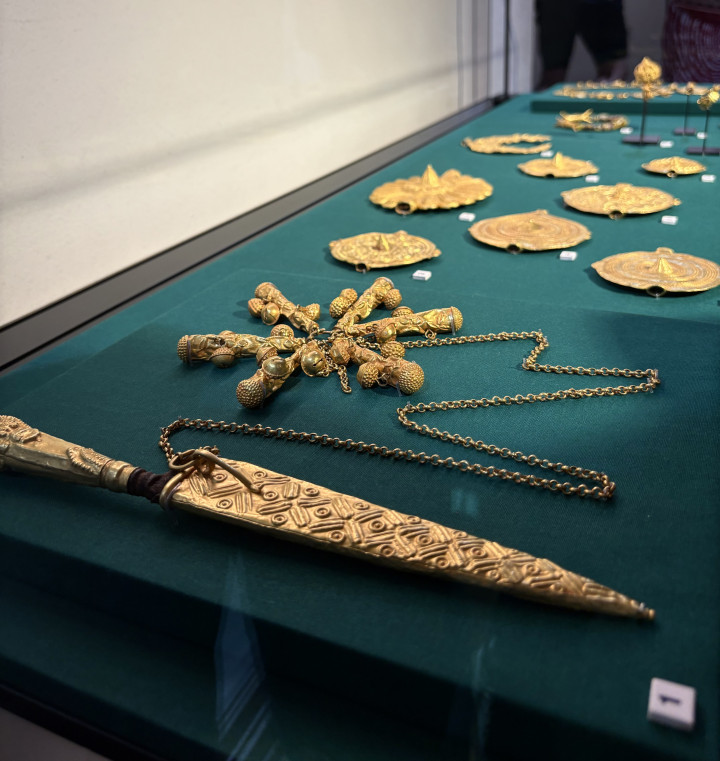
Stolen Treasure, Loaned Back: The Injustice Facing the Asante People
June 20, 2026
On June 18, 2026, as the University of Georgia Ghana 2026 Service Learning students, we had the fortunate opportunity to step into a major part of Ghana’s modern history. Located in Kumasi, the Manhyia Palace was the residence of the late Asantehene (Asante King) and is now a museum that tells the story of the Anglo-Asante War.
The tour guide introduces the Asante Empire as one of the richest and most influential kingdoms of modern Ghana. Renowned for their abundance of gold and an advancedly organized political system, the Asante Empire served as a crucial component of the trans-Saharan trade route. They would adorn their Asantehene with numerous golden bracelets and ornaments. In the 1800s, however, the British sought to undermine the Asante Empire’s influence and took control of the slave trade by assisting several coastal states and engaging them in frequent battles. Although the Asantes achieved victory in the first battle of 1824, they reached a stalemate in the second war and lost to the British in the subsequent conflicts. The British entered Kumasi, burned the city, and captured the 13th Asantehene, King Prempeh, exiling him along with his family members and many other royal chiefs to Elmina, then to Sierra Leone, and finally to Seychelles. They then demanded that the Asante hand over the Golden Stool, the symbol of legitimate Asante rule and cultural unity. This act enraged Queen Mother Yaa Asantewaa, and although she led her people and fought bravely in retaliation, the British won with their powerful firearms and exiled the queen mother and her chiefs to join King Prempeh. Without a proper leader to guide their people, the kingdom's power sharply declined, and the British gained control over the Asante Empire and seized many valuable treasures.
After several years of exile, the British finally allowed Asantehene Prempeh to return to Kumasi, but as an ordinary citizen. They then offered him the Manhyia Palace as compensation. To this gesture, King Prempeh responded to them that if this was the form of compensation the British were going to provide, he wanted the souls of the people he lost in Seychelles to be returned and not empty blocks of stone. He asked for the cost of building the palace and paid the British in full. The palace was inherited by his successors, who lived there before the Manhyia Palace was converted into a museum. It now houses several collections of artifacts and items once used by the Asantehenes.
To this day, despite Ghana's successful independence from the British and its status as one of Africa's leading countries, the Asante people have not had their gold and sacred artifacts fully returned to them. The Manhyia displays some of these stolen items, such as those from the Fowler Museum in the US, which were donated and returned permanently, but many were not. Several artifacts from Britain are returned solely on loan, meaning they must be returned to Britain in 2027, despite rightfully belonging to the Asante people, while hundreds of other precious Asante treasures remain in British museums. The controversy over these stolen items underscores the complex history of colonialism and its ongoing impacts.
- Rachel Jin
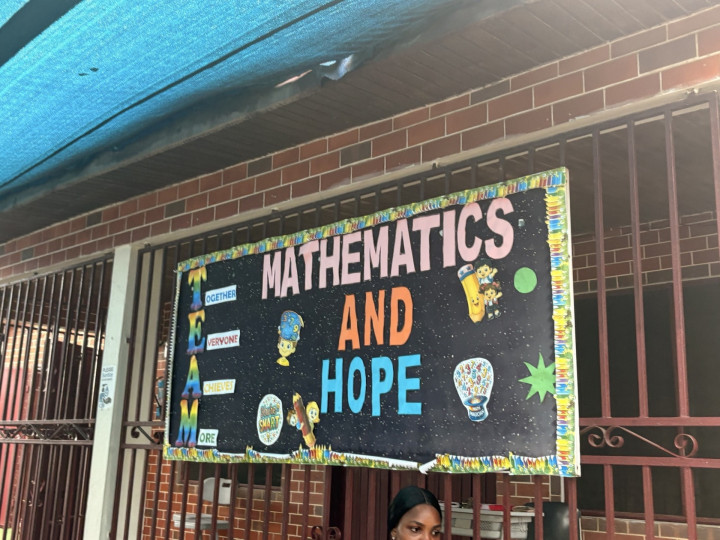
A Wonderful Morning with Children at Bright Lilies School
June 20, 2026
One of the most impactful moments that I’ve experienced in Ghana thus far is visiting the Bright Lilies School in Kwabenya, Ghana. I, along with 12 of my fellow UGA peers, had the privilege of visiting this primary school on June 19, 2026. The school was created in 2006 (a year after I was born – it's almost as old as me!) and offers a diverse range of classes for ages 2-14 years.
We had to wake up quite early (around 5 am) for this opportunity, but it was definitely worth it. As soon as we walked through the gates of the school, I immediately felt welcomed and at ease. A few of the teachers brought out chairs for us to sit on towards the front of the school and we sat and waited for all of the students to get settled in their classrooms. As I waited, I saw some of the students pour in. They seemed very joyful and happy to be there. After waiting for a short while, some of the younger students formed three separate lines in front of us. The energy was quite high so early in the morning, and they were very excited about having guests, which I thought was absolutely adorable! Three teachers were present to assist the children in performing their morning rituals. This consisted of singing songs, counting, and reciting roman numerals. This is among one of the similarities I noticed between schools in the U.S. and Ghana – both perform morning song and dance to start the day right!
I have shadowed and interned in primary schools in the United States, so I was very curious to see how the two school systems compared. We were able to move from classroom to classroom freely and spent most of our time with the younger children. The younger children were very shy towards us at first, but most of them came around once we were actually in the classroom speaking with them. One of my initial observations was how independent the smaller children were. They were able to wash their hands and feed themselves without assistance (ages 2-4). Furthermore, they were very well-behaved and respectful. I believe that they are even more independent in comparison to the school children that I have had experience with in the United States. As we moved into the first grade classroom, I noticed that they were copying words from the board into their notebooks. I was very impressed at how they were learning such complex words for a first grader, such as crucifixion. I walked around and observed many of their notebooks and the handwriting within them was very neat and within the lines. When I was observing first graders in the U.S., most of their handwriting was sloppy and borderline unreadable. The words they were expected to write and be able to read were also much simpler. I was very impressed by the quality of education at this institution!
One of the liveliest classrooms we entered was the fifth grade classroom. They had a lot of questions for us ranging from educational to personal. One student asked us if we were married, which I thought was quite amusing. We also answered questions about our future careers, and we all got to talk about our interests in medicine, nursing, nutrition, and biology. After answering questions, many of them wanted our signatures and to take photos with us. It was quite amusing to me; I felt almost like a celebrity. I had brought enough candy for one classroom with me, so I ended up giving the candy I had to this classroom. It was a very sweet moment for me, and I felt connected to these children despite our cultural differences.
At the end, all 13 of us, including Dr. Anderson, all took a photo together at the side of the school with the staff. I was very sad to say goodbye to the students, but I had a lot of fun and learned that, despite being on different continents, I was not so different from these children after all. It was a once in a lifetime experience for me that I will never forget!
- Emma Carr
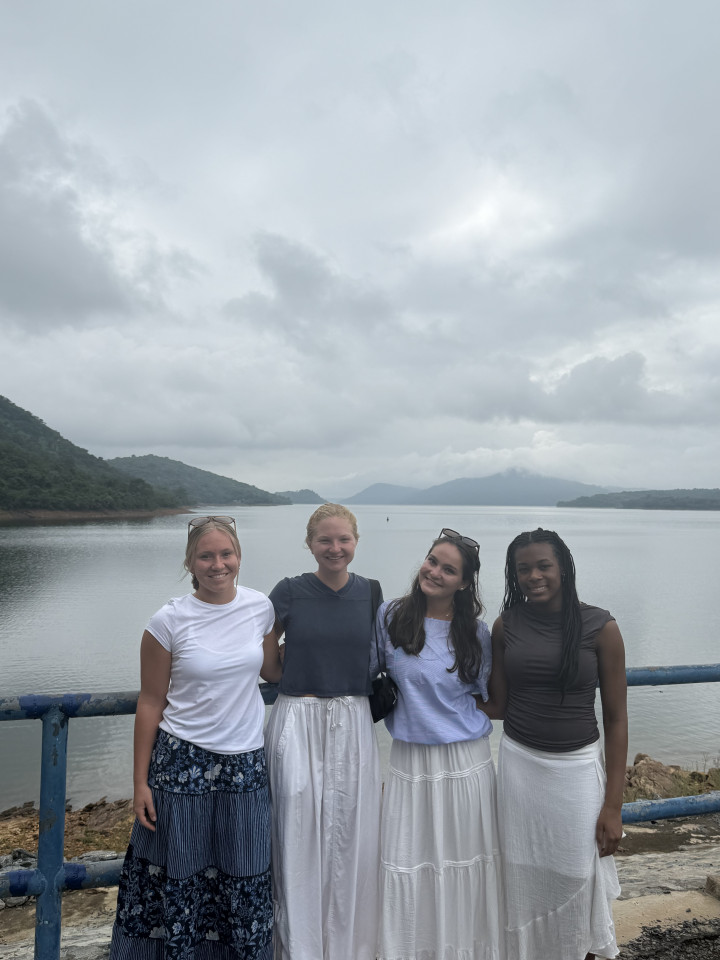
Dancing in the Rain
June 20, 2026
For the 20th anniversary of the study abroad, our professor, Dr. Anderson, surprised us with a cruise on Lake Volta. When we first arrived, it was a little bit foggy outside, then it started to rain. After the rain cleared, we boarded the boat, where immediately one of the workers went to the microphone and started singing the Ghanaian version of Happy Birthday to passengers (including Carlton) and celebrating the wedding anniversaries of people. For the 2.5-hour boat ride, music was playing and food was served along with beverages. The rice was very good despite it being one of the spiciest foods I ever tried.
When I was about to go downstairs, the person in charge of boat safety stopped me and offered to let me go inside the boat's cockpit to take a picture with the captain because it was both his anniversary of starting his job on the boat and his birthday. I went inside the cockpit, took a picture with him with the sailor's hat, and talked to the other man in the cockpit. He was telling me how his daughter lived in Philadelphia and was also studying for school. It was a small but meaningful connection that reminded me how similar our lives can be despite the distance between us.
I went downstairs on the boat, and people were still doing the same things you were doing on the upper deck– dancing. There were more drink options on the lower deck, so Taylor, Mary-Hanna, Katie, and I went to purchase drinks with our coupons. I could not get any alcoholic beverages because I used my coupons to get water to cool myself down from the spicy food. After they got drinks, we went outside for some fresh air and to share stories. A boat worker explained to Taylor how, despite working in Ghana, he not only gets paid a low wage monthly. He also cannot afford to purchase the chocolate that his own country contributes to with their own coco. Another passenger asked them, "Why is it that us Ghanaians are so nice to you when you visit our country, but you are not nice when we visit America?" I forgot how they responded to that question, but I know they felt bad about the status of their condition.
Then the cruise finally reached the dock, and we descended off the boat; however, everyone had to retreat to the boat because it started pouring rain. When all the passengers got on the boat, the workers shut all of the boat's openings so no water got inside and announced to everyone that we would be unable to leave the boat for safety reasons. As soon as the cruise ship departed from the dock, music started playing and people got up and started dancing nonstop until we arrived at the dock. I thought the customers were going to complain that their trip got ruined because when I was at Six Flags Whitewater in Atlanta, the park closed due to rain. The customers were angry and yelling at the workers, demanding a refund. This sharp contrast makes me drawn to think that Americans place a lot more emphasis on money than Ghanaians due to money being everything in America because that's the only way to live the "American Dream." Despite the rain and the unexpected changes, no one on the boat seemed upset or frustrated. Instead, people embraced the moment, dancing and laughing as if the weather was part of the celebration. The workers remained calm and professional, ensuring everyone was safe and comfortable. It was a refreshing change from what I was used to back home, where a small inconvenience often leads to complaints and demands for compensation. Being on that boat, surrounded by people who chose joy over frustration, made me question my own assumptions about what makes a good experience.
Dani Domkam

Making New Friends in Ghana
June 20, 2026
My highlight of the week had to be this little girl we befriended at Dr. Anderson’s church that we attended last Sunday. Carlton, Jordan, and I saw her in the row in front of us around an hour into church and we began to wave at her. She was very interested in several things about us: Carlton’s pants, my freckles and nail color, and Jordan’s hair. She wanted to touch everything mentioned above and was very enamored by us. Jordan entertained her with funny faces, and she was always giggling whenever we paid her attention. She also gifted us a piece of hair which in return I gave a piece of mine at her request. I was happy to oblige. After about an hour of this, we returned our attention to the front, and she disappeared to the side to hang out with some of the church members who were singing in the chorus.
About fifteen minutes later, I felt a nudge against my side and there she was, pushed up between Jordan and I with a big smile on her face. We put her in between us and she immediately wanted to look through my bag. As I pulled out my chapstick, her eyes lit up and she immediately wanted to put it on both her and me, as shown by the picture above. She also held out my hand and proceeded to smear the entire tube of chapstick on it along with doing the same on Carlton and Jordan’s. This kept her entertained for about thirty minutes while we focused on the service. My entire hand and face were covered in the chapstick but she was so intent on doing the smearing that I could not say no. She also was absolutely obsessed with Jordan’s hair. She loved playing with it and trying to fix it up, but ultimately just made it quite messy. Soon, we got up to dance around the church and she motioned to me to pick her up and so I led her around the church like that, swooping her down to make her giggle and watching her dance moves. Everyone we passed by gave us a smile when they saw us together, so I was reassured that we were not actually stealing someone’s child. The whole group went up to the front to be introduced to the church and when we tried to leave her in the row, she insisted on going up with us and holding my hand. Not long after this, she decided she had enough fun and promptly got up and left to go skip off with some of her friends. We laughed at this.
Although we never learned her name, her joy made my day and that church service. Seeing unbridled joy and no wariness surrounding strangers reminded me of all the kids back home at church who love to turn and stare but smile very wide when you wave and make faces at them. There is something very special about having children trust you and want to hang out with you. There is truly no better feeling, and I am grateful to have experienced a few hours of it.
-EK Jordan
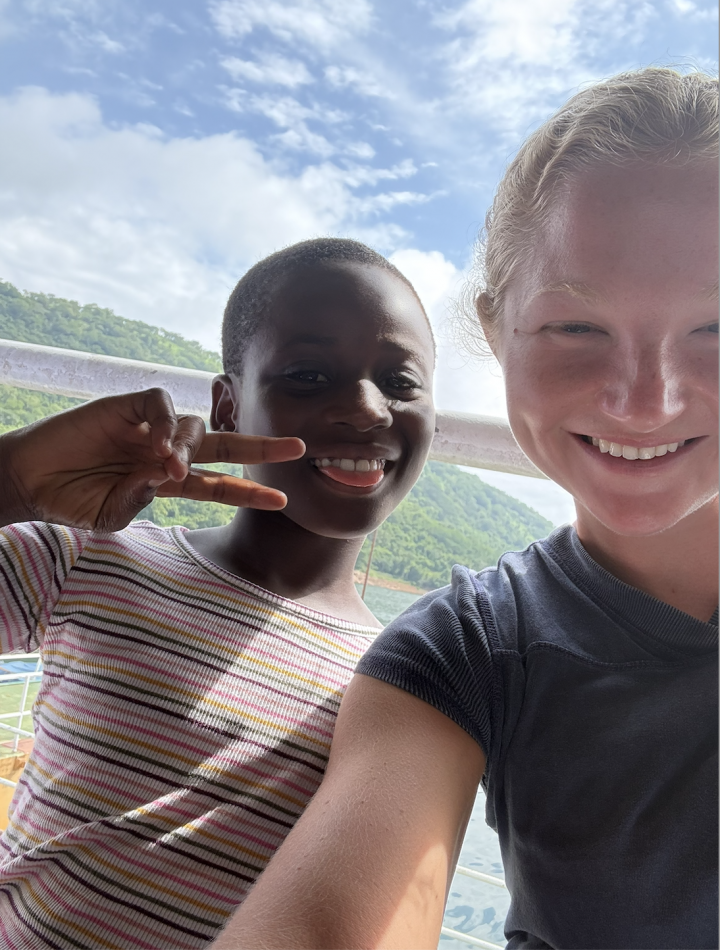
Boat Cruise and Meeting my First Ghanaian Friend
June 20, 2026
For the 20th anniversary of the Ghana study abroad program, Dr. Anderson surprised us with a boat cruise on Lake Volta. He did not tell us much about the excursion, which only added to the excitement because we did not know what to expect. All of our expectations were met and far exceeded, as we all agreed it was the greatest surprise and the best part of the trip so far.
The boat was very large with an upper and lower deck. The lower deck served as the “party room,” featuring seating for everyone and a DJ to keep the energy high throughout the excursion. While this room had a fun, electric atmosphere, the music blasting out of the speakers made it a little difficult to sit and talk to each other. The upper deck, on the other hand, was where we spent the majority of our time. The upper deck consisted of many tables and chairs for the guests to relax and enjoy the view, a bar, a serving area for food, and the captain’s room. The true centerpiece, however, was the small stage for the band, whose job it was to keep everyone on their feet dancing. Not only did they do their job, but they far exceeded it. The band created an atmosphere so energetic and lively that, at some point, just about everyone was dancing and singing along. By a long shot, Dr. Anderson was the best dancer on that boat. I am almost certain I only saw him sitting down twice throughout the entire excursion. While we had no idea what the band was singing, we danced as if we did, following the lead of those around us. The locals on the boat went out of their way to bring us onto the dance floor and encouraged us to join in on their celebration. Through music and dance, any feelings of unfamiliarity quickly disappeared, and we felt a part of the vibrant Ghanaian culture. While I had so much fun dancing to the live music, what I will remember most about this day was meeting my new friend, Afua.
Afua is our driver’s daughter, and she decided to join us on our boat cruise. This was a big day for her because she had never been on a boat. On our two-hour drive to the Volta Lake, she sat right in front of me on a small stool. I specifically recall her peeking over her shoulder at one point on the way there, and I gave her a small smile, which made her smile back. From that point on, it was almost like that small gesture made her gravitate to me, as I found her next to me for most of the day. At first, she was very shy, and I could barely make out a word she was saying. I even had to ask her to type her name into my phone just so I knew I was hearing her correctly. However, by the end of the trip, we were taking selfies on her dad’s phone and dancing together on the dance floor. She even fell asleep on my lap. She took a small piece of my heart as we hugged goodbye. However, just the other day, I got the chance to talk to her over the phone, and it was the best part of my day. Afua was truly the sweetest girl, and I will always cherish her smile.
This day was the greatest surprise and has been my favorite day so far. I will hold on to these memories and am hopeful that I will see Afua again.
-Mary Hanna Hiers

Memories at Mole National Park
June 20, 2026
This week, my study abroad group and I traveled to the northern region of Ghana to stay at Mole National Park. The entire car ride took 16 hours, but it was definitely worth it. Here we had the amazing opportunity to go on a safari through the sanctuary! The area seemed very well taken care of with narrow paths, natural vegetation, no litter, making the land appear very preserved. We took two safari jeeps around the grounds, and the guide even let us out of the vehicle to get closer to the animals. We got ridiculously close to a group of three elephants, so much so I began to get nervous! As of right now, this is my favorite part of trip because it’s an incredibly unique and once-in-a-lifetime experience that I will remember forever. Further along the safari, we also got very close to baboons and different antelope species. It was amazing to see all these animals in the wild freely roaming around, and an experience I wouldn’t be able to get closer to home.
After the safari, we all hung out in the outdoor seating by the pool. We were all relaxing, talking, and reading up until a baboon appeared in the sitting area! The baboon got super close to my friend, Taylor, but just about stole her backpack. Everyone began making lots of noise to scare it off, but it took for the workers to chase the baboon off with their shoe. My friend, Dani, and I were uncontrollably laughing about the interaction until five minutes later the baboon decided to run towards us as well! I froze while Dani started screaming. Eventually, the workers, again, chased the baboon with their same tactics, so we could finally relax and Taylor was able to have her turn laughing at us. memory seems trivial, but it is one so unique and something I associate with so much laughter and joy. I have made good friends on this trip, and we are now able to joke about moments like these together.
At the end of the night, we watched the most beautiful sunset after dinner and then Mary Hanna, Taylor, Dani, and I all played go fish. However, not regular go fish, but Dani’s version. I say this because she would make up her own rules and rage bait me till we all couldn’t stop laughing. She would ask for every single three-of-a-kind in my hand without actually having the card herself. We ended our action-packed day at Mole with easy conversation and uncontrollable laughs, making for a perfect trip.
Ghana has allowed me to see and do things I would otherwise never experience. I have only been here for nine days, but I am already mentally planning for when I can return. Being at Mole National Park with all the wildlife is one of the most memorable and exhilarating things I’ve ever done. I hope I can experience more like this; I am positive I will remember this trip forever with absolute gratitude.
Katie McIntyre
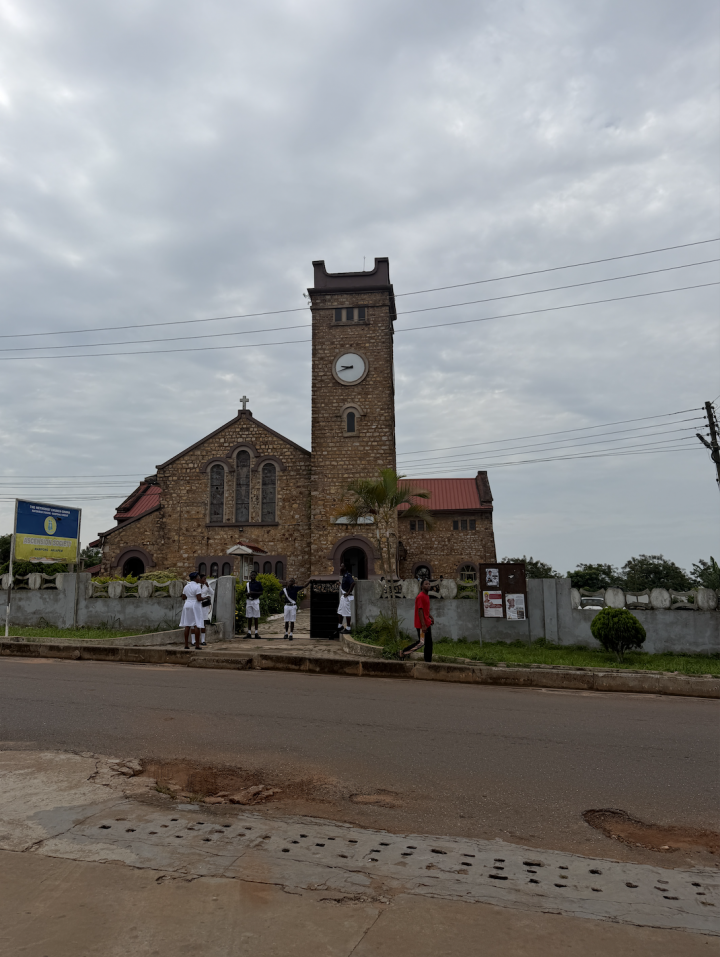
An Unforgettable Ghanaian Church Service
June 20, 2026
The service at the Methodist church in Mampong was unlike any I had ever experienced. From the little I had heard and read about religion in Ghana, I had the impression that it played a central role in people’s lives. However, my expectations were far surpassed after witnessing just how strong their faith is. The energy and liveliness that radiated throughout the church for all three hours were contagious and left me in awe.
From the second we entered through the wooden doors, we felt right at home. You would have never known we were foreigners from the way we were embraced. The warm smiles and hospitality we were greeted with made any sense of feeling out of place quickly vanish. During the praise part of the service, when everyone stood to sing and dance, our group was immediately guided out of our pews to join the dance line. While we did not know the words or exactly what we were doing, we embraced the unfamiliarity and danced around the church grinning from ear to ear. Hearing just how loudly and boldly everyone praised God was truly so incredible to be a part of. It was undeniable just how proud the congregation was of their faith.
The offering was another part of the service that stood out to me, as it was much longer than any offering I have experienced in church back home. There were two parts of the offering. During the first part, everyone in the congregation placed their tithes into the same bowl. The second offering involved seven bowls for your tithes—one for each day of the week. In Ghana, everyone has their own name along with a name that represents the day of the week they were born. For example, if you were born on a Monday, you would be called “Kojo.” I was born on a Monday, so I placed my offering in the corresponding bowl. After the offering ended, the money was counted, and the winner was announced, prompting joyful celebration and applause. The offering was just another part of the church service that showcased the immense pride Ghanaians take in their faith. Worship is not viewed as an obligation but rather as a celebration shared by the entire community.
Attending the Methodist church service completely redefined my understanding of the role religion plays in Ghanaian society. I knew their faith was a priority in their lives; however, it is far more than that. It is the very fabric of daily life and defines who they are. Having met a handful so far, it is clear just how strong their faith is. Every person has welcomed me with a warmth that has felt like family. Overall, the church has been one of the greatest experiences yet, and I feel very grateful to have had the opportunity to attend.
-Mary Hanna Hiers
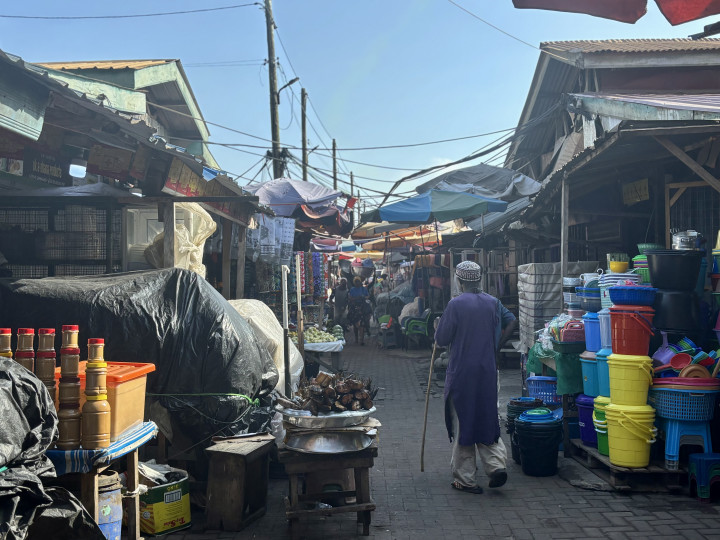
Exploring the Accra Markets
June 20, 2026
Last Friday, June 12th, we visited a local market in Accra. This was not only the first time we were able to visit a market in Ghana, but it was also the first time we were able to interact with the Ghanaian people. When we arrived at our parking spot on the outside of the market, we were greeted by a professor from the University of Ghana, and her graduate student met us to give a tour and educate us about nutrition in Ghana. Th professor that was giving us the tour was also Dr. Anderson’s professor when he was attending the University of Ghana. The professor gave us a tour of the market and gave us pamphlets about nutrition and the variety of foods and growing seasons of crops in Ghana. As we entered, we were met with the bustling sounds of vendors, customers, and motorcycles moving through the market. The vendors sold everything from food to kitchenware to tools. The food vendors consisted of a variety of local ingredients, such as dried fish, tomatoes, onions, yams, coconuts, okra, watermelons, corn, and several spices. One of the stands sold live slugs, which is common part of many Ghanaian dishes. We also got a tour of the slaughterhouse, where the butchers were preparing several goats to be sold at the market. The butchers used heavy cleavers to chop up the. As we were walking through the market, I caught the eye of an onion vendor who called me over, she talked to me for a minute in English, and then we spoke a little bit of Twi. She asked me what day of the week I was born when she first greeted me. In Ghana, one of your middle names that you are given is based on the day you were born. For example, I was born on a Wednesday, so my name in Ghana would be Kweku. As we walked through the market and the villages later in the week, people would ask us what days we were born to call us by out Ghanaian names. This was my first immersion into the Ghanian culture and I was able to have fun with my classmates finding our Ghanian names based on the day we were born. At the end of the tour of the market, we got fresh coconuts to drink that a vendor chopped open with a machete. The vendor handed us a straw so we could drink the coconut juice fresh from the source.
-Ethan Neall
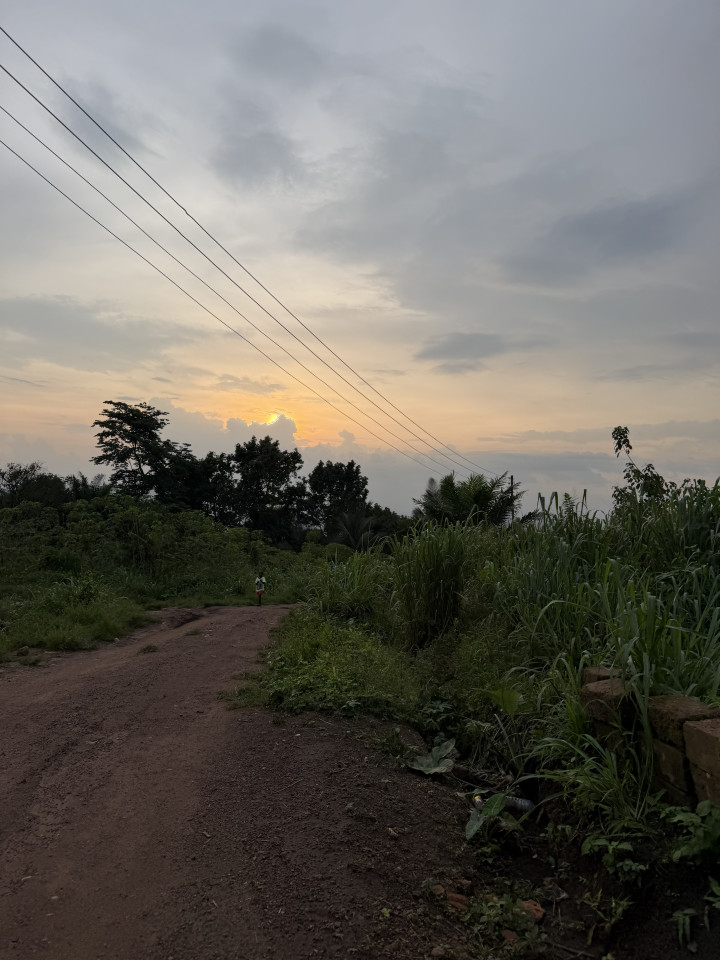
Experiencing Ghanaian Hospitality
June 20, 2026
On the second night of our trip, we were ecstatic to finally venture out and explore. When we arrived back at the house, we quickly gathered a group and decided to walk into town. Just minutes into our walk, we met the nicest group of young boys. They were extremely happy to see us and immediately welcomed us with excitement. They remembered the group that had visited Ghana the previous year and could not wait to spend time with us as well. As we stood there talking, more and more members of their family came outside to greet us. Before long, the entire family had joined the conversation. They even showed us their dog, goat, and turkey in the backyard. This family was beyond welcoming, and their kindness left a lasting impression on me. In fact, this warmth and generosity have been a common aspect of our trip so far. Ghanaians are incredibly hospitable, and their willingness to welcome strangers as friends has been remarkable.
As we continued toward town, we stopped frequently to speak with and wave to the children we passed along the way. We handed out bubbles, yo-yos, and stickers to as many kids as we could. They were incredibly grateful and excited. Some of them were shy at first, but it did not take long before they approached us with bright smiles and eager curiosity. It has been amazing to witness how genuinely happy the children here are. The realization that many of these children do not have as much materially as many children in America, yet remain so joyful and full of life, has been incredibly eye-opening for me. Rather than focusing on material possessions, the children here love spending time outdoors, playing together, and building relationships. Something is inspiring about the way they value connection and community. For many of them, all they truly have is each other, and they treat everyone around them like family.
As we continued down the path, we met an older girl who further demonstrated the hospitality we had already experienced throughout the evening. We decided to practice some of our Twi with her, and she laughed when she heard us speak. However, her laughter was not rude or mocking. Instead, she seemed genuinely surprised and amused that foreigners were attempting to speak her language. She was eager to help us improve and was incredibly patient as she corrected our pronunciation. During our short walk together, we learned how to say “how are you,” “I’m fine,” “my name is,” several days of the week, “welcome,” and “thank you.” Thankfully, Dr. Anderson had briefly introduced many of these phrases, but this young girl took the time to explain them more carefully, helping us clear up confusion and feel more confident in our pronunciation.
Words cannot fully describe the comfort I feel in Ghana. Every person we have encountered has seemed genuinely happy to see us, and for some, we may have been among the first foreigners they had ever met. I have yet to meet a single Ghanaian who was unwilling to greet us with a smile or engage in conversation. The locals are eager to hear our stories while also sharing details about their own lives and culture. Through these conversations, I have already learned so much about life in Ghana and the Twi language. Our group talks daily about wanting to go on more walks simply to meet more people, especially the children. I am incredibly grateful for the love and kindness we have received, and for the way we have been welcomed with open arms. The hospitality here is unlike anything I have experienced in America, and it continues to amaze me more with each passing day.
– Taylor Chesser
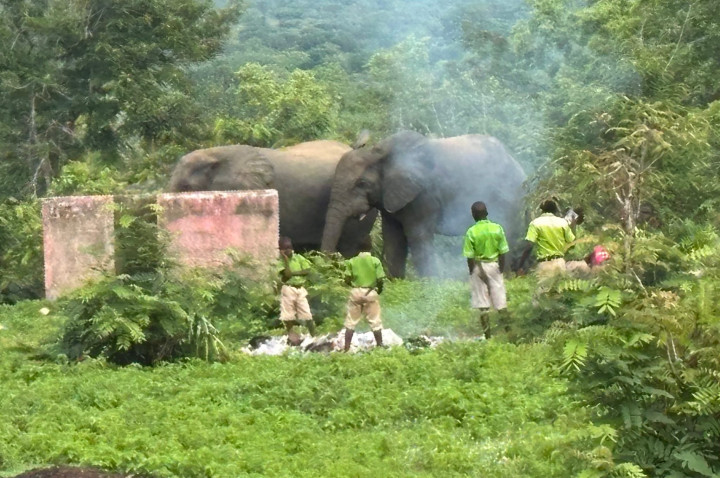
The Burning Plastic in Larabanga
June 19, 2026
Between Larabanga and Mole national park lies a school where children can take classes while wild elephants roam freely outside. Having never been that close to an elephant before, I was completely shocked to see the students had no fear, or even acknowledgement, of their presence. While I was so infatuated with the elephants, I barely noticed the heaping pile of burning plastic directly next to me, being tended to by kids with ski-masks pulled over their faces. While we had passed many plastic piles on our drive, they were all located away from where people were gathered. At Larabanga, the trash pile was directly next to where the students would be learning all day and also right next to the elephants. Everything I have learned about plastic suggests that it should stay outside the body. However, these children were sitting near and inhaling the fumes from these burning plastics. Not only was it near the school, but also in the middle of a national park. I was surprised to see how normal this all seemed to both the students and the park rangers, and I couldn’t keep the image of burning plastic and elephants out of my mind. I feel that it speaks to the reality of the situation here in Ghana, one that is scarcely shared in media and modern international politics. While the picture could easily be doctored to just show the elephants, the reality lies in the full, uncropped photo.
This also aligned well with a previous lecture I had received at the University of Ghana, in which we were shown how people react to the floods in Accra. During the heavy rains, people will take the opportunity to empty their homes of all their trash. The idea is that the rain waters will take away their unwanted belongings far away from home, leaving behind a clean area. However, in reality the trash would clog up the sewers and drainage in the immediate surrounding area, having a lasting and devastating effect on the local landscape as the flooding would get worse. Some might think that this is due to a lack of insight for the immediate environment, being reflected in both the burning of plastic and the littering in the drains. However, this is more a reflection of the enforcement and public service systems that need extreme reform here in Ghana. Without proper installment of methods for people to properly dispose of trash and subsequent consequences for those who disobey, there is no alternative or incentive to practice anything else.
-Carlton Burns

The Eye-Opening Discussion With a Food Science Professor at the University of Ghana
June 19, 2026
Little did I know that spending time with one professor and his class at the University of Ghana would turn into such a fruitful experience. Having the wonderful opportunity to start exploring the University of Ghana on June 12th, where Dr. Anderson went to school, we took a long shot and tried to tour a classroom. We got lucky enough to meet the kindest Food Science professor who allowed us to come sit in his classroom with him and his class for about 20 minutes. During this short time we learned fascinating things about the schooling system and science community in Accra. Students who want to attend university actually have to pick their path/ major while they are in high school. As during grade school they take specific classes for their chosen route that prepare them for their college career. This lack of flexibility is very different from our experience in the US, as we are used to having multiple options for our lives. It seems shocking that we should know what career path we want by high school. We learned that his department of Food Science and Nutrition has served to provide many nutritionists, public health experts, and even physicians to the country- which Ghana has a big shortage of.
After talking to the professorfor a while, he called a few of his students up to discuss with us their final project they are working on to secure their graduation. I was expecting to hear experiments similar to the ones we do in chemistry labs- where the sole purpose is to help us learn our lecture material. Yet, these women presented innovative and groundbreaking research that requires extremely technical work and creativity. One student was working on creating a hazelnut spread that resembled Nutella, since they don’t have Nutella here. One was researching how to grow rice that is usually grown in the US, here in Ghana. Both of these experiments could help limit the imports Ghana must take in, and overall significantly improve the country’s economy.
Seeing where these students train and work on their innovative projects was utterly fascinating, as they have substantially less resources but are still able to keep up with universitis like my own that are much more privileged. The Univeristy of Ghana actually seems to abe doing even more impactful experiments. The motivation for each of these students at the University of Ghana seems to be pure, and for the purpose of advancing medicine and improving Ghana. If we were able to give this Univeristy of Ghana department more resources or funding to access different kinds of experiments, I cannot even fathom the amount of influence their research could have. Their research directly impacts the amount of medical access and medical professionals the country has and it was amazing to see first hand how their program is ran. This lights the fire in me even more to support scientific communities in all areas of the world, as it became clear we are all working towards the same goal of advancing medicine.
-Jordan Nowicki

Ghana: A Nation of Unity and Culture
June 19, 2026
The National Museum of Ghana and the Kwame Nkrumah Memorial Park are sites in which the history and culture of Ghana and how culture and politics influences Ghanaian society can be learned. These sites were the most memorable places as we expanded on the topic of Kwame Nkrumah’s Pan-Africanist ideas and how Ghana remains unified and peaceful despite its diverse cultures and tribes, marking Ghana as the gateway to Africa.
Our first visit was to the National Museum of Ghana in Accra. Immediately upon arrival, we saw an artwork of a spider, known as “ananse” in Twi, one of the local Ghanaian languages. Our tour guide explained that traditionally, ananses are a major figure in Ghanaian folklore, and the webs they weave serve as the main inspiration behind the Kente cloth. We then visited the stones exhibit in which we learned about the importance of stones in ancient Ghanaian society and how their shapes were carved based on their purpose. For example, rounded stones were primarily used for grinding food and other materials, while sharply carved stones were used for cutting or slicing. The exhibit also explained how the process of shaping stones aided in smelting iron ore: heat from fire would be used to smelt the ore and hammering turned the metal to a desired shape.
Another exciting exhibit in the museum featured traditional clothing.We saw traditional clothes of Ghana such as Kente and Fugu. The Fugu is mainly worn in the Northern part of Ghana, while Kente in the Southern part. We learned that before these clothes came into their modern-day styles, clothes were made from plantain tree bark. The procedure included stripping the tree of its bark, soaking it in water for the fibers to loosen, letting the wet bark dry, then finally beating the dried bark with stone hammers to flatten the bark in which it would become cloth-like and used as clothes. This process represents how traditional Ghanaian society worked with natural resources to adapt to their daily needs.
Although I enjoyed every exhibit in the National Museum, the collection of the sculptures stuck out to me. They represented notions such as fertility, teamwork, and traditional beliefs. I have always had an attraction to statues, especially ones that convey a deeper meaning. Art imitates life, so I believe that these types of artworks demonstrate a society’s or person’s way of thinking.Through these statues, I was able to better understand the values and aspirations of ancient Ghanaians.
After the museum, we headed to the Kwame Nkrumah Memorial Park; it was breathtaking and equally inspiring. The scenery consisted of fountains of seven men blowing a horn in front of the first prime minister of the independent Republic of Ghana, Kwame Nkrumah’s statue in which he has his left foot and right arm forward to represent the saying “forwards ever, backwards never”, a quote I heard for the first time and continues to inspire me to this day.
The final part of the memorial tour was viewing the personal belongings of Kwame Nkrumah. The part that stood out to me was seeing Nkrumah being allies with Patrice Lumumba from Democratic Republic of Congo. It was disheartening to hear the overthrow of Lumumba due to foreign exploitation and fight over resources in Congo. At that part of the tour, I wondered to myself how Africa would have looked like today had Nkrumah and Lumumba’s developments not been stopped prematurely.
Overall, both the National Museum and the Kwame Nkrumah Memorial Park provided valuable lessons about the culture, history, and politics of Ghana. These experiences also honed my critical thinking about the roles of these topics and helped me connect better with my Ghanaian identity. As Kwame Nkrumah said, “I am not African because I was born in Africa, but because Africa was born in me.”
- Sydney Apraku
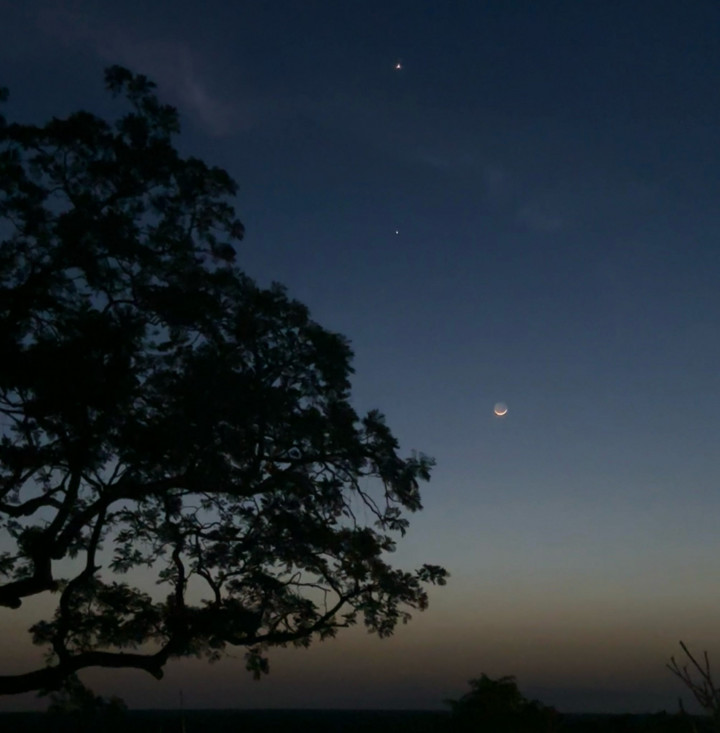
A Night in Mole National Park
June 19, 2026
This Monday, June 15th, we travelled from Mampong-Akuapem to Mole National Park; it was a 14-hour drive and came with some exhaustion and disdain for all moving vehicles. During the last leg of the ride I was thinking there was no way that Mole could be worth it, elephants and all. Of course, though, I was more than wrong. The safari was unbelievably breathtaking. However, what I really want to share with you all is a meaningful conversation I had with a stranger.
On the last night of our stay, post an amazing safari and book discussion, I sat outside on a tiled bench that was set on the peak of a valley. In front of me I watched the burnt orange sky turn to a beautiful purple. All down the valley there were huge trees, and at the bottom you could see a watering hole we had passed on the safari earlier in the day. It was a breathtaking sight. A few minutes after I had arrived, a Ghanaian man with a kind smile came over to the bench with the same idea of watching the sunset. He greeted me, and we started up a conversation. I shared that I was a student from the US that had come to take a safari in order to see Ghana’s animals. I learned his name was Sebastian and that he was from the northern territory of the country; he had driven students like us to take a safari.
As our conversation progressed, I learned that the small cattle town that he had grown up in started to get a lot of people from the city moving in. I asked him if he was a fan of the growing population. Originally I had assumed he would respond in the affirmative, as he had mentioned earlier that nowadays more kids in his town were gaining the opportunity to attend school as the perspective of parents was changing, something he didn’t get the privilege of when he was young. Instead, though, he responded that he wasn’t a fan of the change. To help me understand why, Sebastian painted a picture for me. He pointed to a nearby tree and said to me, "Birds are smart creatures; they like to build their homes in tall trees. If they were to live in shorter ones, they could be at risk of being eaten by predators. If their tall trees are being cut down. What are the birds going to do?” With this I began to understand what he was getting at. I responded, “They will move away or they’ll die out.” He nodded enthusiastically and continued. He had spent his childhood in the town as a cowboy and spent much of his day outside. He described how as more and more of nature is taken to build houses and such, a new generation is growing up with less and less of a connection to the nature around them. “There’s much important knowledge that you can get from nature.” Even for Sebastian, he told of how in his parents' day the fauna (gazelles, guinea fowl, baboons, etc.) we were seeing in the park were commonly a part of their life; it wasn’t something you had to go to a park to see.
I immediately agreed and understood his perspective. I shared that is how America feels to me, but we have fully gotten to this completion of separation from nature. I have grown up in a big industrialised city where nature is something to be controlled, and that is separate from us humans. Just being in an environment where you have animals roaming how they please, outside of a zoo cage, is quite an amazing sight for me.
As I have reflected on my conversation with Sebastian, I feel very grateful for the opportunity to have such a meaningful conversation. Despite our differences, we were able to find a common point of view. Industrialisation has brought us so much progress in technology, medicine, and overall convenience; however, it has also often come at the expense of our natural world. As I continue my trip in Ghana, I hope to learn more about the people and the environment. I hope this post gets you thinking!
- Madison Bradford
Special thanks to Ethan Neall for the photo of the night sky in mole

Misconception and History at Manhyia Palace
June 18, 2026
On June 18, 2026; we were in Kumasi, Ghana visiting the Manhyia Palace Museum. The day before, we came from a 9-hour car ride from Mole National Park, making it a long, cramped journey to where we are now. It was a needed change of pace and one I enjoyed thoroughly. At the entrance of the museum, there is a sign stating “AKWAABA” (meaning “Welcome” in Twi) and an arrow pointing to the entrance of Manhyia Palace. When we first entered, there is a nice yard with a small pond and other plants, but most importantly; the Kum Tree (or also referred to as the Banyan Tree) is housed in this garden. This giant, draping tree holds such historical and cultural significance, such as it being traced to the naming of the city of Kumasi, as legends say that important meetings and decisions were held under the shade of this tree, leading to the Twi phrase of “Kum Ase” (which means “Under this tree”). This sounds like such a historical, grandiose moment but……
The tree shown is not the Kum Tree mentioned in the legends unfortunately. The tree that captivates visitors with its long, draping aerial roots is an Indian Rubber Tree that was introduced to the Manhyia Palace in 1916. This tree is often mistaken as the Kum Tree of Manhyia Palace, with the original Kum Trees being lost to time. Even though it is not one of the original Kum Trees planted by King Osei Tutu, it still holds an important role in the history and culture of the city. Its presence in Manhyia Palace reflects the Ashanti’s legacy, connection to nature, and their heritage.
While I wasn’t able to get pictures of the many artifacts of the past and who the previous kings and queens were, one thing I was able to capture on camera was the gold artifacts, ranging from jewelry to swords. An important thing to note of the artifacts shown is that they were originally looted by the British during the Anglo-Ashanti War of 1873-1874. These artifacts were just recently obtained back to Manhyia Palace but on a loan, meaning that in 2027, they will try to regain the artifacts they originally stole, which is some pretty odd logic but I digress. On the other hand, Fowler Museum at the University of California, Los Angeles did return 7 royal artifacts to the Manhyia Palace. They made this batch’s return unconditional and permanent, which is a nice and respectable gesture to the Ashanti people.
Overall, this was such a fun and interesting tour and it was enjoyable to learn about a kingdom that I never even knew about before going to Ghana. From the calm, peaceful garden to the rustic interior of the palace filled with relics of the past, it was a wonderful experience and I recommend you visit to place to get a taste of new history from a new perspective.
Maximiliano Villeda-Macias